Colorado Health Insurance Exchange vs Private Market Plans
Understanding Your Options in Colorado
Choosing health coverage in the Centennial State can feel overwhelming. When evaluating **Colorado Health Insurance Exchange vs Private Market Plans Compared**, residents quickly realize that the right choice depends heavily on household income, medical history, and whether you qualify for financial assistance. Colorado operates its own state-based marketplace, making healthcare shopping unique compared to states relying on the federal platform.
To make an informed decision, you need to understand how both pathways operate, what they cost, and the specific consumer protections attached to each type of plan. Here is a comprehensive breakdown to help you navigate your options during the open enrollment period or a qualifying life event.
What is the Colorado Health Insurance Exchange?
The official state marketplace is known as Connect for Health Colorado. It is the only place where residents can access financial help, such as federal tax credits and state-specific savings, to lower their monthly health insurance premiums. All plans sold through the exchange must meet strict federal and state standards set by the Affordable Care Act (ACA).
Key Features of Exchange Plans
- Income-Based Subsidies: Premium tax credits are available for individuals and families earning up to 400% of the federal poverty level (and often higher thanks to enhanced federal subsidies).
- No Pre-Existing Condition Denials: Insurers cannot deny coverage or charge higher rates based on your medical history or health status.
- Essential Health Benefits: Every plan must cover ten essential benefits, including maternity care, mental health services, prescription drugs, and preventive care at no extra out-of-pocket cost.
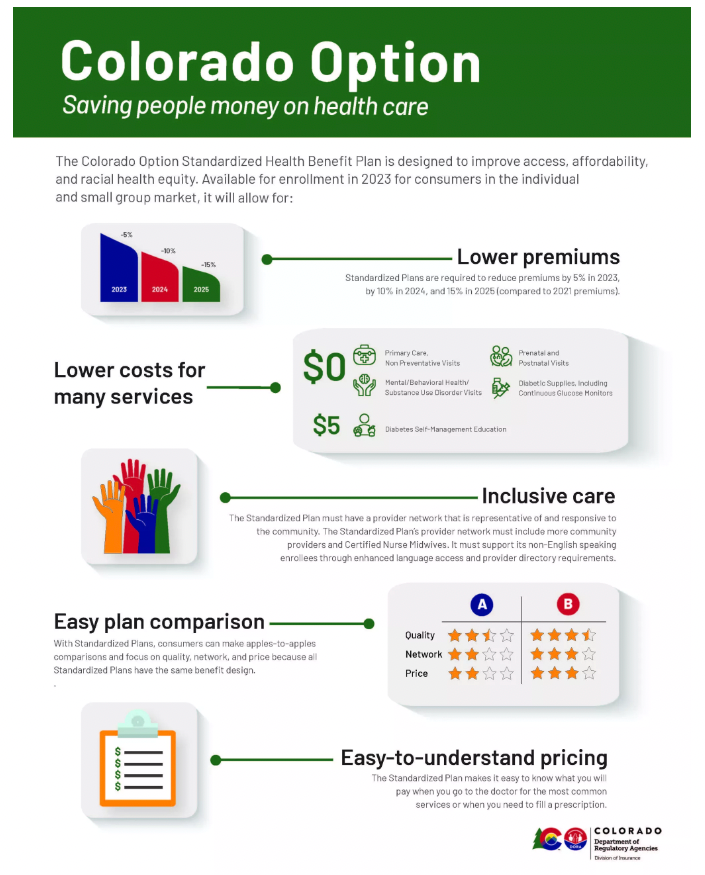
- Standardized Tiers: Plans are categorized into Bronze, Silver, Gold, and Platinum tiers, making it easier to compare costs and benefits across different insurance carriers.
What is the Private Health Insurance Market?
The private market consists of health insurance plans purchased directly from insurance companies (like Kaiser Permanente, Anthem, or Denver Health) or through independent brokers, off-exchange websites, and agents. While some of these plans are ACA-compliant, many are not.
Types of Off-Exchange Private Plans
- On-Exchange Equivalents: Major medical plans sold off-exchange that offer identical benefits to exchange plans, but without the tax credits.
- Short-Term Limited Duration Insurance (STLDI): Temporary plans designed to bridge gaps in coverage. Colorado law strictly limits these plans to a maximum duration of three months.
- Alternative Products: Health-sharing ministries, indemnity plans, and association health plans. These often have lower premiums but exclude critical benefits and pre-existing conditions.
Direct Comparison: Costs, Subsidies, and Coverage
When looking at the numbers, the financial mechanics of buying coverage through the exchange versus the private market differ significantly.
1. Financial Assistance and Subsidies
This is the single biggest differentiator. Connect for Health Colorado is the exclusive gateway for financial assistance. If your household qualifies for subsidies, a private market plan bought directly from an insurer will almost always be much more expensive because you must pay the full, unsubsidized monthly premium.
Conversely, if your income is too high to qualify for subsidies (exceeding the federal poverty level thresholds), exchange plans and off-exchange ACA-compliant plans cost the exact same amount for the exact same coverage.
2. Medical Underwriting and Health Status
Exchange plans never use medical underwriting. Your premium is based solely on your age, tobacco use, and geographic location within Colorado. In contrast, certain non-ACA private market products may require you to answer health questions, and insurers can reject your application or exclude coverage for pre-existing conditions.
If you manage a chronic health condition, sticking to an exchange plan or an on-exchange compliant private plan is essential to ensure your treatments are covered.
3. Network Quality and Provider Access
Colorado features distinct regional healthcare networks. Mountain resort communities, the Front Range, and the Eastern Plains often have vastly different provider options.
- Exchange plans frequently feature narrow networks designed to keep premiums manageable. Major hospital systems like UCHealth or Centura Health may or may not be included depending on the specific carrier and tier you select.
- Private market plans, particularly those sold off-exchange by major carriers, sometimes offer broader PPO networks that give you more flexibility to see out-of-network doctors, though usually at a much higher cost.
Pros and Cons Summary
Connect for Health Colorado (Exchange)
Pros: Access to tax credits, guaranteed coverage for pre-existing conditions, standardized benefits, and robust consumer protections.
Cons: Enrollment is restricted to the annual open enrollment period (November 1 to January 15) unless you experience a qualifying life event; provider networks can be restrictive.
Private Market Plans (Off-Exchange)
Pros: Greater flexibility for specialty plans, potential access to broader PPO networks, and alternative options for temporary coverage gaps.
Cons: No financial subsidies available for ACA plans; non-ACA plans may lack essential benefits and deny coverage for pre-existing conditions.
How to Decide Which Path is Right for You
To determine whether you should shop on the Colorado exchange or look into the private market, run through this quick checklist:
- Calculate your household income: Check current federal poverty level guidelines to see if you qualify for tax credits. If yes, start on Connect for Health Colorado.
- Review your medical needs: If you take regular medications, require ongoing therapy, or plan to start a family, ensure you choose an ACA-compliant plan that guarantees essential health benefits.
- Check your preferred doctors: Look up provider directories for both on-exchange and off-exchange plans to verify whether your primary care physician and local hospital are in-network.
- Consult a licensed broker: Working with a certified Colorado insurance broker is free of charge, as brokers are paid commissions by the insurance carriers. They can run quotes across both the exchange and private market simultaneously to find your best value.
Conclusion
Navigating health insurance requires balancing monthly premium costs against potential out-of-pocket medical expenses. For the vast majority of Colorado residents, the financial subsidies available through Connect for Health Colorado make the exchange the most cost-effective route. However, high-income earners or those seeking specific off-exchange network arrangements may find value in exploring private market alternatives with the guidance of a professional advisor.