Colorado's Stance on Gun Control Laws Explained
Historically rooted in traditional Western firearm culture, Colorado has experienced a profound shift over the past two decades. Driven in large part by high-profile tragedies—from Columbine and the Aurora theater shooting to the 2021 King Soopers shooting in Boulder—the state has transformed from a relatively permissive jurisdiction into one of the country's most proactive legislative environments for firearm regulation. Today, Colorado's stance on gun control laws balances the state’s outdoor sporting heritage with increasingly strict public safety measures designed to curb gun violence.

The Evolution of Colorado's Stance on Gun Control Laws
Colorado's contemporary gun policy landscape began to change dramatically in 2013, when lawmakers passed landmark measures establishing universal background checks and limiting firearm magazine capacities. While these laws sparked historic recall elections of state lawmakers, they established a foundation for subsequent reform.
In recent legislative sessions, Colorado has accelerated this trajectory. The state has expanded extreme risk protection orders, eliminated municipal preemption, cracked down on untraceable firearms, and instituted mandatory waiting periods. Rather than relying solely on federal baselines, Colorado has systematically enacted state-level statutes that place it among the more regulated states in the Mountain West.
Core Pillars of Colorado Gun Legislation
To understand the current legal landscape, firearm owners and residents must navigate several foundational statutes that govern firearm purchase, possession, and ownership across the state.
1. Universal Background Checks
Under Colorado law, almost all private and commercial transfers of firearms must be processed through a licensed Federal Firearms License (FFL) dealer. The dealer must run a background check through the Colorado Bureau of Investigation (CBI) InstaCheck unit. Limited exceptions exist for immediate family gifts, temporary transfers in life-threatening emergencies, or target shooting at established ranges.
2. Mandatory Three-Day Waiting Period
Enacted in 2023 through House Bill 23-1219, Colorado requires a mandatory three-day (72-hour) waiting period between the initiation of a background check and the physical transfer of a firearm. The law aims to prevent impulsive acts of violence and suicide by establishing a legal "cooling-off" window. Sellers face civil penalties if they deliver a firearm before the three-day window expires or before receiving CBI approval, whichever is later.
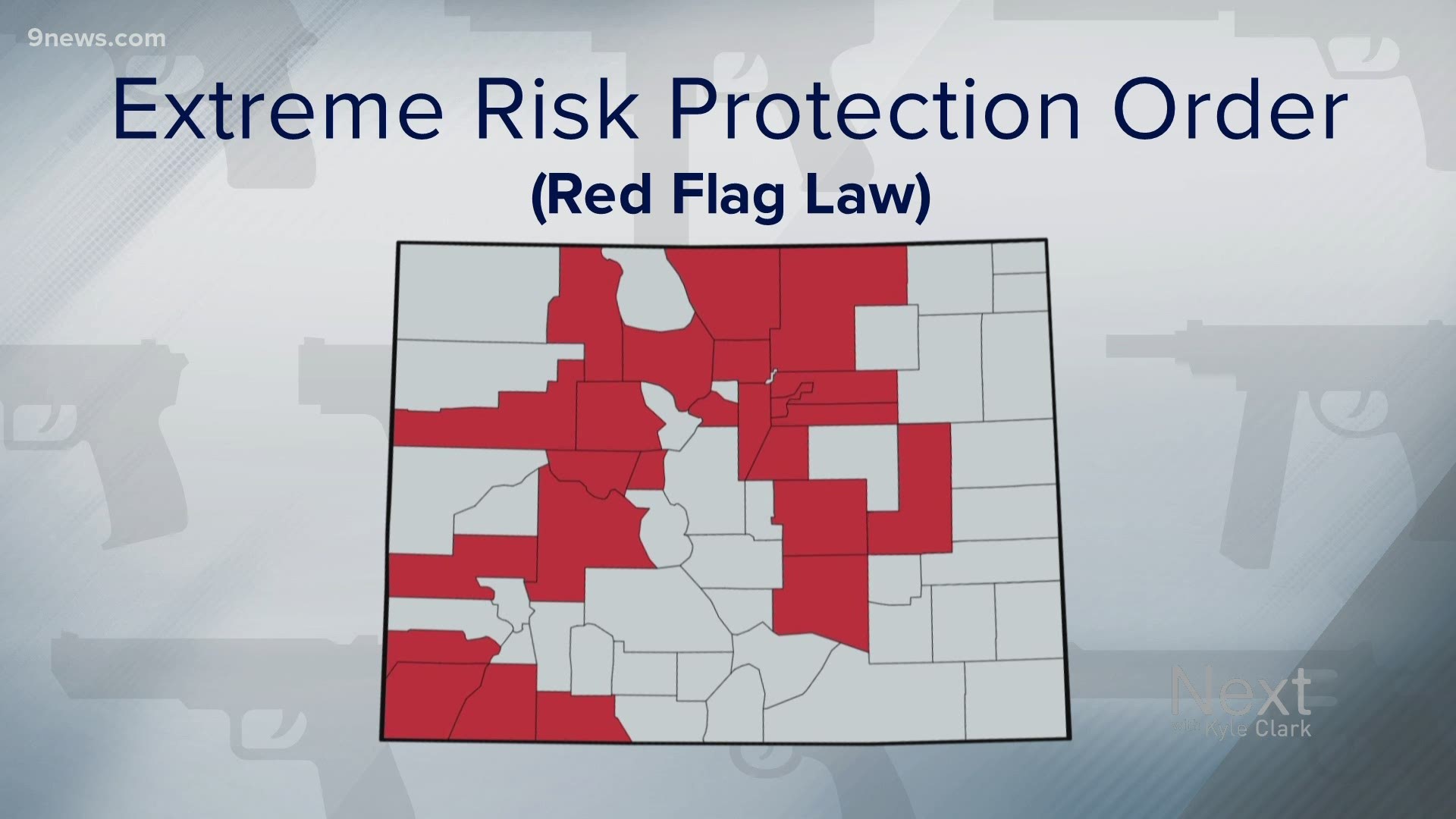
3. Extreme Risk Protection Orders (Red Flag Law)
Colorado enacted its initial Extreme Risk Protection Order (ERPO) statute in 2019, allowing family members or law enforcement officers to petition a civil court to temporarily remove firearms from individuals who pose an imminent danger to themselves or others. In 2023, Senate Bill 23-170 significantly expanded the list of eligible petitioners to include:
- Licensed healthcare providers
- Mental health professionals
- Educators and school district staff
- District attorneys and city attorneys
If granted, a temporary order lasts up to 14 days, followed by a formal hearing where a judge can extend the firearm surrender requirement for up to 364 days.
4. High-Capacity Magazine Restrictions
Since 2013, Colorado statute has prohibited the sale, transfer, or manufacture of ammunition feeding devices capable of holding more than 15 rounds. While the law "grandfathered" magazines legally possessed before July 1, 2013, continuous possession is technically required to maintain legal status. Enforcement has often varied across counties, but state courts have repeatedly upheld the statute under the Colorado Constitution.
Video: New laws go into effect in Colorado including a gun restriction that some claim is unconstitutional
Recent Legislative Expansions and 2023–2024 Updates

Recent legislative sessions have introduced some of the most far-reaching measures in state history, targeting emerging technology and commercial liability.
Prohibition of "Ghost Guns"
Senate Bill 23-279 banned the manufacture, possession, sale, and transport of unserialized firearms and unfinished frames or receivers (commonly known as ghost guns). Anyone possessing an unfinished frame or 3D-printed receiver was required to have it serialized and registered through an FFL dealer by early 2024. The law strictly outlaws DIY gun kits that circumvent background checks.
Repeal of Firearm Manufacturer Immunity
With Senate Bill 23-168, Colorado repealed state-level protections that shielded firearm and ammunition manufacturers and dealers from civil liability. The law establishes a statutory "code of conduct" requiring industry members to exercise reasonable controls to prevent their products from being sold to straw purchasers, traffickers, or individuals who pose an imminent risk. As a result, victims of gun violence can now bring civil suits against firearms businesses in state courts for negligence or unlawful marketing practices.
Minimum Purchase Age and Judicial Scrutiny
Lawmakers passed Senate Bill 23-169 to raise the minimum age to purchase any firearm in Colorado from 18 to 21. However, this statute faced immediate challenges in federal court under the framework established by the U.S. Supreme Court’s Bruen decision. Enforcement was temporarily blocked by a federal judge, illustrating the ongoing tension between Colorado's legislative intent and federal judicial review.
Local Control vs. State Preemption
For decades, Colorado maintained strong state preemption laws, which barred cities and counties from enacting local gun restrictions stricter than state law. In 2021, Senate Bill 21-256 repealed that long-standing preemption doctrine.
Today, municipalities and counties have the legal authority to enact local ordinances that are more restrictive than state statutes. This shift has created a jurisdictional patchwork across the state:
- Boulder, Louisville, and Superior: Have enacted local bans on certain semi-automatic firearms (often classified as assault weapons), rapid-fire trigger activators, and open carry in public spaces.
- Denver: Has maintained and enforced local ordinances banning open carry and prohibiting firearms in city parks, public buildings, and permitted events.
- Rural and Conservative Counties: In contrast, several rural jurisdictions declared themselves "Second Amendment Sanctuaries," passing symbolic or administrative resolutions resisting state-level firearm regulations.
Concealed Carry and Open Carry Regulations
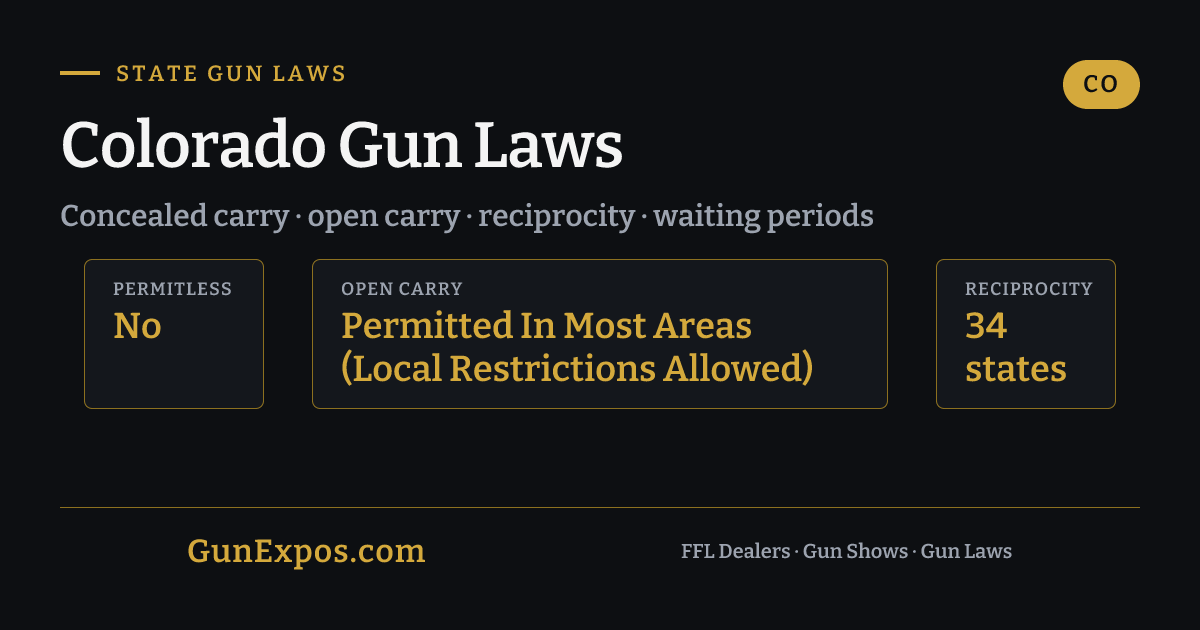
Colorado operates on a shall-issue basis for Concealed Handgun Permits (CHP). County sheriffs must issue a permit to an applicant who meets statutory criteria, which includes being at least 21 years old, passing a background check, and providing proof of firearms competence through an approved training course. Recent statutory changes have tightened these training requirements, mandating in-person instruction and live-fire range qualifications.
Open carry is legally permitted under state law without a license for individuals 18 and older, provided they are not legally disqualified from firearm ownership. However, because local preemption was repealed, local governments can outlaw open carry within their boundaries. Denver has prohibited open carry for decades, and other jurisdictions have followed suit in government buildings, polling places, and designated public facilities.
Looking Ahead: Ongoing Legal Battles
Colorado’s stance on gun control laws remains dynamic and heavily contested. While the Democratic-led General Assembly continues to explore further interventions—such as broader bans on assault weapons, secure storage mandates, and enhanced permitting requirements—federal courts remain a significant hurdle. Gun-rights organizations frequently challenge new statutes under the Second Amendment, creating ongoing legal battles over the constitutionality of magazine caps, age limits, and local restrictions.
For firearm owners, hunters, and residents, staying compliant requires tracking both state statutory revisions and local municipal codes, as Colorado’s regulatory framework continues to evolve rapidly.