Conversion Between Pounds and Kg: Simple Guide & Formula
Navigating different weight measurements can be frustrating, especially when you are following an international recipe, tracking your fitness progress, or shipping a package abroad. The need for a quick conversion between pounds and kg comes up more often than you might think. While the United States and a few other countries rely heavily on the imperial system (pounds and ounces), the vast majority of the world uses the metric system (kilograms and grams).

Fortunately, converting weight from one system to the other does not require a degree in mathematics. Once you understand the basic conversion factor and a few handy estimation tricks, you can easily switch between the two units in seconds.
The Exact Formula for Conversion Between Pounds and Kg
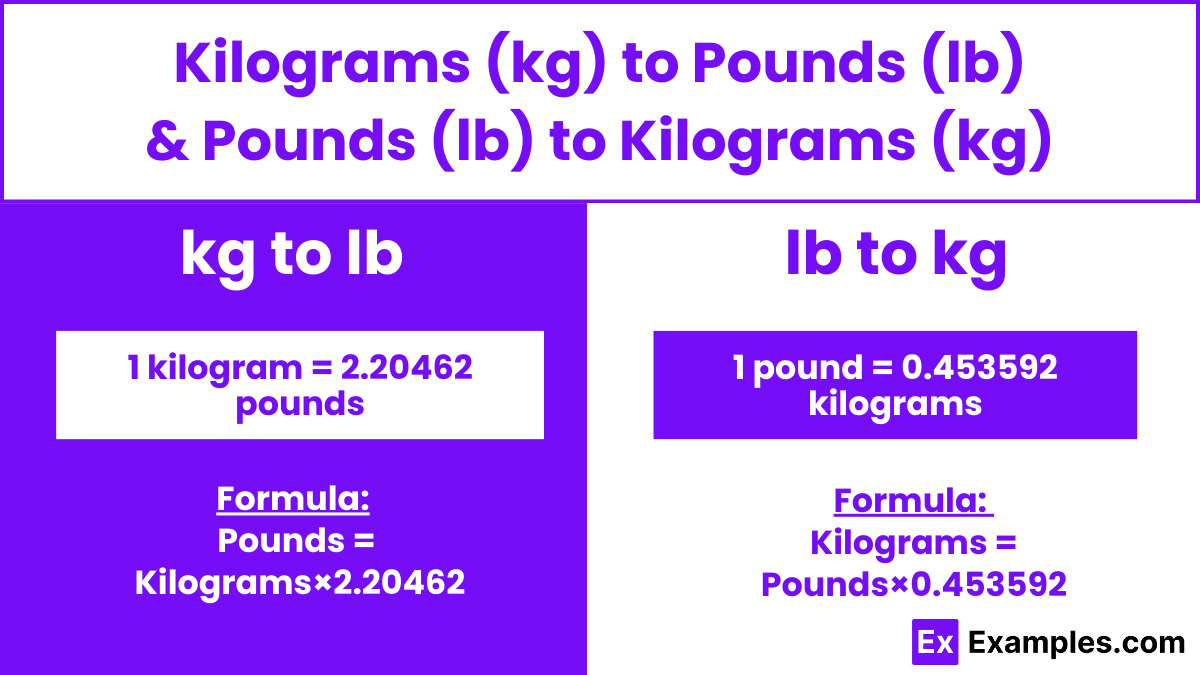
To convert accurately, you need to know the exact mathematical relationship between a pound and a kilogram. The international standard definition establishes that:
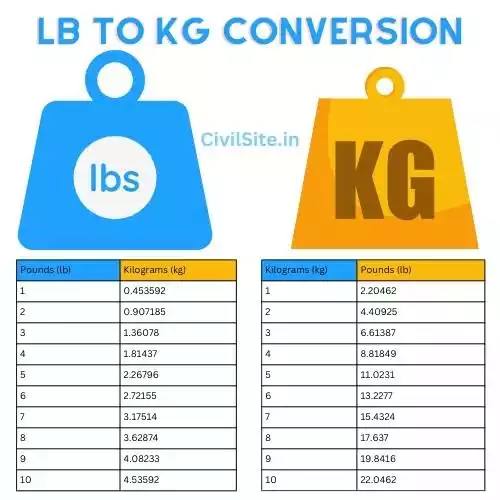
- 1 pound (lb) is exactly equal to 0.45359237 kilograms (kg).
- 1 kilogram (kg) is approximately equal to 2.20462 pounds (lb).
Because these long decimal numbers are difficult to remember and calculate on the fly, most people round them up or down depending on the level of precision they need. For everyday use, multiplying pounds by 0.45 gives you kilograms, while multiplying kilograms by 2.2 gives you pounds.
How to Convert Pounds to Kilograms (lbs to kg)
If you have a weight in pounds and want to find out what it is in kilograms, you need to divide the number by 2.2046 (or simply multiply it by 0.4536).
Example: You want to convert 150 pounds into kilograms.
- Take your weight in pounds: 150
- Multiply by 0.4536 (or divide by 2.2046)
- 150 ÷ 2.2046 = 68.038 kg
How to Convert Kilograms to Pounds (kg to lbs)
Going the opposite direction is just as straightforward. To change kilograms into pounds, you multiply your metric weight by 2.2046.
Example: You want to convert 75 kilograms into pounds.
- Take your weight in kilograms: 75
- Multiply by 2.2046
- 75 × 2.2046 = 165.346 lbs
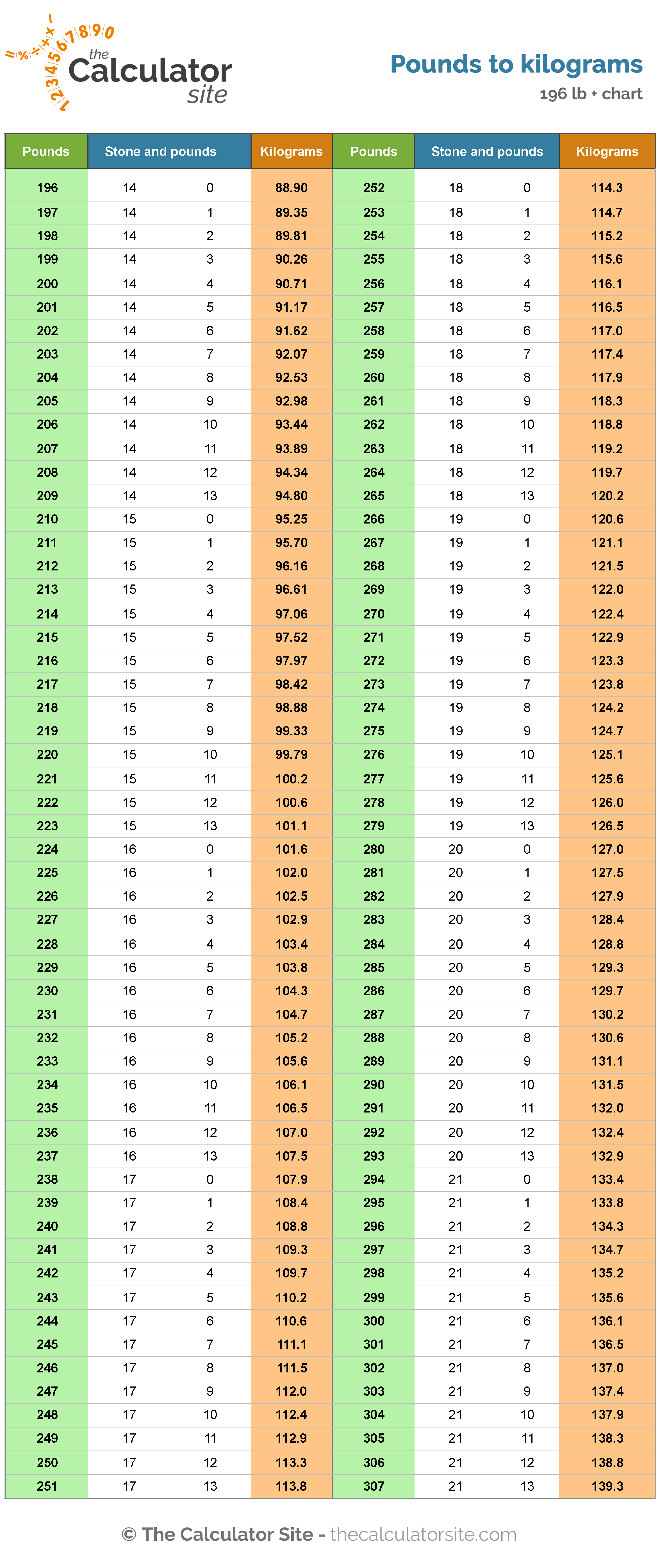
Quick Reference Conversion Table
Video: What Is the Difference Between Pounds & Kilograms? : Measurement Conversions
When you are in a rush, looking at a pre-calculated chart is much faster than doing the math. Use the following reference table for common body weights, luggage sizes, and everyday items.
- 10 lbs = 4.5 kg | 5 kg = 11.0 lbs
- 25 lbs = 11.3 kg | 10 kg = 22.0 lbs
- 50 lbs = 22.7 kg | 20 kg = 44.1 lbs
- 100 lbs = 45.4 kg | 50 kg = 110.2 lbs
- 150 lbs = 68.0 kg | 75 kg = 165.3 lbs
- 200 lbs = 90.7 kg | 100 kg = 220.5 lbs
Mental Math Tricks for Fast Estimations
You will not always have a calculator or smartphone handy. When you need a rough estimate on the spot, these mental shortcuts will save the day.
The Halving and Subtracting Trick (lbs to kg)
If you need to convert pounds to kilograms quickly in your head, try this clever approximation:
- Divide the pound value in half.
- Subtract 10% of that halved number from itself.
Let's test it with 160 lbs:
Half of 160 is 80. 10% of 80 is 8. Subtracting 8 from 80 gives you 72 kg. (The exact mathematical conversion is 72.57 kg, meaning your mental estimate is impressively close and more than accurate enough for daily life!)
The Double and Add Trick (kg to lbs)
To estimate kilograms in pounds without a calculator:
- Double the kilogram value.
- Add 10% of that doubled number back to the total.
Let's test it with 60 kg:
Double 60 is 120. 10% of 120 is 12. Add 12 to 120 to get 132 lbs. (The exact answer is 132.27 lbs.)
Common Uses for Weight Conversion
Understanding how to move back and forth between these two units is helpful in several common scenarios:
- Travel and Luggage: Airlines have strict weight limits for checked bags, often measured in kilograms internationally and pounds domestically. Knowing your bag's weight in both units prevents unexpected airport fees.
- Fitness and Health: Whether you are tracking weight loss goals or loading weight plates onto a barbell at the gym, fitness equipment and apps often mix metric and imperial units.
- Cooking and Baking: Professional pastry chefs often use grams and kilograms for precision baking, while home cooks in the US rely on pounds and ounces. Converting weights correctly ensures your recipes turn out perfectly.
By keeping the core multiplier of 2.2 in mind, you will never be caught off guard by a weight measurement again. Bookmark this guide for your next international recipe or travel adventure!