Create a Fraction Comparison Checklist Now
Fractions often cause frustration for students and adults alike. Whether you are helping a child with homework, baking a recipe, or studying for a standardized test, comparing fractions can feel confusing. Which is larger: 5/8 or 7/12? Without a reliable method, guessing leads to mistakes. That is why you need to create a fraction comparison checklist now to streamline your math workflow and guarantee accurate results every time.

By breaking down the process into clear, manageable steps, you eliminate guesswork. This guide walks you through the core methods of comparing fractions—from finding common denominators to cross-multiplication and converting to decimals—so you can build your own foolproof reference sheet.
Understanding Fraction Basics
Before jumping into the comparison steps, it helps to remember what a fraction represents. A fraction consists of a numerator (the top number) and a denominator (the bottom number). The denominator tells you how many equal parts make up a whole, while the numerator tells you how many of those parts you have.
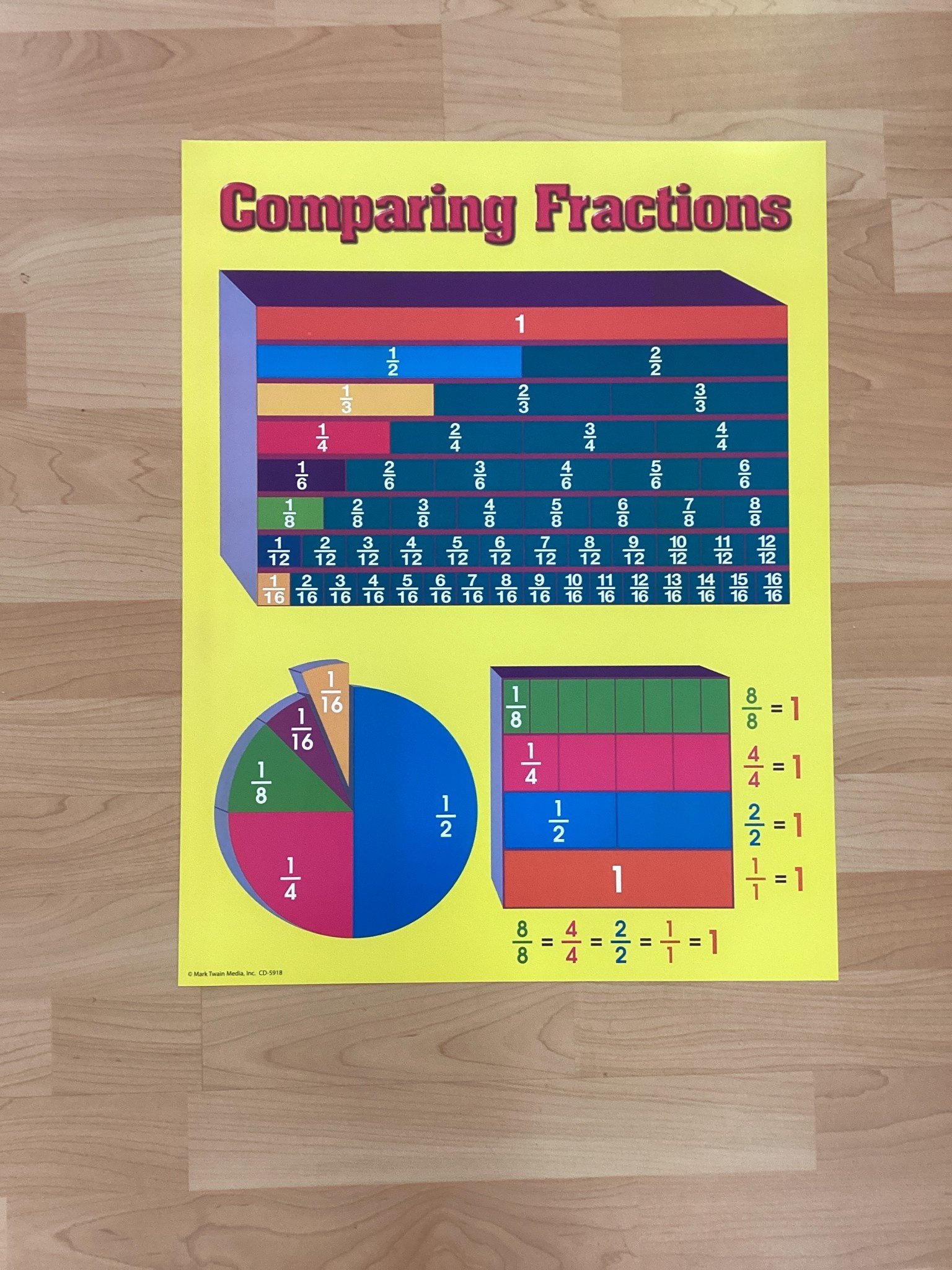
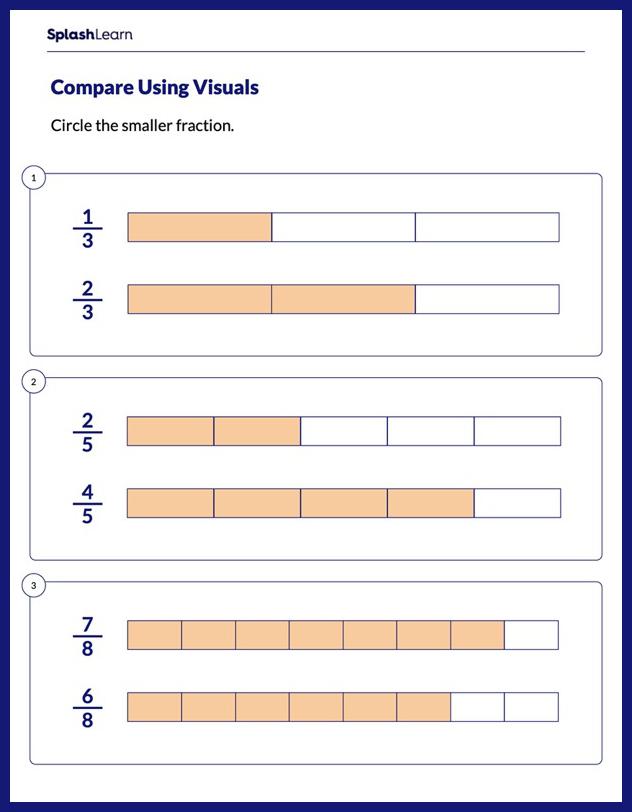
Visualizing fractions can prevent silly errors. For instance, a larger denominator means smaller individual pieces (like slicing a pizza into 12 slices versus 8). Keeping this mental model active helps you estimate whether your calculated answers make logical sense.
Your Step-by-Step Fraction Comparison Checklist Now
When faced with two or more fractions to compare, follow this structured checklist to determine which is greater, lesser, or if they are equal.
Step 1: Check for Like Denominators
Always look at the bottom numbers first. If the denominators are already the same, your job is incredibly easy.
- Look at the numerators.
- The fraction with the larger numerator is the greater fraction.
Example: Compare 3/7 and 5/7. Since 7 is the same for both, compare 3 and 5. Because 5 is larger, 5/7 is greater than 3/7.
Step 2: Check for Like Numerators
Sometimes the top numbers match instead. You can use a quick mental shortcut for this scenario.
- Look at the denominators.
- Remember: smaller denominator equals larger pieces, meaning the overall fraction is larger.
Example: Compare 4/9 and 4/11. Both numerators are 4. Since 9 is smaller than 11, the pieces of ninths are bigger than elevenths. Therefore, 4/9 is greater than 4/11.
Step 3: Find a Common Denominator
If neither the numerators nor the denominators match, you must find a common denominator. The easiest way is usually to find the Least Common Multiple (LCM) of both denominators.
- List the multiples of each denominator until you find the smallest number they share.
- Multiply the numerator and denominator of each fraction by the necessary factor to reach that common denominator.
- Compare the new numerators.
Example: Compare 2/3 and 3/4. The denominators are 3 and 4. The least common multiple is 12. Convert 2/3 by multiplying top and bottom by 4, giving you 8/12. Convert 3/4 by multiplying top and bottom by 3, giving you 9/12. Comparing 8/12 and 9/12 reveals that 3/4 is the larger fraction.
Step 4: Use the Cross-Multiplication Shortcut
If you are in a rush—such as during a timed math test—cross-multiplication is a fast and reliable method for comparing two fractions.
- Write the two fractions side by side (e.g., A/B and C/D).
- Multiply the numerator of the first fraction by the denominator of the second fraction (A × D). Write this product above the first fraction.
- Multiply the numerator of the second fraction by the denominator of the first fraction (B × C). Write this product above the second fraction.
- Compare the two resulting products. The fraction sitting below the larger product is the larger fraction.
Example: Compare 3/5 and 4/7. Multiply 3 × 7 = 21 (goes above 3/5). Multiply 4 × 5 = 20 (goes above 4/7). Since 21 is greater than 20, 3/5 is the larger fraction.
Step 5: Convert to Decimals or Percentages
If you prefer working with base-ten numbers, converting fractions to decimals is a foolproof fallback method.
- Divide the numerator by the denominator using long division or a calculator.
- Compare the resulting decimal values.
Example: Compare 3/8 and 0.4. Convert 3/8 by dividing 3 by 8, which equals 0.375. Compare 0.375 to 0.4 (or 0.400). Since 0.4 is larger, it is the greater value.
Tips for Building Your Permanent Reference Sheet
Now that you know the mechanics, put everything onto a physical or digital card. When you write down your reference guide, keep these best practices in mind:
- Keep it concise: Use bullet points instead of long paragraphs.
- Include color coding: Use one color for numerators and another for denominators to make steps pop visually.
- Add a practice problem: Put one example of cross-multiplication and one example of common denominators right on the card for instant reminders.
Conclusion
Comparing fractions does not have to be an intimidating guessing game. By understanding the underlying values and following a systematic routine, you can solve any fraction problem accurately. Take a moment to write down these steps and create a fraction comparison checklist now to build long-term math confidence and accuracy.