Dahmer’s Polaroid Photos: 7 Facts You Didn't Know
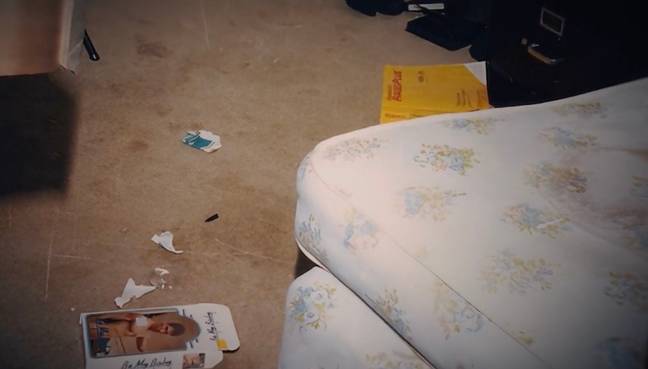
On the night of July 22, 1991, Milwaukee police officers entered Apartment 213 at 924 North 25th Street after Tracy Edwards escaped handcuffed and flagged them down. What officers expected to be a routine dispute call quickly collapsed into one of the most horrifying forensic discoveries in American criminal history. At the center of that discovery was an open bedside drawer containing a stack of instant photographs. Below are 7 things you didn't know about Dahmer's Polaroid crime scene photos, examining their evidentiary role, psychological origins, and legal aftermath.

1. The Polaroids Triggered the Arrest Before the Human Remains Were Found
Pop culture retellings often suggest that police arrested Jeffrey Dahmer after immediately smelling decomposing remains or stumbling across human skulls. In reality, the photographs were the sole catalyst for his immediate restraint.
When Officers Rolf Mueller and Robert Rauth accompanied Edwards back to the apartment to retrieve his personal belongings, Dahmer was calm and cooperative. Edwards pointed to a bedroom dresser where Dahmer allegedly kept the knife used to threaten him. Officer Mueller opened the drawer looking for a weapon and instead found a stack of uncensored Polaroid pictures depicting dismembered human torsos, posed body parts, and victims in various stages of mutilation.
Mueller walked into the living room, showed the snapshots to Rauth, and whispered, “These are for real.” A violent struggle ensued before Dahmer was pinned to the floor and handcuffed. It was only after securing him that investigators searched the refrigerator, freezer, and 57-gallon drum, uncovering the biological remains.
2. Instant Film Was Chosen Entirely to Evade Commercial Developers
In the late 1980s and early 1990s, standard 35mm cameras required film rolls to be developed at commercial photo labs, pharmacies, or grocery stores. Photo technicians were legally obligated to report suspected child abuse, homicides, or illegal acts to law enforcement—a safeguard that had caught several criminals in decades prior.
Dahmer understood this risk and deliberately purchased a Polaroid 600-series camera. Instant film allowed self-developing prints within minutes, entirely bypassing commercial processing. This technical barrier allowed Dahmer to document his atrocities in complete privacy for years without raising external suspicion.
3. The Photos Served as Surrogate Memories, Not Just Souvenirs
Criminologists and forensic psychologists distinguish between different types of criminal trophies. For Dahmer, the Polaroid images served a specific clinical function related to his psychological deterioration and severe isolation.
During his comprehensive interviews with Milwaukee Detective Patrick Kennedy, Dahmer explained that he lacked the ability to vividly recall visual details over time. The photographs served as visual memory aids. When he was not killing, he would lay the pictures out to relive the sensory sensations of control, possession, and arousal.
Dr. Park Dietz, the renowned forensic psychiatrist who evaluated Dahmer before his trial, noted that the photographs were also intended to feature in Dahmer’s planned “altar.” Dahmer intended to construct an installation of painted human skulls and skeletons in his living room, with the Polaroid images arranged around them as aesthetic centerpieces to satisfy his compulsion for complete domination.
4. A Total of 74 to 84 Photographs Were Cataloged as Evidence
While public discussion often treats the collection as a monolithic set, police inventory logs documented between 74 and 84 individual Polaroid photographs in Apartment 213. The varying counts in public records stem from the categorization of prints versus test shots and duplicates.
The images were systematically sorted into stages:

- Intact victims: Several photographs depicted victims shortly after being drugged with halcion or chloral hydrate, posed on Dahmer's bed while unconscious or immediately post-mortem.
- Surgical dismemberment: Step-by-step documentation of bodies being divided in his bathtub.
- Skeletal staging: Highlighting skulls, ribcages, and visceral organs displayed on tables or inside containers.
Because Dahmer meticulously framed these shots, investigators noted that the photographs read like a chilling procedural manual of his killings between 1989 and 1991.
5. 7 Things You Didn't Know About Dahmer's Polaroid Crime Scene Photos: The Crucial Identification Tool
Dahmer went to extraordinary lengths to destroy biological evidence. He dissolved flesh in concentrated acid, pulverized bones into powder, and boiled skulls in Soilex to strip away soft tissue. Consequently, several victims had no viable fingerprints, dental records, or identifiable remains left for the medical examiner.
Without the Polaroid photographs, identifying several of the missing young men would have been forensically impossible with the technology of 1991. Forensic pathologists used the photos to match unique identifying markers against missing persons reports, including:
- Distinctive tattoos, birthmarks, and scars visible on intact skin.
- Recognizable facial features taken immediately after death before decomposition or skeletal stripping occurred.
- Jewelry, wristbands, or clothing worn by victims when they entered the apartment.
The Milwaukee County Medical Examiner’s Office relied directly on these images to bring definitive legal closure to families who otherwise would never have confirmed their loved ones' fates.
6. The Original Prints Are Legally Sealed and Strictly Controlled
In an era dominated by digital leaks, true crime enthusiasts frequently question why the original evidentiary archive is not accessible via standard Freedom of Information Act (FOIA) requests. The physical photographs remain sealed under protective court orders.
During the 1992 trial, the prosecution—led by District Attorney E. Michael McCann—exercised strict control over the images to protect the dignity of the victims and their surviving families. The photographs were exhibited to the jury, the judge, and the defense team, but camera crews inside Courtroom 470 were barred from broadcasting them.
Following Dahmer's conviction and subsequent death in 1994, the photographic evidence was preserved in secure, restricted-access municipal and state archives. Unofficial scans and unauthorized leaks that occasionally surface on shock sites represent low-resolution reproductions from investigative leaks, not legal public releases.
7. The Visual Trauma Altered Police Interrogation and Support Protocols
The visual horror preserved on those Polaroid prints had a profound, lasting impact on the law enforcement officers who handled the case. First responding officers, evidence technicians, and interrogators faced intense psychological distress from the exposure.
Detective Patrick Kennedy, who spent weeks building rapport with Dahmer and reviewing the physical evidence daily, spoke candidly throughout his later life about the recurring nightmares and secondary trauma caused by analyzing the photographs. The Dahmer case became a prominent case study in the 1990s for law enforcement mental health programs, helping accelerate the implementation of mandatory debriefings and psychological support for first responders exposed to graphic crime scenes.
The Evidentiary Legacy of Apartment 213
Jeffrey Dahmer’s Polaroids remain among the most horrific evidentiary artifacts in modern legal history. Far from mere morbid artifacts, they were the decisive link that secured his capture, provided undeniable proof of guilt in court, and allowed forensic specialists to return names to victims who were nearly erased. Understanding the forensic reality behind these photographs strips away sensationalism and highlights the meticulous work required to bring justice to one of history's darkest criminal cases.