Dale Earnhardt Fatal Crash Car Conspiracy Theories
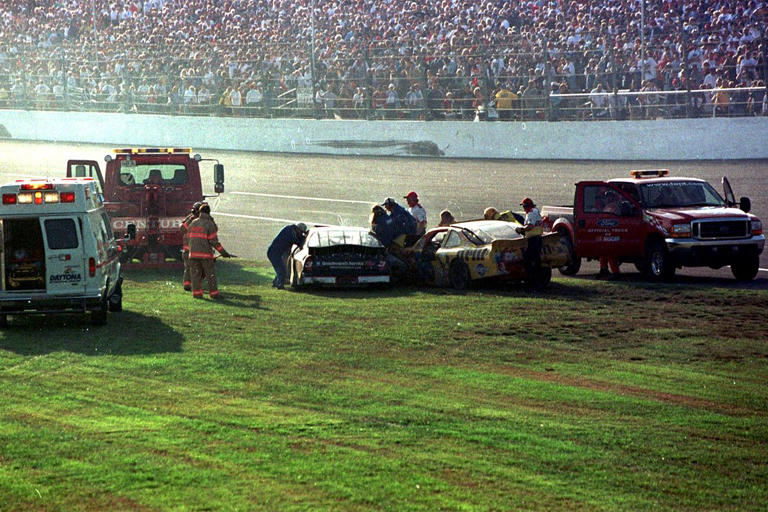
On February 18, 2001, the sports world suffered one of its darkest days when NASCAR legend Dale Earnhardt crashed on the final lap of the Daytona 500. The iconic black No. 3 Chevrolet collided with the retaining wall in Turn 4, resulting in a fatal basilar skull fracture. While official investigations by safety experts, biomechanical engineers, and law enforcement provided clear answers, the mythology surrounding the Dale Earnhardt fatal crash car persists. Decades later, a subset of fans and internet sleuths continue to debate what really happened on that fateful afternoon.

The Official Findings: What Led to the Tragedy?
To understand why conspiracy theories took root, it is essential to look at the official conclusions drawn by NASCAR, independent crash investigators, and the Florida Department of Law Enforcement. The primary mechanical failure identified was not a structural defect of the car itself, but rather a failure of safety equipment.
The Broken Seatbelt Controversy
One of the earliest and most contentious points of discussion involved Earnhardt's lap belt. During the impact, the lap belt webbing snapped. This allowed Earnhardt's body to lurch forward violently, contributing to the fatal head trauma upon impact with the steering wheel.
Initially, rumors suggested that the belt had been intentionally cut or improperly installed to give Earnhardt's tall frame more comfort in the cockpit. However, extensive metallurgical and forensic testing proved otherwise:
- The belt was severely worn from improper mounting angles that caused it to rub against the metal frame of the seat.
- During the crash forces, the webbing frayed against a sharp edge of the seat bracket before finally severing.
- NASCAR subsequently overhauled its seatbelt standards, mandating higher-grade materials and stricter mounting guidelines.
Examining the Dale Earnhardt Fatal Crash Car Theories
Despite conclusive scientific evidence, the sudden death of arguably NASCAR's biggest star created an information vacuum. For many devoted fans, it was difficult to accept that an accident of that apparent angle and speed could be fatal. This disbelief fueled several persistent conspiracy theories regarding the Dale Earnhardt fatal crash car.
Theory 1: The Broken Seatbelt Was Sabotaged
Because safety restraints rarely fail completely in professional racing, the broken belt became the centerpiece of foul-play theories. Detractors claimed that saboteurs—either rival teams or even internal NASCAR actors—compromised the belt. However, independent investigators and forensic experts from NASA and the University of Nebraska-Lincoln analyzed the fibers under electron microscopes. They confirmed the failure was due to mechanical friction and stress overload, not human tampering.
Video: Dale Earnhardt's fatal crash @ Daytona

Theory 2: Earnhardt Was Already Dead Upon Impact
Another grim rumor suggests that Earnhardt died instantly from a heart attack or an internal medical event *before* his car ever hit the wall, implying that the crash itself was secondary. This theory often stems from grainy television footage showing his head slumping over quickly. Medical examiners thoroughly debunked this myth during the autopsy, which confirmed that death was caused by massive, instantaneous blunt-force trauma to the head resulting from the collision, with no pre-existing medical event contributing to the crash.
Theory 3: The Intiated Cover-Up of the Black No. 3
Some conspiracy theorists believe that NASCAR mishandled the impounded vehicle to hide evidence of structural flaws or external contact. Earnhardt's car was indeed scrutinized heavily, but NASCAR allowed independent media, safety consultants, and law enforcement access to the wreckage. The vehicle was eventually released to the Earnhardt family, who chose to keep its final resting place private to prevent morbid tourism and preserve the driver's dignity.
The Real Legacy: How the Crash Changed Racing Safety
While the conspiracy theories surrounding the Dale Earnhardt fatal crash car make for dramatic internet lore, the true legacy of the accident is profoundly positive. Earnhardt's death served as a harsh wake-up call for a sport that had long prioritized speed over advanced driver protection.
In the wake of the tragedy, NASCAR instituted sweeping safety mandates that transformed the sport:
- Mandatory HANS Device: The Head and Neck Support system, which prevents the exact type of basilar skull fracture that killed Earnhardt, became compulsory later that season. No driver in NASCAR's top national series has suffered a fatal basilar skull fracture since.
- SAFER Barriers: Steel and Foam Energy Reduction walls were rapidly deployed across tracks to absorb kinetic energy during high-speed impacts.
- Car Design Evolution: The introduction of the Car of Tomorrow (CoT) and subsequent Next Gen cars placed drivers further away from the outer walls and built crumple zones directly into stock car racing.
Conclusion
The Dale Earnhardt fatal crash car remains an enduring symbol in automotive racing history. While conspiracy theories will likely continue to circulate in online forums and fan circles, the thorough investigations left little room for genuine mystery. The tragedy was not the result of a dark plot, but rather a tragic combination of physics, equipment limitations, and a lack of modern safety technology. Ultimately, the hard lessons learned from that day at Daytona saved countless lives in the decades that followed.