Davidson County Criminal Court Clerk: Fixing Nashville
When residents think of the criminal justice system in Middle Tennessee, their minds usually go to police officers, prosecutors, defense attorneys, and judges. However, the administrative engine that keeps the machinery moving is often overlooked: the court clerk. In Music City, the operations of the Davidson County Criminal Court Clerk play a pivotal role in determining whether justice is delivered swiftly or bogged down by bureaucratic delays. In recent years, public scrutiny has intensified, leading many community leaders, legal professionals, and taxpayers to ask a pressing question: Can Nashville's justice system be saved?

The Role of the Davidson County Criminal Court Clerk
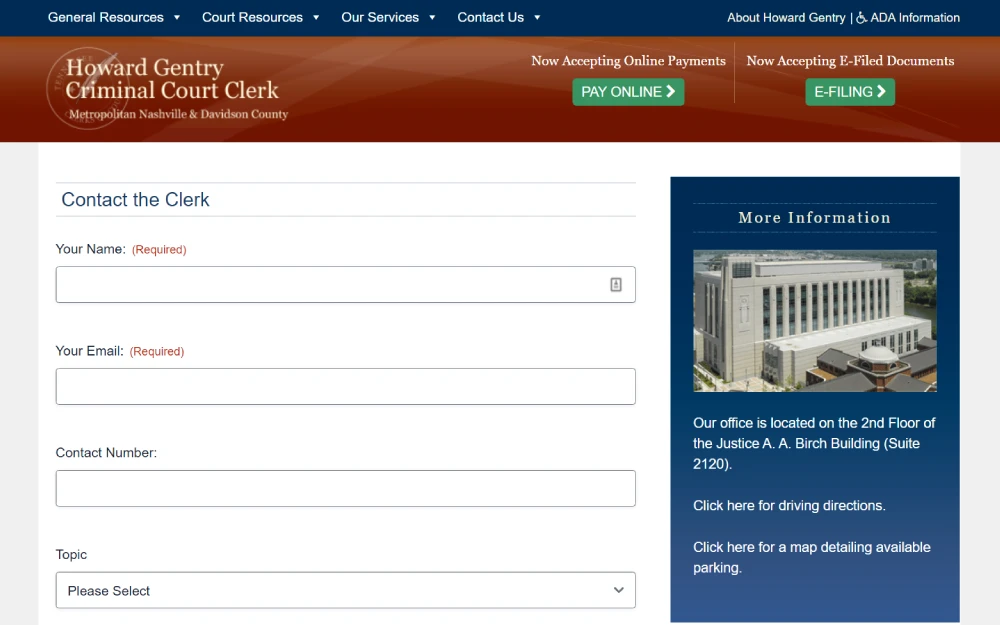
To understand the current state of reform efforts, it is necessary to examine what this office actually does. The Criminal Court Clerk is an elected official responsible for managing all records, documents, and financial transactions associated with the Davidson County Criminal Court and General Sessions Criminal Court. This includes:
- Processing warrants, indictments, and subpoenas.
- Managing court dockets and scheduling hearings.
- Collecting fines, court costs, and restitution fees.
- Maintaining accurate, accessible public records for ongoing and historical cases.
When this office functions smoothly, trials happen on time, defendants have timely access to discovery materials, and victims receive restitution payments promptly. When it stumbles, the entire judicial process grinds to a frustrating and costly halt.
Systemic Challenges Facing Nashville Courts
Nashville's explosive population growth over the last two decades has placed unprecedented strain on local infrastructure. Unfortunately, the judicial administration has sometimes struggled to keep pace with the sheer volume of cases flowing through the downtown courthouse.
Technology and Modernization Gaps
One of the most frequent criticisms leveled against the court clerk's office involves technological modernization. For years, local attorneys and journalists have pointed to antiquated case management systems that make digital filing cumbersome and public record searches unnecessarily difficult. In an era where citizens expect real-time access to public data via mobile devices, outdated software creates bottlenecks. While transitions to newer digital platforms have been initiated, implementation hiccups have occasionally worsened delays rather than curing them.
Backlogs and Case Processing Delays
Case backlogs are not unique to Nashville, but they carry severe human and financial consequences. When trials are delayed for months or years:
- Defendants awaiting trial remain incarcerated in the Davidson County Detention Facility at taxpayer expense, often before being proven guilty.
- Victims and witnesses experience prolonged emotional distress, waiting indefinitely for closure.
- Evidence can degrade, and key witnesses may become unavailable, undermining the integrity of trials.
The court clerk's office shares the responsibility of mitigating these backlogs through efficient docket management and rapid processing of court orders.
Video: Criminal justice reform advocates challenge Davidson County bail bond rule

Pathways to Reform: Can the System Be Saved?
Despite significant hurdles, optimism remains. Fixing Nashville's justice system is entirely possible, but it requires deliberate strategy, sustained funding, and transparent leadership. Several key initiatives are currently shaping the future of the office.
Embracing Transparent Leadership and Accountability
Voters and local watchdogs are demanding greater accountability from elected officials. Modernizing the clerk's office goes beyond buying new computers; it requires a cultural shift toward customer service, transparency, and data-driven management. Publishing regular performance metrics—such as average time-to-trial, warrant processing speeds, and budget utilization—allows the public to hold leadership accountable.
Investing in Staff Retention and Training
Administrative burnout is a silent killer of government efficiency. High turnover among clerk deputies leads to institutional brain drain and processing errors. Offering competitive wages, comprehensive training programs, and manageable workloads ensures that experienced personnel remain on the job, directly improving the accuracy and speed of court filings.
Inter-Agency Collaboration
No single office can fix the justice system in isolation. The Criminal Court Clerk must work hand-in-hand with:
- The District Attorney's Office
- The Public Defender's Office
- Local Trial Judges
- The Metro Nashville Council (which controls budgetary allocations)
When these entities communicate effectively and share integrated digital systems, redundant data entry is eliminated, accelerating the path from arrest to resolution.
Conclusion
Nashville is a booming, progressive metropolis, yet its local legal infrastructure has often felt trapped in the past. The challenges facing the Davidson County Criminal Court Clerk are real, complex, and deeply entrenched. However, they are not insurmountable. With targeted investments in modern technology, a commitment to operational transparency, and collaborative leadership across county agencies, Nashville can build a streamlined, fair, and efficient justice system that serves all of its residents equitably.