Debunking Colorado Springs Death Records Access Myths
When closing an estate, filing for life insurance benefits, or assembling a family tree, acquiring official vital documentation is often an urgent task. Yet, many people run into unexpected roadblocks because they assume vital statistics work the same way in every state. When it comes to debunking common myths about Colorado Springs death records access, the most critical lesson is that Colorado operates under strict privacy protections that distinguish it from open-record states.
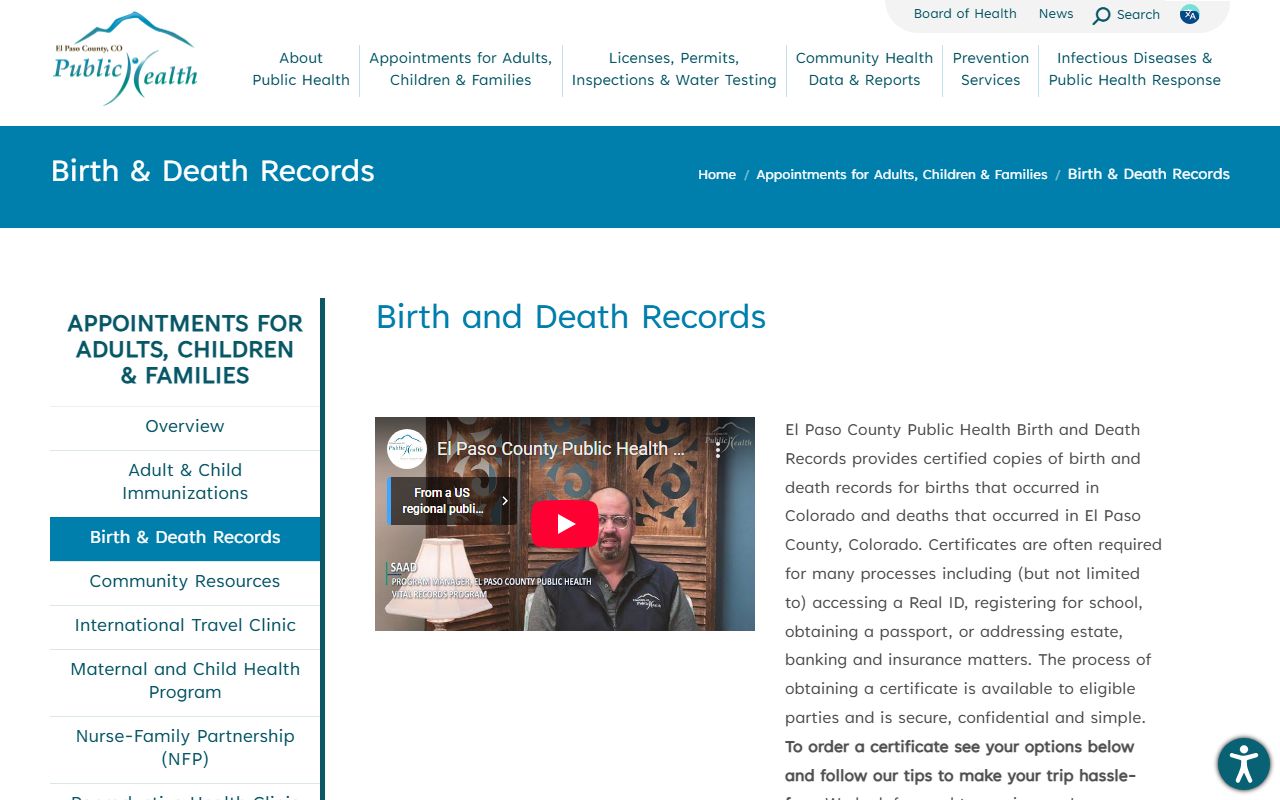
Death records for individuals who passed away within Colorado Springs or anywhere in El Paso County are managed by the El Paso County Public Health Vital Records Department and the Colorado Department of Public Health and Environment (CDPHE). Misunderstandings about state statutes, access tiers, and processing requirements can cost families valuable time and unnecessary administrative expense. Below, we examine the most common misconceptions and clarify the legal realities.
Myth 1: Anyone Can Request a Death Certificate in Colorado Springs
The single most pervasive myth is that death certificates are matter-of-record documents available to anyone with an internet connection or the curiosity to look. In several states, vital statistics are largely open to the public. Colorado, however, is definitively a closed-records state under Colorado Revised Statutes (C.R.S.) § 25-2-117.
To obtain a certified death certificate in Colorado Springs, an applicant must demonstrate what the law terms a “direct and tangible interest.” This restriction protects surviving family members from identity theft and unauthorized financial exploitation. Legally eligible applicants include:
- Immediate family members: Surviving spouses or civil union partners, parents, adult children, siblings, grandparents, and grandchildren.
- Legal representatives: Attorneys, personal representatives, or estate executors with court-issued Letters of Administration or Letters Testamentary.
- Financial entities: Creditors, insurance companies, or beneficiaries who can provide a verified contract, policy, or claim establishing an active legal need.
- Funeral directors: Acting on behalf of the deceased family within established statutory windows.
Neighbors, acquaintances, distant relatives (such as cousins, aunts, or uncles without direct legal standing), and curious members of the public cannot simply purchase or inspect these records.
Myth 2: Private Lookup Websites Provide Official Certified Copies
When searching online for records in El Paso County, search engines frequently display sponsored results for background check platforms and public data aggregators. Many consumers pay $30 to $60 to these third-party platforms assuming they will receive an official document suitable for probate or insurance claims.
Private data aggregators do not issue certified vital records. At best, they provide unverified index summaries, transcribed obituary information, or Social Security Death Index (SSDI) snapshots. These printouts carry no legal weight. Courts, banks, the Social Security Administration, and life insurance carriers require an official certified certificate issued on security paper featuring the embossed or raised seal of the State of Colorado or El Paso County Public Health.
Official records can only be obtained directly through the local health department, the state vital records office, or authorized state vendors like VitalChek.
Myth 3: The Cause of Death Is Kept Hidden on All Records
Another common misconception is that medical information and cause of death are classified and redacted on death records issued in Colorado Springs. This myth often stems from confusion regarding federal HIPAA privacy rules, which some believe bar the release of post-mortem medical details entirely.
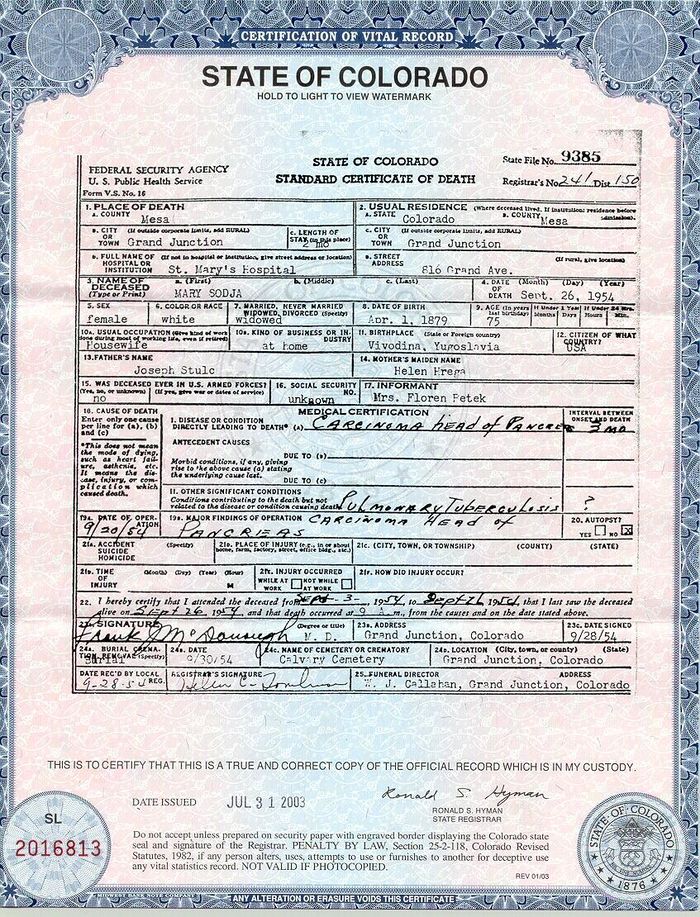
In reality, certified death certificates issued to authorized immediate family members and estate administrators typically include the full medical certification, including the primary cause of death, contributing conditions, and manner of death (e.g., natural, accidental, homicide, suicide, or undetermined). This data is essential for life insurance underwriters to settle policies and for legal representatives resolving estate affairs.
Video: Child Fatality Review Team reflects on impact following two Colorado Springs child deaths

Informational, non-certified copies or historical copies provided under specific statutory exceptions may have sensitive details omitted, but legitimate applicants ordering certified certificates receive the complete vital document.
Myth 4: Historical and Genealogical Records Are Inaccessible
Because Colorado enforces strict vital privacy laws, genealogists often believe that family history research in Colorado Springs is an impossible dead end. While recent records are strictly protected, the law accounts for historical inquiry through statutory expiration periods.
Under Colorado regulations, death certificates become open public records 75 years after the date of death. Once a record reaches the 75-year milestone, any person can request a copy for historical or genealogical purposes without proving immediate kinship or financial interest.
For research involving deaths that occurred within the past 75 years, genealogists must either be direct descendants who meet the statutory eligibility guidelines or partner with an immediate living family member who can submit the application on their behalf. Local archives, such as the Pikes Peak Library District’s Special Collections and the Colorado State Archives, also house historical indexes, mortuary ledgers, and sexton records that assist researchers without violating modern privacy boundaries.
Debunking Common Myths about Colorado Springs Death Records Access
: The Processing Timeline
People often assume that requesting a vital record in El Paso County requires traveling to the state capital in Denver or enduring weeks of bureaucratic delay through standard mail. Neither assumption is correct.
Colorado Springs residents have local, direct access through the El Paso County Public Health Vital Records office, located at the Citizens Service Center on Garden of the Gods Road. In-person applicants can often walk out with their certified certificates on the same day, frequently within 20 to 30 minutes, provided they bring appropriate documentation.
| Application Method | Estimated Turnaround | Best Used For |
|---|---|---|
| In-Person (El Paso County Health) | Same-day (under 1 hour) | Urgent probate, banking, or funeral requirements |
| Online (State-Authorized Portal) | 3 to 7 business days | Out-of-state family members or heirs |
| Mail-In Application | 2 to 4 weeks | Non-urgent personal archiving |
What You Actually Need to Request a Record
To avoid delays when applying through the El Paso County Vital Records office or the CDPHE, applicants must arrive prepared with clear, verified documentation. Having an incomplete packet is the most common reason applications are rejected.
- Valid Identification: A current, government-issued photo ID (driver’s license, state ID, U.S. passport, or military ID). If an ID is expired, two secondary proofs of identification are required, such as a recent utility bill, vehicle registration, or tax document matching the applicant's current address.
- Proof of Relationship or Interest: If you are a child of the deceased, your own birth certificate showing the parent-child relationship; if you are an executor, certified court documents demonstrating active fiduciary authority; if an insurer, an active policy contract.
- Specific Details: The full legal name of the deceased, date of death, place of death (confirming it took place in Colorado Springs or El Paso County), and date of birth.
- Statutory Fees: In Colorado, death certificates carry an initial search and issuance fee (historically $20 for the first copy and $13 for each additional copy of the same record ordered simultaneously).
Final Thoughts
Understanding the statutory boundaries of vital records access protects you from online scams and administrative frustration. Colorado Springs death records are neither entirely public nor hopelessly inaccessible. By verifying your legal eligibility, gathering proper identity documents, and working directly with the El Paso County Public Health office, you can secure the necessary certified paperwork efficiently and in full compliance with Colorado law.