Decoding Aztec Prison Ink Symbolism
Tattoos have long served as visual languages, communicating a person’s history, beliefs, affiliations, and trials. Within the complex subculture of correctional facilities, body modification takes on an even deeper layer of urgency and meaning. Among the most visually striking and culturally resonant motifs found behind bars are those rooted in Mesoamerican heritage. Decoding Aztec Prison Ink Symbolism reveals a fascinating intersection of ancient indigenous pride, survival strategies, and modern street sociology.

To the untrained eye, a warrior tattoo or a stylized calendar stone on an inmate's skin might look like standard gang art. However, these designs carry centuries of historical weight. Understanding them requires looking past the concrete walls of the prison system and tracing the imagery back to the powerful Aztec Empire and its evolution through Chicano culture.
The Roots of Mesoamerican Body Art
Before European contact, the Mexica (commonly known as the Aztecs) used body modification, including scarification, paint, and tattoos, to denote status, achievements, and spiritual devotion. Warriors who distinguished themselves in battle earned specific insignia that commanded respect across society.
When Spanish colonizers arrived, they suppressed indigenous religious and cultural practices, driving many traditions underground. Centuries later, during the mid-20th century, Mexican-American communities in the American Southwest—particularly within the Pachuco and Chicano subcultures—began reclaiming this lost heritage. They blended Catholic iconography, lowrider aesthetics, and indigenous imagery into a distinct visual language. When individuals from these communities entered the penal system, this artistic tradition adapted to the harsh realities of prison life, giving birth to contemporary prison ink symbolism.
Common Motifs and Their Meanings
Prison tattoos are applied under difficult conditions, often using improvised machines made from cassette player motors, guitar strings, and melted chess pieces for ink. Despite these primitive tools, the detail and precision of Aztec-inspired pieces can be staggering. Here are some of the most common symbols and what they represent:
The Aztec Warrior (Guerrero Águila / Jaguar)
The image of the fierce Aztec warrior is perhaps the most popular motif in this category. In ancient times, elite warriors belonged to military societies dedicated to the sun god or the rain god. In the context of prison ink, the warrior symbolizes:
- Survival and Resilience: The ability to endure harsh sentences, solitary confinement, and constant danger.
- Protection: Serving as a spiritual armor against rivals or the oppressive environment of the institution.
- Honor: Upholding a strict personal code of conduct despite being incarcerated.
Huitzilopochtli and Quetzalcoatl
Deities also find a permanent home on the skin of inmates. Huitzilopochtli, the god of war and the sun, represents aggression, drive, and the fight to overcome obstacles. On the other hand, Quetzalcoatl, the feathered serpent, often symbolizes rebirth, wisdom, and transformation. An inmate getting a Quetzalcoatl tattoo may be signaling a personal journey toward rehabilitation, a desire to shed old habits, or spiritual awakening while serving time.
Video: Earning Tattoos In California Prisons: The Dangers
The Aztec Calendar (Sun Stone)
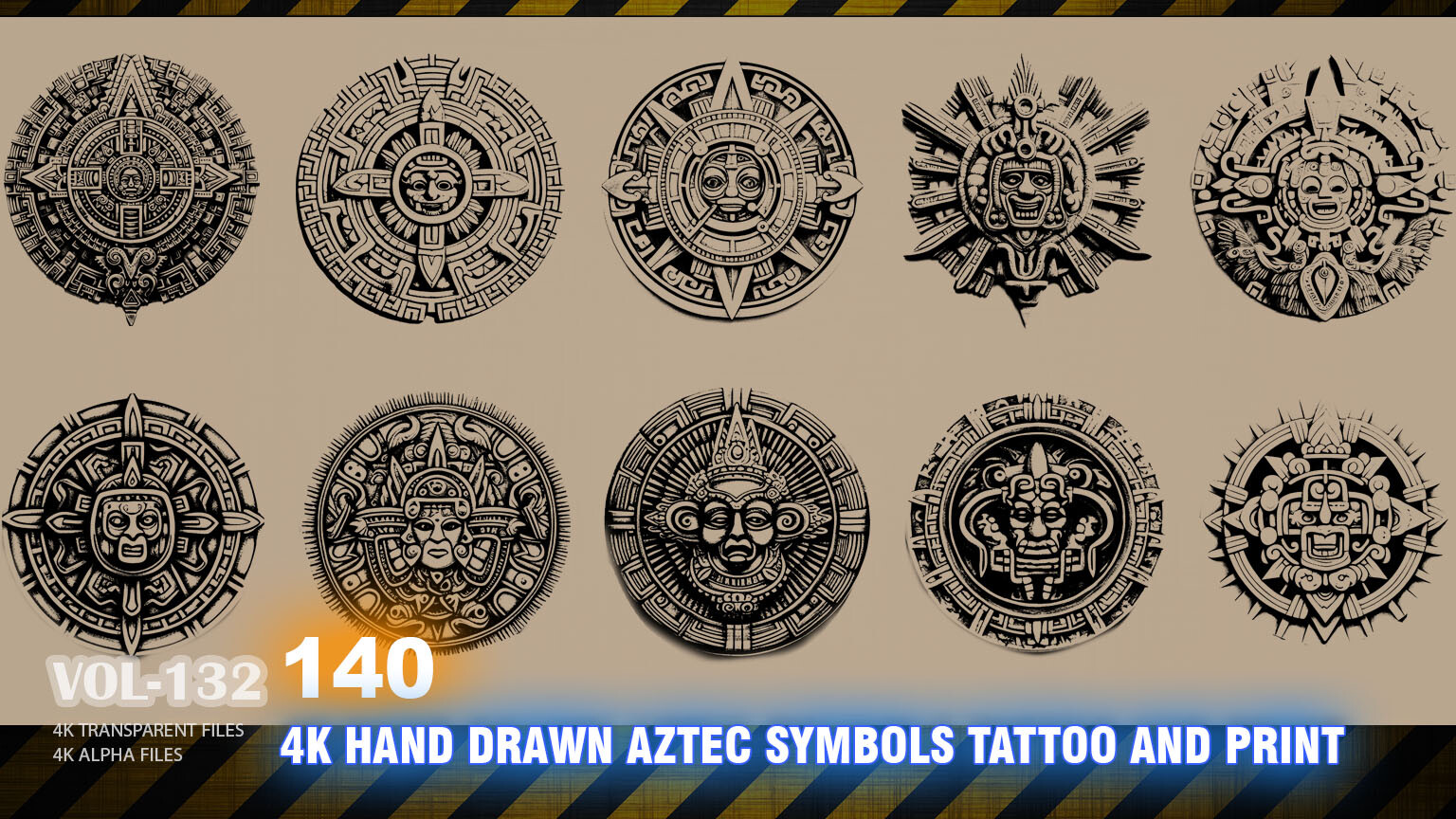
The iconic Sun Stone is a masterpiece of geometric precision. Translating this massive stone monolith onto skin requires incredible skill. In prison, the calendar represents:
- Time Served: A acknowledgment of the passage of time, cycles, and the inevitability of change.
- Cosmic Order: A way to anchor oneself in a chaotic, unpredictable environment by connecting to an ancient, orderly universe.
The Skull (Mictlantecuhtli / Death Imagery)
Death is an ever-present reality in correctional facilities. Aztec culture maintained a complex, non-fearful relationship with mortality, personified by Mictlantecuhtli, the lord of the underworld, and later merged with the modern concept of Santa Muerte. Skulls in this style are rarely simple grim reminders of mortality; instead, they represent the cyclical nature of life and death, reminding the wearer that they have stared mortality in the face and refused to break.
Identity, Protection, and Politics
Beyond personal philosophy, decoding Aztec prison ink symbolism requires an understanding of group dynamics. In many maximum-security facilities, tattoos are not merely decorative—they are markers of institutional geography and affiliation.
For instance, certain Hispanic prison gangs utilize specific Mesoamerican iconography to denote loyalty, rank, or geographic origin (such as Northern versus Southern California factions). Wearing these symbols without earning them can result in violent repercussions. Conversely, for individuals who are not affiliated with gangs, wearing an Aztec warrior or calendar can simply be a profound expression of ethnic pride and cultural reclamation.
For many marginalized individuals, prison is a place where identity is systematically stripped away. Uniforms replace clothing, identification numbers replace names, and strict routines govern every waking moment. In this environment, inking indigenous history onto one's body is a powerful reclamation of self. It says: *My ancestors built empires, and I come from a lineage of survivors.*
The Evolution Beyond the Yard
Today, the aesthetic boundaries between prison art and professional fine-line tattooing have blurred significantly. Many formerly incarcerated artists have transitioned into legitimate parlor owners, bringing the intricate techniques of black-and-grey prison work into mainstream tattoo culture.
As a result, Mesoamerican tattoos are now worn by people from all walks of life—from direct descendants celebrating their heritage to art enthusiasts who appreciate the striking composition of a jagged headdress or the sweeping curves of a feathered serpent. However, understanding the deeper roots ensures that these powerful designs are viewed not just as cool graphics, but as a living bridge between ancient indigenous history and modern human endurance.