Decoding the Conspiracy Iceberg: What's Hidden?
Decoding the Conspiracy Iceberg

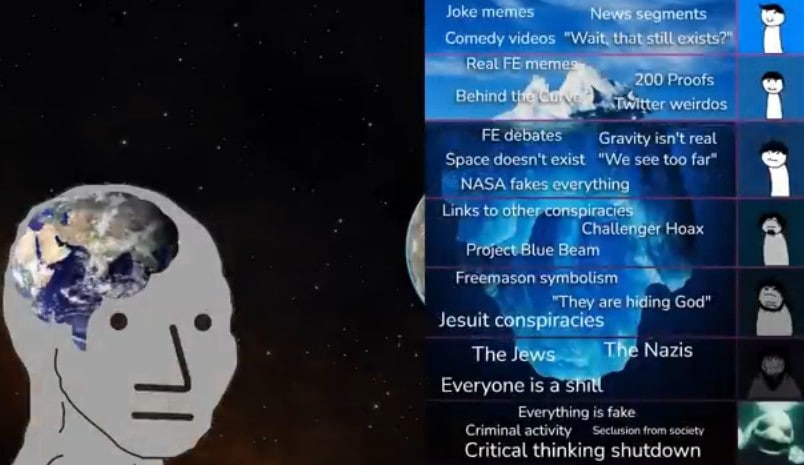
If you have spent any time browsing internet culture over the last few years, chances are you have stumbled across a sprawling, multi-tiered graphic known as the conspiracy iceberg. Ranging from relatively benign pop-culture curiosities at the very top to deeply unsettling, esoteric claims at the freezing depths, this visual metaphor has captured the imagination of millions. But what lies beneath the surface of these viral memes? Separating cultural folklore from actual history requires looking at how these ideas are structured and why they hold such a powerful grip on the human psyche.
The iceberg format works brilliantly because it mirrors how we categorize information. The tip represents common knowledge or mainstream debates, while each downward tier plunges deeper into obscurity, niche internet forums, and complex mythologies. To understand the phenomenon fully, we have to navigate these layers one by one.
Surface Level: Pop Culture and Mainstream Mysteries
At the peak of the iceberg, sitting comfortably above the water line, are theories that almost everyone has heard of. These are staples of late-night television, blockbuster movies, and mainstream internet discourse.
- The Moon Landing Faking: The enduring claim that NASA staged the 1969 Apollo landings in a Hollywood studio.
- The JFK Assassination: Debates surrounding the Warren Commission, magic bullets, and multiple shooters.
- The Titanic Switch: The theory that the RMS Titanic was swapped with its damaged sister ship, the Olympic, for an insurance scam.
These theories are well-documented, widely debated, and generally serve as an introduction for people dipping their toes into alternative history. They rely on distorted interpretations of public documents, fuzzy photographs, and a distrust of official institutions.
Mid-Tier Waters: Historical Anomalies and Cover-Ups
As we descend beneath the waves, the water gets colder and the theories grow more intricate. This middle tier of the conspiracy iceberg usually involves secretive organizations, alleged corporate greed, and geopolitical manipulation.
Secret Societies and Global Cabals
In this section, names like the Illuminati, the Freemasons, and the Bilderberg Group take center stage. Proponents of these ideas suggest that a shadowy elite pulls the strings of global finance, media, and governments. While historical secret societies certainly existed—often formed for networking, philosophy, or political influence—the modern narrative paints them as omnipotent puppet masters orchestrating world events from behind closed doors.
Video: The Conspiracy Theory Iceberg

Similarly, technological developments often anchor this tier. Discussions around mass surveillance, facial recognition grids, and the gradual digitization of currency frequently blur the line between verified government overreach and speculative fiction.
Alternative Science and Suppressed Inventions
Another popular sub-genre in the middle layers involves suppressed technology. These claims suggest that free energy devices, cures for major diseases, and anti-gravity propulsion systems were invented decades ago, only to be buried by governments and energy monopolies to maintain economic control. While major corporations certainly prioritize profit, the logistical nightmare of hiding a world-changing invention from global scientific communities makes these scenarios highly improbable.
The Deep Abyss: Esoteric Lore and Internet Fiction
Plunging past the middle tier, the conspiracy iceberg enters the realm of the absurd, the metaphysical, and the outright fictional. Here, theories shed any remaining connection to conventional reality and venture into pure sci-fi territory.
- Flat Earth and Hollow Earth: The belief that our planet is either a disc protected by an Antarctic ice wall or a hollow sphere containing an advanced inner civilization.
- Reptilian Overlords: The assertion that shape-shifting extraterrestrial lizards disguise themselves as human politicians and celebrities.
- Dead Internet Theory: The modern internet meme claiming that the vast majority of online traffic and user accounts are now run by automated bots designed to manipulate human behavior.
It is worth noting that many entries at the very bottom of the iceberg are not actually believed by their creators. Instead, they originate as creative writing exercises on platforms like 4chan or Reddit, designed specifically to see how far a ridiculous idea can travel before someone takes it seriously.
The Psychology of the Iceberg
Why are humans naturally drawn to these complex webs of secrecy? Psychologists point to a few core cognitive drivers:
- Pattern Recognition: Our brains evolved to connect dots quickly to spot predators. Sometimes, this system misfires, finding patterns where none exist (apophenia).
- Need for Control: Believing that a hidden group controls the world can paradoxically feel more comforting than accepting that the universe is chaotic, random, and largely out of anyone's control.
- Special Knowledge: Uncovering a "secret truth" gives individuals a sense of belonging to an exclusive, enlightened ingroup.
Conclusion
The conspiracy iceberg is a fascinating artifact of modern digital culture. It maps out our collective anxieties, our distrust of authority, and our boundless capacity for storytelling. While exploring these theories can be an entertaining exercise in creative thinking, it remains crucial to anchor ourselves in empirical evidence, critical thinking, and a healthy appreciation for the difference between a clever internet meme and objective reality.