Decoding the Mysterious Anomaly in Ocean Africa
When scientists look at the planet from a geophysical perspective, the Earth's crust and mantle reveal complex patterns of density, temperature, and magnetic variation. Among the most intriguing features discovered in recent decades is a vast subterranean and marine phenomenon known as the anomaly in ocean Africa. Stretching deep beneath the African continent and extending out under the surrounding Atlantic and Indian Oceans, this colossal geological feature has captured the imagination of researchers worldwide.

Far from being a simple footnote in oceanography, this structure represents a massive puzzle piece in understanding plate tectonics, mantle plumes, and the very evolution of our planet. In this article, we examine what this anomaly is, how scientists detected it, and why it matters for the future of Earth science.
What Is the African Superplume?
To understand the anomaly in ocean Africa, one must look deep beneath the ocean floor into the Earth's mantle. Seismologists have identified two massive blobs of dense, hot rock sitting right at the boundary between Earth’s core and its mantle. Officially known as Large Low-Shear-Velocity Provinces (LLSVPs), one of these colossal structures sits directly beneath Africa.
This African LLSVP is essentially a subterranean mountain range made of superheated rock, dwarfing anything found on the surface. When seismic waves from distant earthquakes travel through the Earth, they slow down significantly upon entering this region. This velocity drop indicates that the material is much hotter and chemically distinct from the surrounding mantle.
Characteristics of the African LLSVP
- Massive Scale: The structure is thousands of kilometers wide and rises hundreds of kilometers from the core-mantle boundary.
- Chemical Distinction: It contains ancient, dense material that may date back to the early formation of the Earth.
- Surface Impact: It correlates heavily with high elevations and volcanic activity across the African continent and surrounding ocean basins.
How Scientists Detected the Marine and Terrestrial Feature
Detecting something thousands of kilometers beneath the surface requires indirect methods, primarily seismology. As earthquakes occur around the globe, they send shockwaves through the planet. By deploying dense networks of seismometers both on land and across ocean-bottom observatories, geophysicists can map the interior of the Earth much like a medical doctor uses a CT scan.
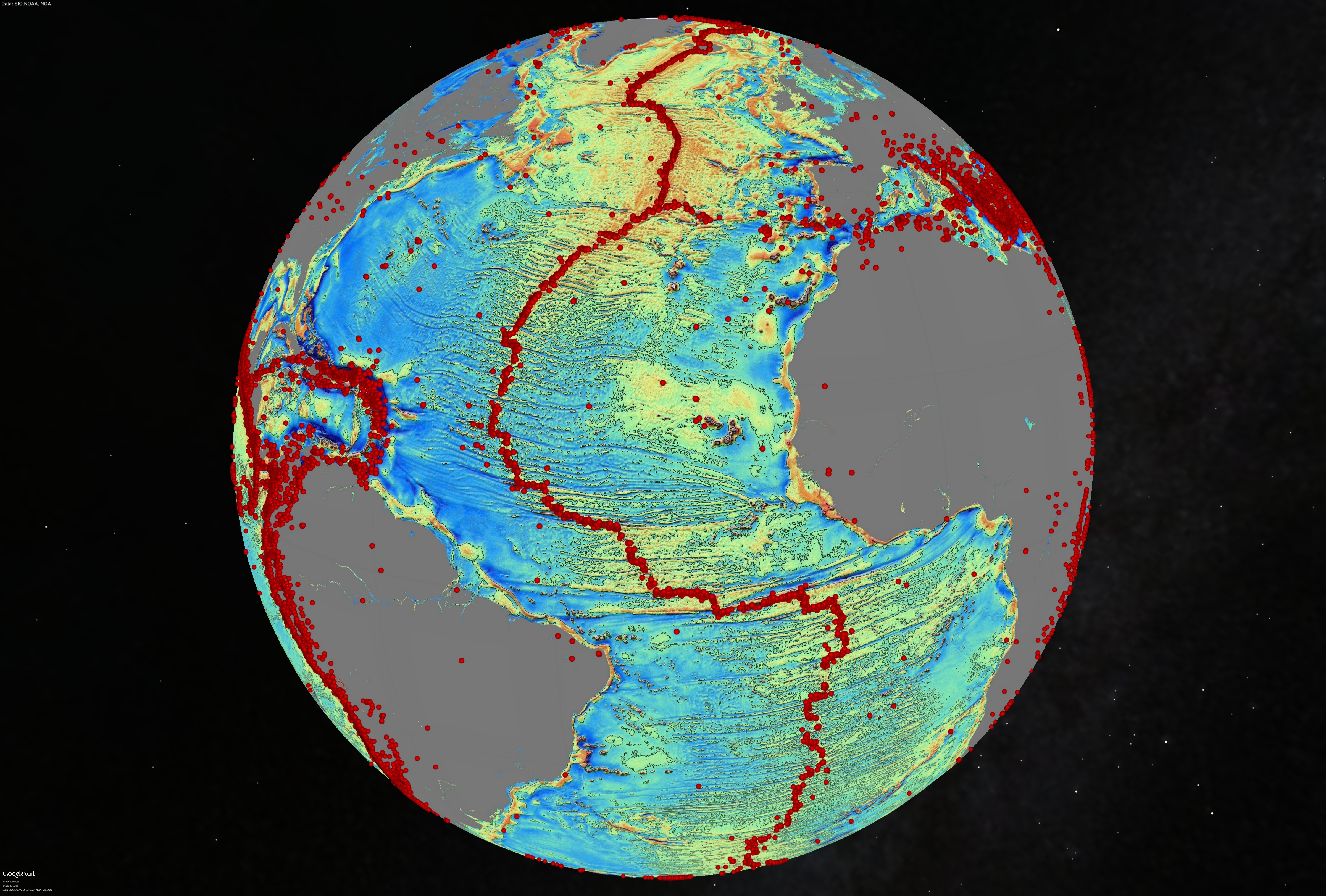
In the case of the anomaly in ocean Africa, researchers noticed bizarre disruptions in seismic wave travel times. Waves passing through the region beneath the African plate behaved erratically compared to those passing under the Pacific LLSVP. Furthermore, satellite measurements of Earth's gravity and magnetic field revealed anomalies that aligned closely with the seismic data, confirming that a massive density anomaly exists in this part of the world.
The Connection to Plate Tectonics and Ocean Basins
Video: Woman Records "Mysterious Anomaly" In The Ocean, And Things Get Crazy

The presence of this massive thermal anomaly deep in the Earth does not just stay underground; it actively shapes the surface geology and the surrounding ocean basins. The heat rising from the African LLSVP drives mantle convection currents, which in turn exert immense pressure on the Earth's crust.
This dynamic process contributes to several major geological phenomena:
- The East African Rift: The rising heat and plume activity are instrumental in pulling the African continent apart, eventually creating a new ocean basin millions of years from now.
- Seafloor Topography: The swells in the ocean floor surrounding Africa are partially supported by the buoyant, hot mantle beneath them.
- Volcanism: Hotspots linked to the margins of the African anomaly fuel volcanic chains in the Atlantic and Indian Oceans.
Current Debates and Ongoing Research
Despite decades of study, the anomaly in ocean Africa remains a subject of intense scientific debate. Geologists and geophysicists are still trying to answer fundamental questions about its origin and stability.
One major question is whether the LLSVP is a static pile of dense ancient crust or a dynamic, churning structure that rises and falls over hundreds of millions of years. Some researchers suggest that these blobs act as graveyards for ancient tectonic plates that sank into the mantle, while others believe they are primordial material left over from the formation of the Moon-forming impact.
Why This Matters for the Future
Understanding deep-earth anomalies is not merely an academic exercise. The interactions between the core, mantle, and crust dictate the long-term habitability of our planet. They control the magnetic field that protects our atmosphere from solar radiation, drive the supercontinent cycle, and influence global sea levels over geological timescales.
As ocean-bottom seismology technology improves, researchers will gain even higher-resolution imagery of the anomaly in ocean Africa. Future discoveries will likely refine our models of mantle dynamics and give us a clearer picture of how the deep interior connects to the oceans and continents we see today.
Conclusion
The anomaly in ocean Africa is a prime example of how much remains unknown about our own planet. Hidden deep beneath the seabed and the continental mass, this colossal thermal structure governs surface volcanism, tectonic rifting, and the evolution of ocean basins. As science pushes further into the realm of high-precision seismology, we move closer to unraveling the secrets of Earth's most elusive subterranean giant.