Definitive UHNW Definition: Stop Using It Wrong
In financial media, luxury brand pitches, and casual cocktail party chatter, wealth acronyms get thrown around with reckless abandon. Someone with a multimillion-dollar home in Malibu gets labeled “ultra-wealthy,” while an executive making a seven-figure salary is assumed to sit at the absolute pinnacle of global finance. But if you work in wealth management, private banking, or luxury commerce, precision matters: this is the definitive UHNW definition—stop using it wrong forever!

Using the term incorrectly doesn’t just sound amateurish; it derails market segmentation, muddles capital raising, and misjudges client needs. Here is the exact industry-standard definition of an Ultra-High-Net-Worth Individual (UHNWI), how the global financial sector measures this cohort, and why most people misunderstand what it actually takes to qualify.
This Is the Definitive UHNW Definition—Stop Using It Wrong Forever!
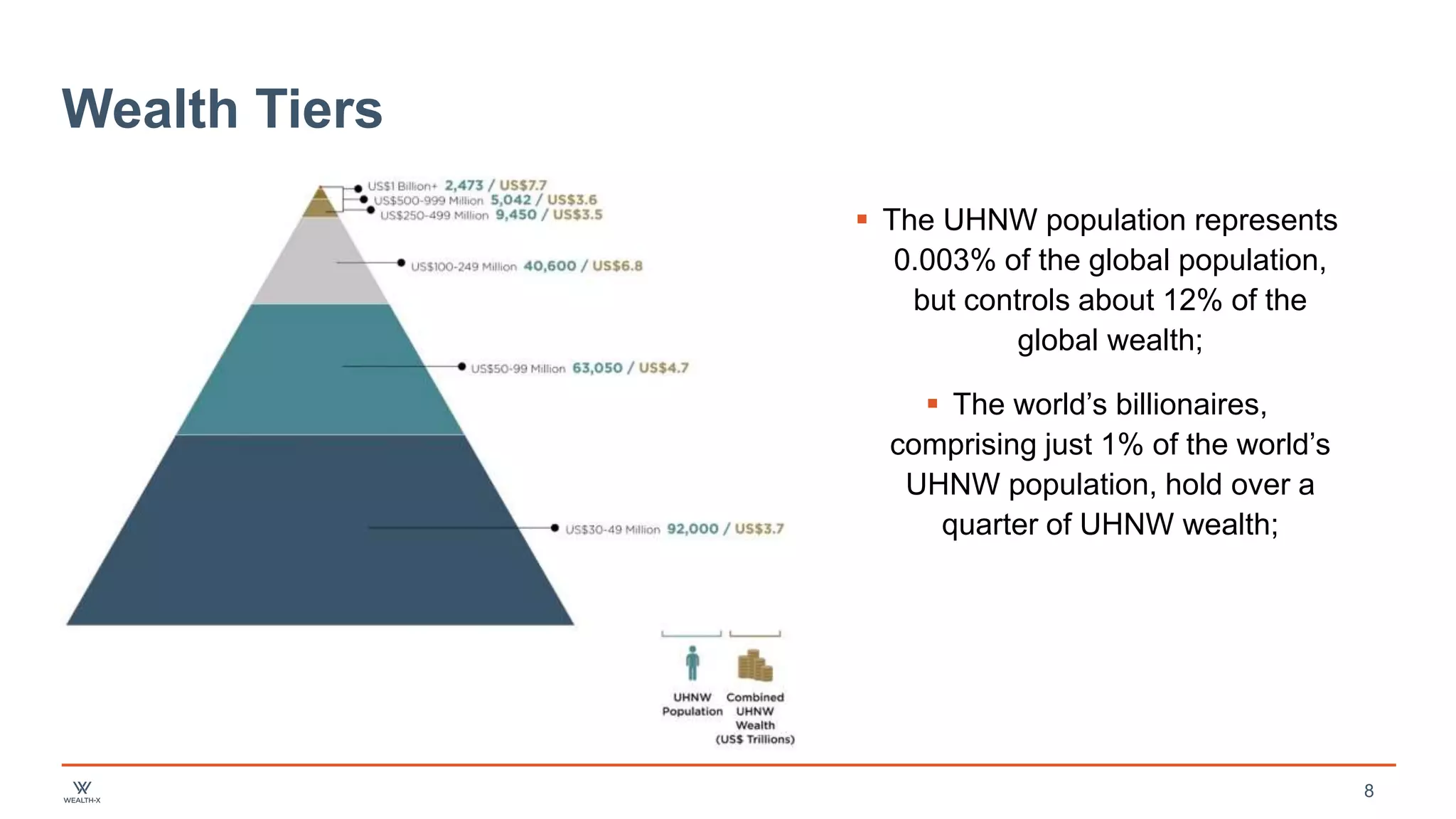
An Ultra-High-Net-Worth Individual (UHNWI) is defined by global financial institutions, private banks, and wealth intelligence firms (including Capgemini, UBS, and Wealth-X) as someone with a net worth of at least $30 million in investable assets.
Notice the critical qualifier: investable assets. This does not mean owning a primary residence assessed at $30 million with a $20 million mortgage. It does not mean running a privately held startup that was nominally valued at $30 million during an early seed round. It represents liquid, investable wealth—capital that can be deployed into financial markets, private equity, debt instruments, or alternative investment vehicles after subtracting all personal liabilities.
The “Investable Assets” Rule Explained
Standard wealth classification models deliberately exclude several categories when tallying UHNW status:
- Primary Residences: The home you live in is an illiquid lifestyle asset, not a deployable financial reserve. While some broad net worth estimates include real estate equity, tier-one private banks evaluate UHNW status based on liquid or marketable capital.
- Consumables and Collectibles: Superyachts, exotic cars, private aircraft, and fine art collections generally do not count toward investable assets unless managed within a dedicated, liquid fund structure.
- Unrealized Paper Wealth: Illiquid equity in an early-stage private business with restrictive secondary sale terms is discounted until a real liquidity event (such as an IPO or recapitalization) takes place.
The Global Wealth Spectrum: HNW vs. VHNW vs. UHNW
To avoid mislabeling clients and prospects, you need to understand where UHNW sits within the broader wealth management hierarchy. The industry recognizes four distinct tiers above the mass-affluent market:
- High-Net-Worth Individual (HNWI): $1 million to $5 million. This tier represents the baseline for private wealth management services. While financially secure, members of this cohort are often salaried executives, successful small-business owners, or retirees who still depend on structured retirement planning.
- Very-High-Net-Worth Individual (VHNWI): $5 million to $30 million. Often overlooked in popular culture, VHNWIs bridge the gap between upper-middle-class wealth and true dynastic capital. They frequently access boutique private banking and customized tax shelters, but typically do not operate standalone single-family offices.
- Ultra-High-Net-Worth Individual (UHNWI): $30 million to $1 billion. At this level, wealth dynamics transform fundamentally. Wealth preservation, multi-generational succession, philanthropic endowments, and complex cross-border tax mitigation eclipse basic portfolio growth.
- Billionaires: $1 billion and above. The rarest wealth tier on earth, comprising roughly 3,000 individuals globally. Their capital structures often function like sovereign wealth funds, exerting macroeconomic and geopolitical influence.
The 4 Most Common Mistakes People Make with the UHNW Label
Misapplying the UHNW tag creates severe disconnects in client acquisition, marketing budgets, and financial modeling. These are the four most common errors:
1. Confusing High Income with High Net Worth

An elite corporate attorney or surgeon earning $1.5 million per year is undeniably an ultra-high earner, but that does not make them a UHNWI. If their lifestyle expenses, taxes, mortgages, and consumer debt leave them with an investable balance sheet of $6 million, they belong firmly in the VHNW tier. UHNW is a measure of balance-sheet equity, not a measure of annual cash inflow.
2. Ignoring Debt and Leverage
Gross assets do not equal net worth. An individual who controls a commercial real estate portfolio valued at $100 million might carry $80 million in senior debt and mezzanine financing. Their net equity is $20 million—well below the $30 million threshold required for UHNW categorization.
3. Conflating Family Wealth with Individual Wealth
A multi-generational family holding $60 million across four siblings, twelve grandchildren, and several trust beneficiaries is a wealthy family, but none of the individual members may individually qualify as UHNWIs. Private banks evaluate both individual balance sheets and collective family asset pools separately for family office qualification.
4. Assuming All UHNWIs Live Alike
Popular media equates the UHNW cohort exclusively with mega-mansions, private islands, and flashy luxury spending. In reality, a significant portion of the global UHNW population consists of low-profile entrepreneurs, industrial manufacturers, and long-term value investors who live unpretentious lifestyles while directing their capital into private debt, index funds, and operating businesses.
Why the $30 Million Mark Changes Everything
Why did global institutions settle on $30 million rather than $10 million or $50 million as the dividing line for UHNW? Because $30 million is the mathematical threshold where wealth management fundamentally changes operational structures:
- Single-Family Office Viability: Running a dedicated single-family office—with in-house legal, accounting, investment, and lifestyle management staff—typically costs between $1 million and $2 million annually. At $30 million to $50 million in investable capital, establishing a family office or joining a multi-family office (MFO) becomes economically justifiable.
- Direct Deal Access: UHNWIs rarely rely on standard retail mutual funds or plain-vanilla brokerages. They access direct private equity co-investments, venture capital allocations, pre-IPO secondaries, and bespoke structured debt products reserved exclusively for qualified purchasers.
- Generational Longevity: At a standard conservative distribution rate of 3% to 4%, a $30 million portfolio generates $900,000 to $1.2 million annually in inflation-adjusted cash flow without depleting the underlying principal, securing multi-generational financial independence.
The Takeaway
The term “Ultra-High-Net-Worth” is not an emotional descriptor or a vague synonym for rich. It is a rigorous financial benchmark denoting individuals who control at least $30 million in unencumbered, investable capital. Keep the distinctions clean, account for leverage, look at net deployable balance sheets rather than revenue or lifestyle trappings, and you will never use the term incorrectly again.