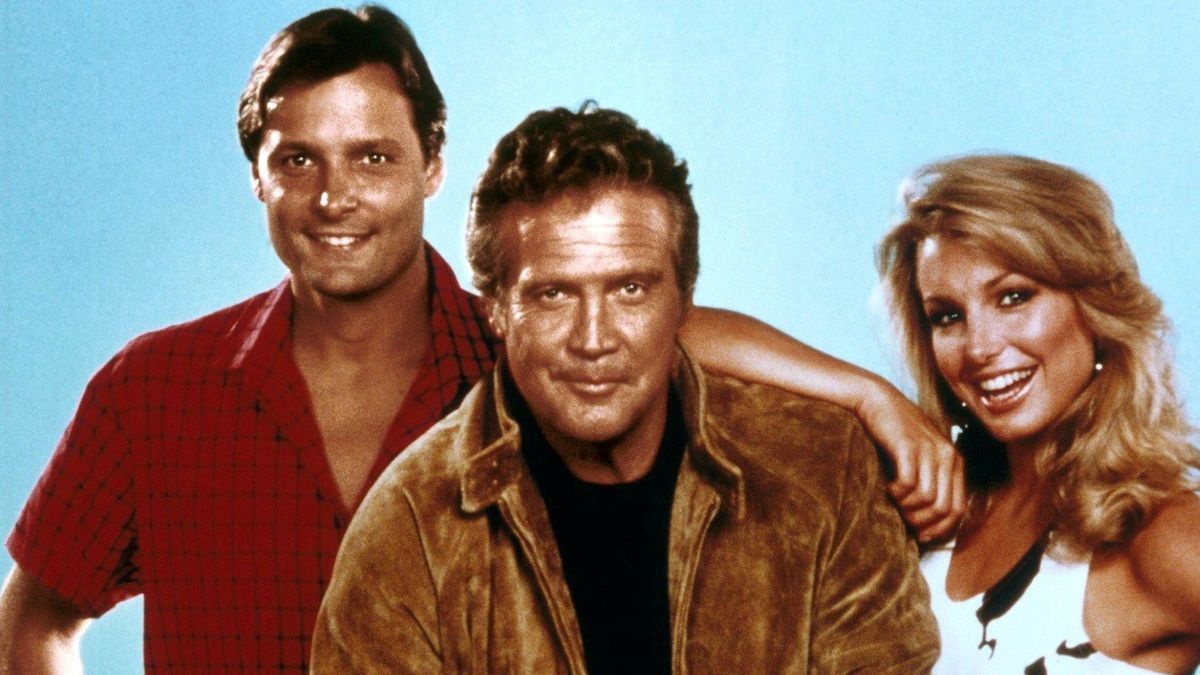
Did Douglas Barr's Hidden Past Shock Hollywood?
For fans who grew up watching network television in the 1980s and 1990s, Douglas Barr was a warm, charming, and dependable presence on screen. Whether playing the earnest sidekick Howie Munson on The Fall Guy or the devoted husband Col. Bill Stillfield on Designing Women, Barr carved out a memorable television career. In recent years, however, sensational internet headlines and video titles have prompted fans to ask: Did Douglas Barr's hidden past shock Hollywood?

Whenever an actor from television's golden eras steps away from the bright lights of the entertainment industry, the internet rumor mill tends to work overtime. Sordid rumors often fill the vacuum left by silence. Yet when you peel back the dramatic clickbait headlines, the reality of Douglas Barr’s life and career path reveals something far more interesting than an alleged Hollywood scandal.
The Myth of the Scandalous Past
Search algorithms and content farms frequently generate shocking titles suggesting that classic television icons harbored dark criminal histories, secret feuds, or career-ending scandals. Douglas Barr has not been immune to this trend. Inquiries questioning whether his past “shocked” the industry typically stem from these dramatized retrospectives.
In truth, public records, industry reporting, and co-star testimonies show no evidence of a scandalous hidden past. Barr never faced explosive tabloid arrests, industry blacklisting, or personal controversies. Instead, what actually caught Hollywood off guard was something rarely seen in a town driven by ego: a successful working actor who chose to reinvent himself entirely on his own terms.
From Cedar Rapids to Prime-Time Stardom
To understand Barr's trajectory, it helps to look at where he began. Born in Cedar Rapids, Iowa, on May 1, 1949, Douglas Barr enjoyed a grounded Midwestern upbringing. Far from having a secretive or subversive youth, Barr focused on his education and developed an early interest in the arts and athletics.
After heading west to pursue an acting career, Barr did not have to wait decades for his big break. Following a few minor television appearances, he landed a career-defining role in 1981 on ABC’s action-packed drama The Fall Guy.
The Breakout: 'The Fall Guy' (1981–1986)
Starring opposite veteran actor Lee Majors, Barr played Howie Munson, the well-meaning, college-educated cousin and apprentice stuntman to Majors' character, Colt Seavers. The dynamic between the rugged veteran and the slightly green, book-smart Howie became the comedic and emotional heart of the program.
Barr stayed with The Fall Guy across all five seasons and over 110 episodes. His work on the series solidified his reputation within the industry not as a troublemaker, but as an easygoing, reliable professional who hit his marks and got along well with the cast and crew.
Finding Romance on 'Designing Women'
Following the conclusion of The Fall Guy, Barr joined the critically acclaimed CBS sitcom Designing Women in 1987. Playing Colonel Bill Stillfield, the romantic interest and eventual husband of Charlene Frazier (played by Jean Smart), Barr showcased a distinct comedic timing and effortless charm.
Appearing in dozens of episodes between 1987 and 1991, Barr represented the ideal television partner—supportive, kind, and emotionally grounded. It was a role that endeared him to millions of viewers and cemented his status as a prime-time staple.
Video: Doug Barr on "The Unseen"
Did Douglas Barr's Hidden Past Shock Hollywood or Was It a Career Pivot?

If there was any genuine surprise surrounding Barr in the industry, it came from his abrupt decision to step away from acting at the height of his visibility. Hollywood often expects performers to cling to the screen as long as possible. Barr, however, had different ambitions.
Rather than chasing ever-diminishing acting roles as he entered his forties, Barr made a quiet, decisive transition behind the camera. Between the mid-1990s and the 2010s, he built a prolific second career as a television director and screenwriter.
Barr proved to have an exceptional instinct for family dramas and romantic movies, directing dozens of successful titles, particularly for the Hallmark Channel. Among his notable directorial efforts are:
- The Note (2007)
- Taking a Chance on Love (2009)
- Northpole (2014)
- Multiple holiday and seasonal romance features
While industry insiders might have been surprised by how smoothly he transitioned from comedic actor to in-demand TV movie director, it was a move driven by craftsmanship rather than controversy.
The Napa Valley Chapter: Hollywood & Vine Cellars
Perhaps the most unexpected chapter of Barr’s life had nothing to do with entertainment. In the late 1990s, while still working in film and television, Barr co-founded a boutique winery in California’s Napa Valley called Hollywood & Vine Cellars.
What began as a shared passion project between Barr and his longtime friend Bruce Orosz turned into a highly regarded, premium wine label. The duo partnered with acclaimed Napa Valley winemaker Celia Welch to produce small-batch, top-tier Cabernet Sauvignon and Chardonnay.
Rather than relying merely on celebrity vanity branding, Barr took the business seriously. The wines received glowing critical scores from leading industry publications, surprising traditional vintners who often dismissed Hollywood figures entering the wine trade. If Barr shocked anyone, it was the Napa Valley wine establishment, which realized this former television star was producing genuinely world-class wine.
Why Modern Internet Culture Invents Scandals
The persistence of search queries regarding Barr's supposed “hidden past” highlights a modern media phenomenon: the nostalgia-trap headline. Classic television fans represent a deeply engaged demographic, and digital algorithms exploit that loyalty by presenting mundane life updates as dramatic revelations.
Common tactics used by these outlets include:
- Framing ordinary transitions as mysterious disappearances: An actor choosing to direct or retire is described as having “fled Hollywood.”
- Exaggerating normal personal privacy: A private, low-profile personal life is recast as an attempt to hide dark secrets.
- Bait-and-switch video essays: Promising explosive exposés in the title, only to recite the actor's Wikipedia page once the viewer clicks.
The Real Legacy of Douglas Barr
Douglas Barr represents an exception to the tragic tropes often associated with 1980s television stars. He did not succumb to public downfalls, bitter legal battles, or self-destructive habits. He enjoyed two major hit television series, built a thriving second career as a director, and launched a critically acclaimed wine venture.
Did Douglas Barr have a hidden past that shocked Hollywood? The simple answer is no. His real story is not one of dark secrets or tabloid scandals, but of a smart, versatile artist who navigated the entertainment industry on his own terms and built a peaceful, multifaceted life beyond the camera.