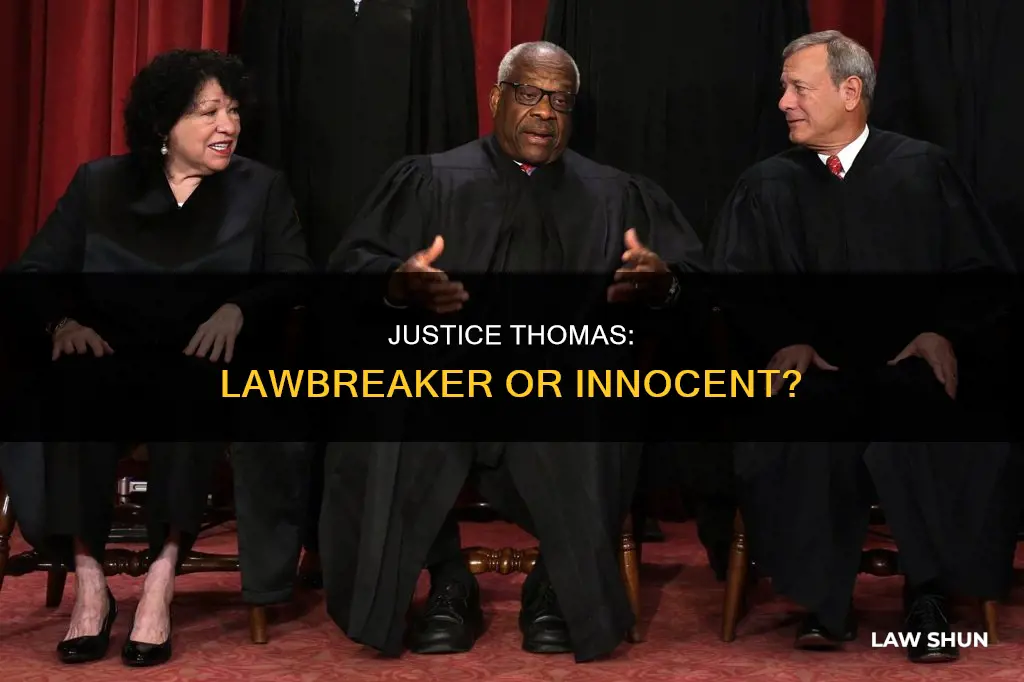
Did Justice Thomas List His Gifts on His Tax Returns?
Understanding the Supreme Court Gift Controversy

In recent years, the ethical practices and financial disclosures of the United States Supreme Court have come under unprecedented public scrutiny. At the center of this storm is Justice Clarence Thomas. Investigative reports revealed that Thomas accepted decades of luxury travel, private jet flights, and real estate transactions from wealthy conservative donors, primarily Harlan Crow, without initially reporting them on his annual financial disclosure forms.
This revelation immediately triggered a broader public question: beyond the disclosure reports required by the Ethics in Government Act, did Justice Thomas list his gifts on his tax returns? Navigating the intersection of federal tax law, gift tax regulations, and judicial disclosure requirements is complex. To understand what happened, it is essential to examine how American tax law treats gifts, what the reporting obligations actually are, and how public officials handle these high-value transfers.
The Intersection of Gifts and Federal Tax Law
Before looking specifically at the documentation filed by Supreme Court justices, it helps to understand how the Internal Revenue Service (IRS) defines and taxes gifts. Under the federal tax code, a gift is generally defined as any transfer of property from one individual to another without receiving full and adequate consideration in return.
Who Pays the Gift Tax?
A common misconception among the general public is that the recipient of a gift must report it as taxable income or pay taxes on it. Under standard IRS rules:
- The Donor's Responsibility: The legal burden for paying federal gift taxes falls entirely on the person giving the gift, not the person receiving it.
- Exclusions and Thresholds: For high-net-worth individuals like Harlan Crow, annual exclusions and lifetime exemption limits apply. Donors must file a gift tax return (IRS Form 709) if the value of gifts given to a single individual exceeds the annual exclusion amount in a given calendar year.
- Income Tax Exemption: Generally, true gifts received by an individual are excluded from gross income. This means the recipient does not report a traditional gift as income on their standard Form 1040 federal income tax return.
Did Justice Thomas List His Gifts on His Tax Returns?
When investigating whether Justice Thomas listed these luxury gifts on his tax returns, legal and tax experts point out two critical realities regarding federal income tax filings and judicial reporting:
First, standard IRS guidelines dictate that personal gifts do not constitute taxable income. Therefore, under normal circumstances, a recipient is not required to report non-taxable gifts as income on their personal federal tax returns (Form 1040). If Justice Thomas received travel, hospitality, or lodging that qualified legally as personal gifts from a friend, omitting them from the income section of his tax return would align with standard IRS compliance for gift recipients.
Second, and more importantly, neither Justice Thomas nor his legal representatives have publicly released his personal federal or state income tax returns. Unlike many modern presidential candidates, members of Congress, and lower-court judges who routinely make summaries or full copies of their tax returns public, Supreme Court justices are not legally mandated to publish their personal tax returns. Consequently, independent verification of whether specific asset transfers or related transactions were addressed on his confidential IRS filings remains impossible without public access to those documents.
Judicial Financial Disclosures vs. Tax Returns
While personal income tax returns remain private, Supreme Court justices are legally required to file annual financial disclosure reports under the Ethics in Government Act of 1978. These documents are designed to provide transparency and reveal potential conflicts of interest.
The Evolution of Thomas's Disclosures
For decades, Justice Thomas did not report certain trips aboard private jets and yachts, or real estate deals involving his family property, on his annual judicial disclosure forms. His legal defense relied on a historical exemption within the Judicial Conference guidelines that categorized hospitality from personal friends—specifically food, lodging, and entertainment received at private properties—as "personal hospitality" that did not need to be reported.
However, the Judicial Conference of the United States subsequently tightened its regulations. In March 2023, the policy was revised to explicitly state that transportation provided on private aircraft constitutes reportable gifts, closing the loophole that allowed such travel to go undisclosed.
Following these rule changes and intense media scrutiny, Justice Thomas filed amended financial disclosure reports. These amendments included previously unreported trips, such as flights on private jets, alongside explanations that his initial omissions were based on prior guidance and advice from colleagues regarding personal hospitality exemptions.
Broader Implications and Ongoing Debate
The distinction between tax returns and ethics disclosures remains a core focus for ethics watchdogs and lawmakers. While tax returns ensure compliance with the Internal Revenue Code regarding income and capital gains, ethics disclosures are meant to maintain public trust in the judiciary by revealing potential financial entanglements.
Critics argue that even if receiving personal gifts does not trigger a reporting requirement on a personal income tax return, the scale and value of the gifts received by Justice Thomas should have been more transparently handled under ethics laws. Conversely, defenders of the Justice emphasize that he followed the established rules and disclosure interpretations of the era, and subsequently amended his filings when those interpretations were updated.
Ultimately, because personal tax returns are private documents, the definitive answer to whether Justice Thomas listed specific gifts on his IRS tax filings is known only to him and his tax preparers—though standard tax law does not typically require gift recipients to report non-taxable gifts as personal income.