Discover The Best Printable Numbers 2 Resources Online
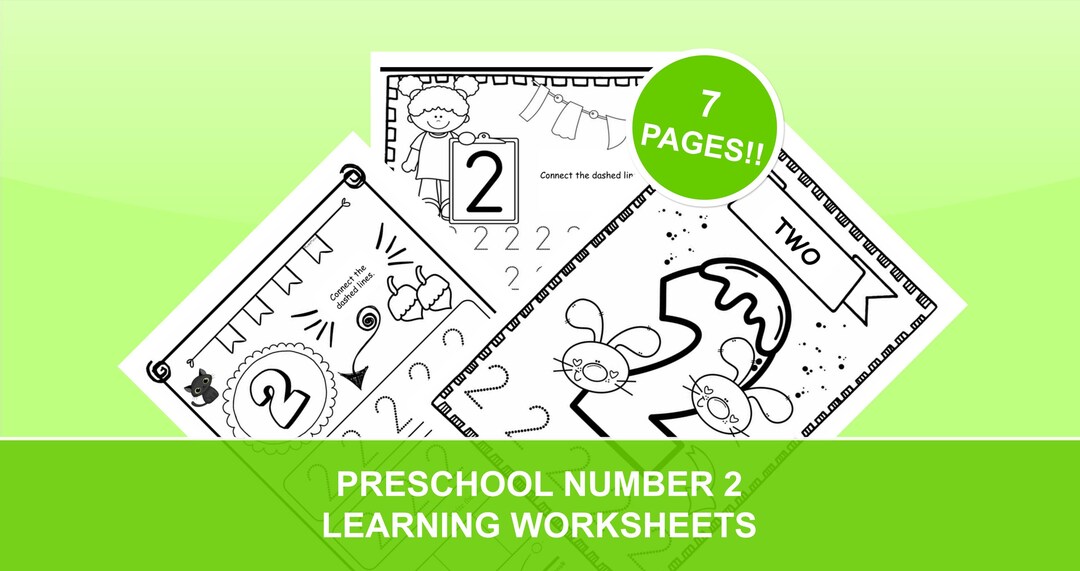
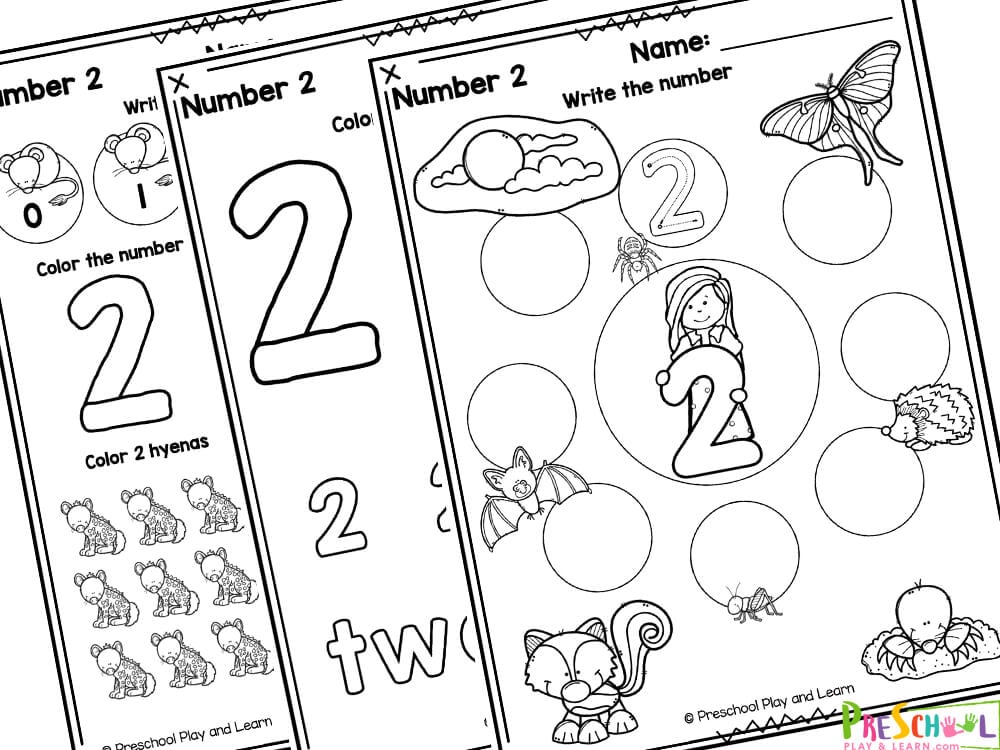
Early childhood numeracy begins with recognizing patterns, quantities, and individual symbols. While counting starts verbally, connecting the spoken word to the written digit requires targeted visual and tactile reinforcement. When educators and parents look to introduce early math concepts, finding well-designed materials makes all the difference. You can easily discover the best printable numbers 2 resources online to support handwriting, quantity recognition, and fine motor development without spending hours building sheets from scratch.
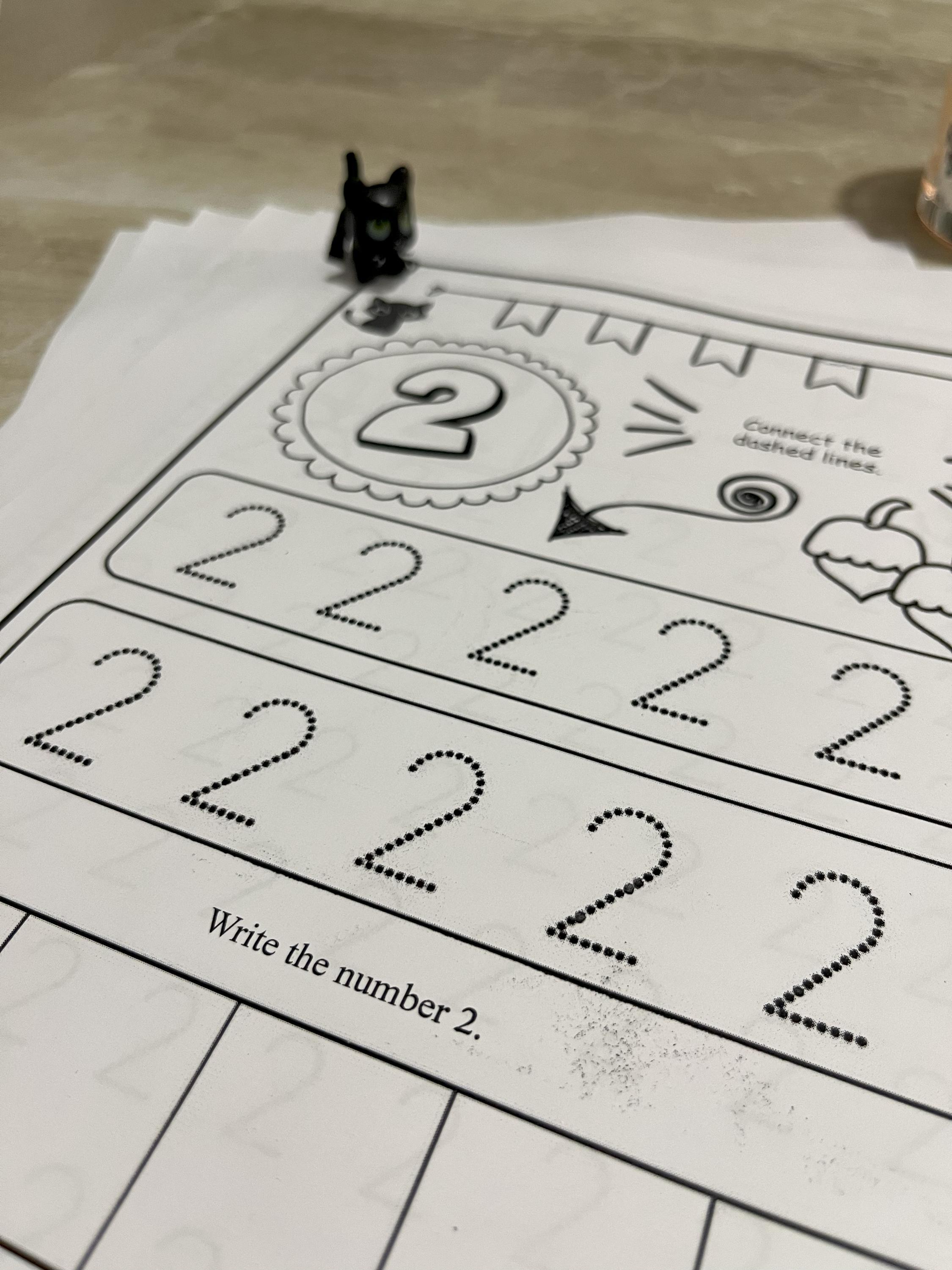
The number 2 is unique for early learners. Mechanically, it demands a smooth curve followed by an oblique downward slant and a sharp horizontal baseline—a sequence that challenges developing motor skills. Conceptually, it introduces the foundational idea of pairs and correspondence. The right printables bridge the gap between abstract numbers and physical counting.
Key Types of Printable Number 2 Resources
Not all printables serve the same developmental purpose. Depending on whether your learner is eighteen months old or five years old, you will want different worksheet styles to match their current dexterity and cognitive stage.
1. Tracing and Handwriting Worksheets
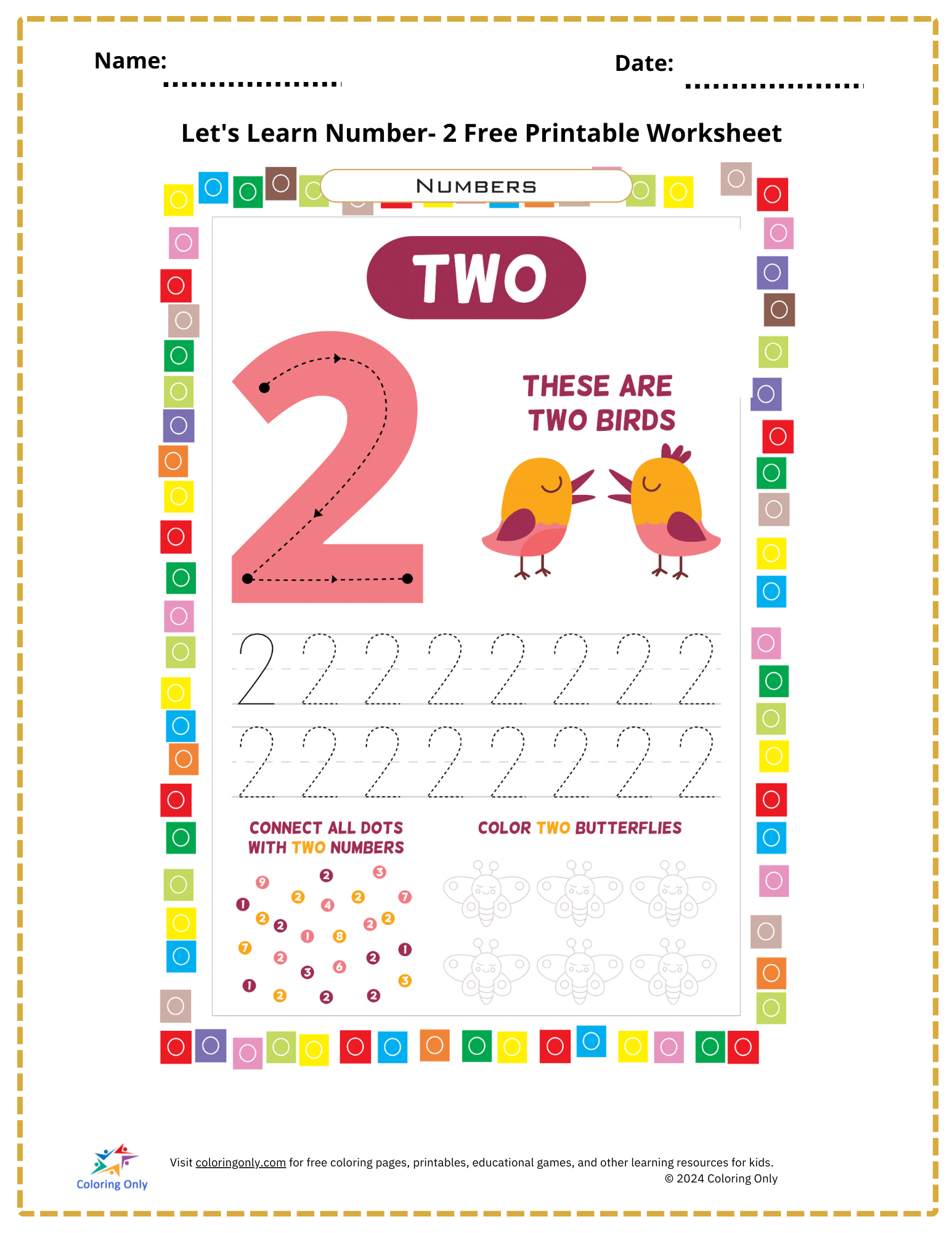
Tracing sheets help children internalize the stroke order of the numeral. The best tracing resources include directional arrows and starting dots that prevent bad habits, such as starting from the bottom line. Look for printables that progress from large, wide-track numerals to smaller lines with dotted guides.
2. Dot-Marker and Dauber Pages
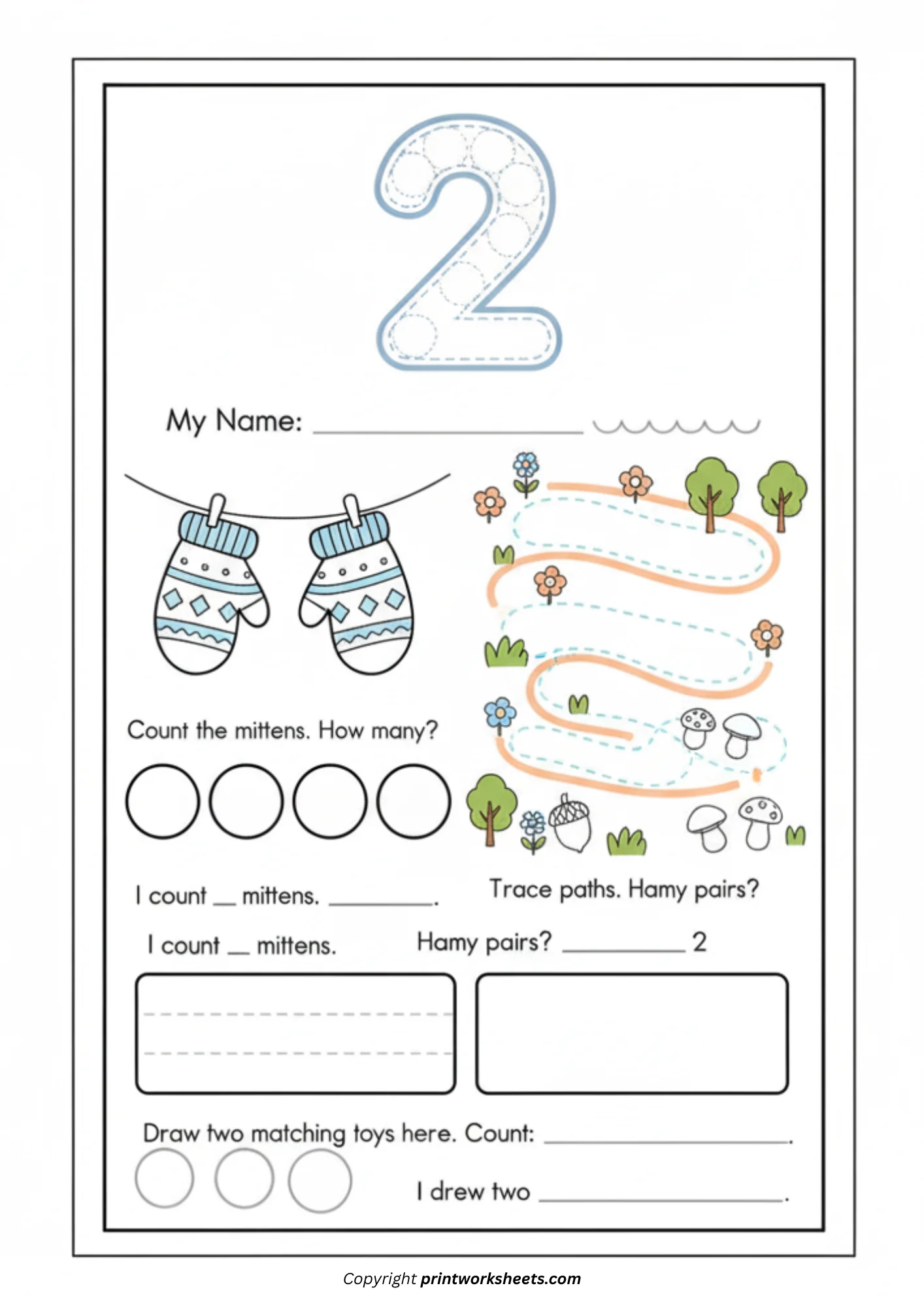
Ideal for toddlers and young preschoolers, dot-marker pages feature large outlines of the number 2 filled with open circles. Children stamp these circles using bingo daubers, stickers, or fingerprint impressions. This builds hand-eye coordination while establishing the visual shape of the number long before a child can reliably control a pencil.
3. Number Sense and Subitizing Mats
Subitizing is the ability to instantly recognize a small group of items without counting them one by one. Quality number 2 printables integrate ten-frames with two filled boxes, dice faces showing two pips, dominoes, and paired illustrations (such as two shoes, two socks, or two eyes). These teach children that "2" is not just a symbol, but a concrete value.
4. Cut-and-Paste Sorting Sheets
Interactive sheets require children to cut out various quantities or representations and paste only the groups of two into a designated area. This reinforces classification skills, bilateral hand coordination, and active decision-making during table time.
Where to Discover the Best Printable Numbers 2 Resources Online
The internet offers thousands of educational printables, but quality varies considerably. Poorly scaled margins, cluttered layouts, and confusing fonts can frustrate a child. Here are the top digital hubs providing vetted, developmentally appropriate number 2 printables:
- Twinkl: A global favorite for teachers, Twinkl offers curriculum-aligned number 2 display cards, sensory tray mats, and differentiated tracing strips. Their materials are formatted cleanly and adhere to standard handwriting scripts.
- Teachers Pay Teachers (TpT): TpT features hundreds of free and affordable number 2 bundles created by practicing classroom teachers. You can find comprehensive "Number of the Week" units that treat the number 2 from multiple sensory angles.
- Totschooling: If you teach toddlers or preschoolers, Totschooling specializes in colorful, play-based printables. Their do-a-dot mats, playdough cards, and matching puzzles for the number 2 are particularly engaging.
- Education.com: Excellent for structured, standards-based worksheets. They host clean, no-nonsense practice sheets that pair the numeral 2 with counting exercises, coloring elements, and simple word tracing.
- Montessori Nature and Preschool Mom: These niche sites offer clean, minimalist 3-part cards and counting cards that emphasize realism, avoiding the visual overstimulation found in heavily cartoonish worksheets.
How to Choose High-Quality Number 2 Printables
Before sending sheets to your printer, evaluate them against these practical criteria to ensure they support learning effectively:
- Font Clarity: The printed numeral must feature a clear, standard top curve and a flat base. Stylized, overly decorative, or condensed fonts confuse early readers who are still building a mental model of the digit.
- Visual White Space: Cluttered borders, heavy background patterns, and excessive illustrations distract young learners. A quality sheet leaves plenty of open space for uncoordinated hand movements.
- Progressive Difficulty: A solid printable set includes multiple pages: one for sensory introduction (like finger tracing or playdough filling), one for guided pencil practice, and one for independent quantity identification.
- Ink Efficiency: Look for black-and-white line art options. Heavy solid-color backgrounds drain ink cartridges rapidly without adding educational value.
Hands-On Activities to Pair with Printable Sheets
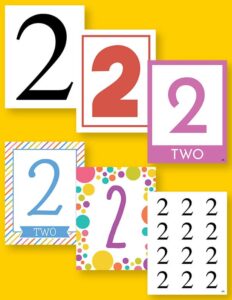
Paper worksheets yield the highest retention when integrated into multi-sensory play. Rather than using printables strictly with pencils and crayons, incorporate these interactive variations:
Playdough Shaping Mats
Slide a full-page number 2 outline into a clear plastic sheet protector or laminate it. Have your child roll playdough into long "snakes" and shape them along the curves of the number. This builds fine motor strength in the hand arches and fingers, which directly prepares them for pencil grip.
Pair-Hunting Sensory Bins
Print a set of small number 2 flashcards or counting tokens and bury them in a bin filled with dried beans, colored rice, or shredded paper. Provide tongs or scoops. Challenge the child to dig up two matching items (such as two buttons, two toy cars, or two acorns) and place them on the printable counting mat.
The Rainbow Trace Technique
Take a single large tracing sheet of the number 2. Instead of having the child trace it once with a graphite pencil, have them choose six different colored crayons. Guide them to trace the path of the number in red, then orange, yellow, green, blue, and purple. By the end, they have practiced the stroke six times, producing a vibrant "rainbow number" without feeling bored.
Troubleshooting Common Number 2 Learning Roadblocks
Teaching the number 2 frequently uncovers two standard developmental hurdles: letter/number reversals and pencil grip fatigue.
Reversals
It is completely normal for children between the ages of three and six to write the number 2 backwards. Their brains are still mastering spatial orientation. To correct this gently, use printables that place a prominent green dot at the top-left start position and a red star at the bottom-right finishing point. Verbal cues also help: "Up, around, slide down the hill, and straight out along the grass."
Pencil Fatigue
If a child resists handwriting sheets, do not force pencil work. Switch to cotton swabs dipped in washable paint, small stickers placed along the outline, or finger-tracing with shaving cream spread over a laminated sheet. Physical stamina develops gradually; conceptual understanding should always come first.
Final Tips for Organizing Your Math Printables
Once you download your selected resources, organize them into a systematic system. Keep reusable sheets in a dedicated binder using heavyweight plastic sheet protectors. Supply dry-erase markers so multiple children can reuse the same counting mats without repeated printing.
By selecting clear, purposeful printables and combining them with tactile manipulatives, you create an engaging early math foundation that sets young learners up for long-term confidence in numeracy.