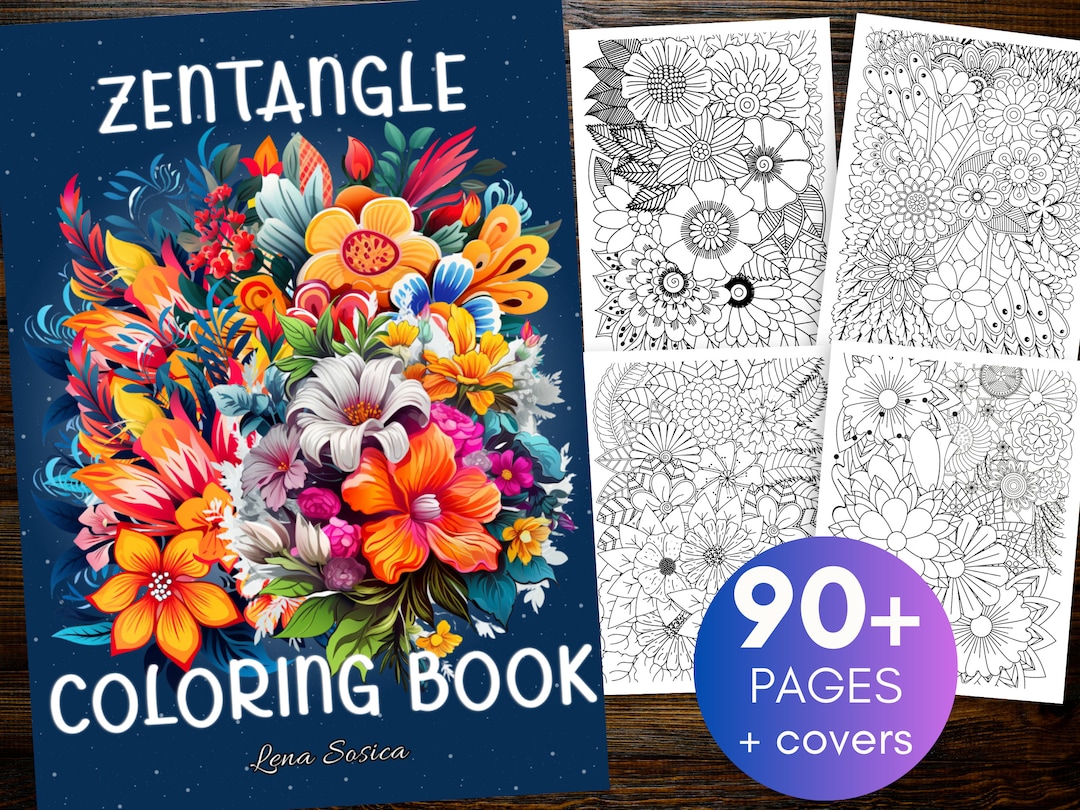
Discover The Calming World Of Zentangle Coloring Books
In our fast-paced digital world, finding moments of genuine stillness can feel nearly impossible. Between endless notifications, work deadlines, and daily responsibilities, our minds rarely get a break. Enter the mindful art movement: a growing trend toward intentional, analog hobbies designed to quiet the nervous system. Among these, you can discover the calming world of Zentangle coloring books, a unique fusion of structured pattern-making and meditative relaxation that has captured the hearts of millions.

Unlike traditional coloring books that often feature complex landscapes or cute animals, Zentangle-inspired books focus on abstract, repetitive patterns known as "tangles." These books offer a structured yet creative outlet that quiets the inner critic and invites you into a state of flow. Whether you are an experienced artist or someone who insists they "cannot draw a straight line," this practice meets you where you are.
Understanding the Zentangle Method
To truly appreciate these books, it helps to understand where they come from. Created by Rick Roberts and Maria Thomas, the original Zentangle Method is an easy-to-learn, relaxing, and fun way to create beautiful images by drawing structured patterns. Traditionally, this is done on small square paper tiles using black ink, focusing on one intentional stroke at a time.
Zentangle coloring books adapt this philosophy for a broader audience. Instead of starting with a blank page, you are provided with pre-drawn grids, geometric outlines, or partially filled compositions. Your role is to complete the patterns, shade the intersections, and bring depth to the design. This removes the intimidation of the blank page while retaining the core meditative benefits of the original practice.
Why Zentangle Coloring Books Reduce Stress
If you have ever tried meditation only to find your mind wandering constantly, repetitive pattern art might be the missing puzzle piece you need. This activity engages your hands and visual focus just enough to keep everyday worries at bay, functioning as an active form of meditation.
The Power of Repetitive Motion
Human brains respond positively to rhythm and repetition. When you trace curves, draw dots, and fill in small geometric spaces, your brain enters a relaxed state similar to what happens during deep breathing exercises or yoga. Heart rates tend to lower, and muscle tension slips away as you concentrate on the simple movement of pen on paper.
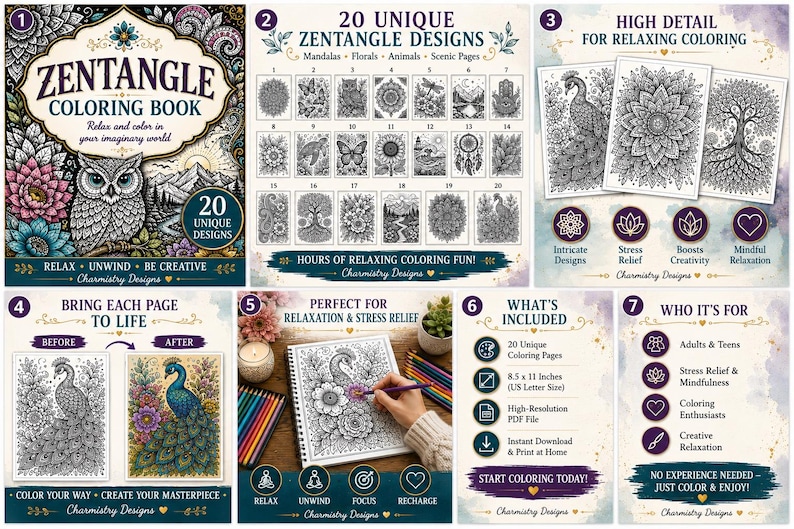
Video: Coloring book for adult Zentangle and Mandala art
Silencing the Inner Critic
Traditional art can sometimes trigger performance anxiety—worries about whether a drawing "looks good" or "makes sense." Zentangle eliminates this pressure. There are no up-or-down orientations, no mistakes, and no eraser required. If a line goes slightly awry, the method encourages you to incorporate it into the pattern. This mindset shift spills over into daily life, teaching self-compassion and acceptance.
What Makes These Books Different From Standard Adult Coloring Books?
While standard adult coloring books are fantastic for relaxation, Zentangle-focused books offer distinct characteristics that set them apart:
- Focus on Creation vs. Filling In: Many pages require you to draw the patterns yourself following simple step-by-step guides, rather than just coloring inside pre-existing lines.
- Monochromatic Roots: While you can certainly use vibrant markers or colored pencils, many enthusiasts stick to fine-liner pens, emphasizing contrast, line weight, and shading.
- Intricate Detail: The small, compartmentalized nature of tangles forces you to slow down completely, making it impossible to rush through a page.
Tips for Getting the Most Out of Your Practice
To turn your coloring session into a true mindfulness ritual, a few intentional setup choices can make a significant difference:
- Choose the Right Tools: Invest in a set of fine-tip black ink pens (such as Micron pens) that won't bleed through the paper. If you prefer color, use water-based markers or soft colored pencils.
- Create a Quiet Space: Set aside 15 to 30 minutes without screens or loud background noise. Soft instrumental music or ambient soundscapes can help set the mood.
- Focus on the Stroke: Pay attention to the physical sensation of the pen gliding across the paper. Notice the sound it makes and the pressure of your hand. When your mind drifts to your to-do list, gently guide your focus back to the current line.
- Don't Rush to Finish: A single Zentangle page can take multiple sittings. Treat the process as the reward, rather than the finished product hanging on your wall.
Finding the Right Book for Your Skill Level
The market offers a wide variety of titles tailored to different experience levels. If you are entirely new to pattern drawing, look for beginner-friendly editions that include step-by-step breakdowns of foundational tangles like "Coxcomb," "Flux," or "Printemps." For those with more experience, advanced architectural or floral-based Zentangle books offer complex compositions that can keep you engaged for hours.
Taking up this relaxing hobby requires very little investment—just a book, a good pen, and a willingness to slow down. By integrating this creative ritual into your routine, you gain a portable tool for mental clarity that you can take anywhere, whether you are unwinding after a long workday or traveling.