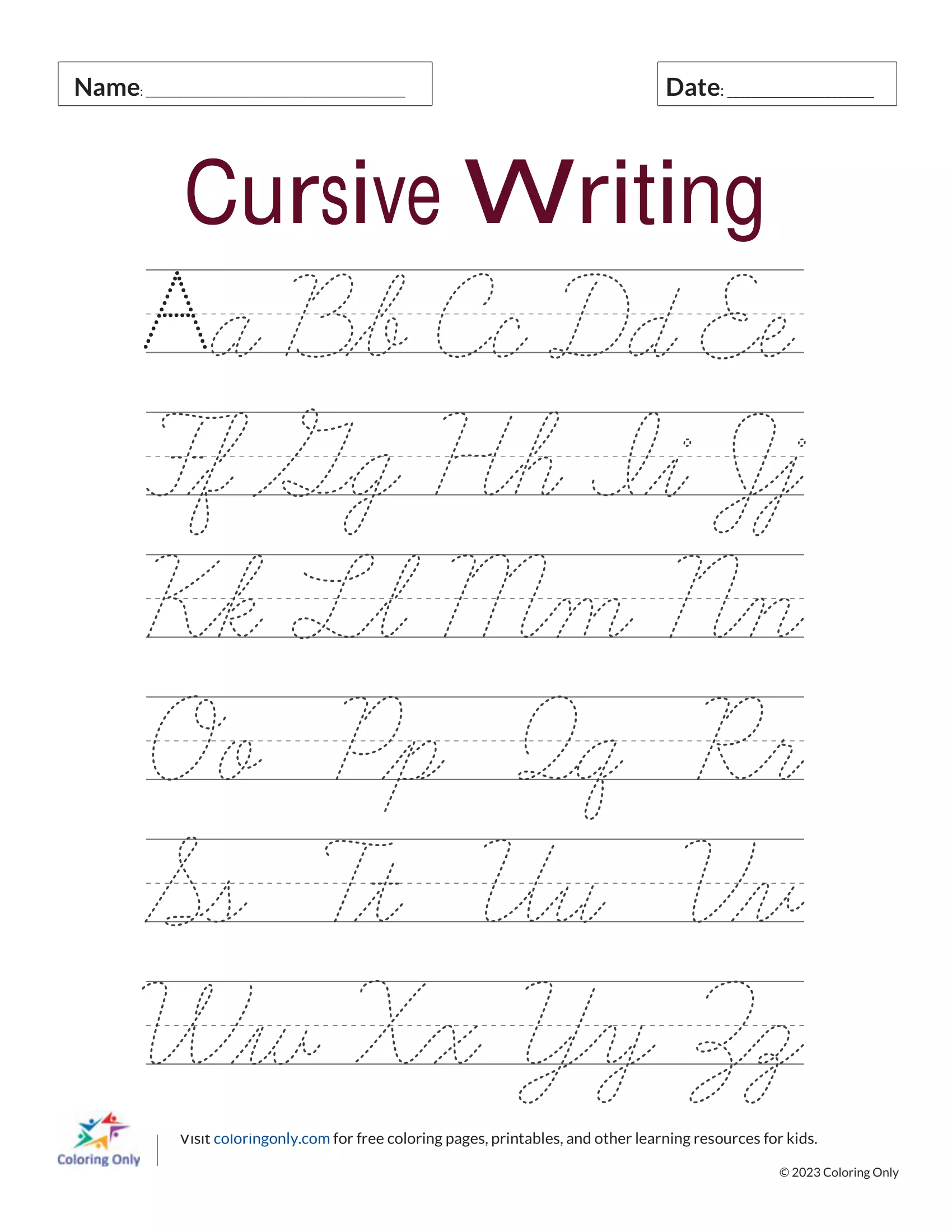
Discover the Fun of Cursive Handwriting with Printable Learning Charts
In an era dominated by touchscreens and mechanical keyboards, the rhythmic flow of a pen moving across paper might seem like a relic of the past. Yet, learning to write in script remains one of the most effective ways to develop fine motor coordination, cognitive agility, and reading fluency. When you discover the fun of cursive handwriting with printable learning charts, practice shifts from a tedious classroom chore into an empowering, creative routine that learners of all ages can genuinely enjoy.

Why Cursive Still Matters in a Digital Era
While keyboard proficiency is undeniably essential today, cognitive science demonstrates that handwriting activates neural pathways in ways typing simply cannot match. Cursive writing, in particular, offers unique developmental advantages:
- Continuous Brain Stimulation: The flowing motion of cursive requires hand-eye coordination, spatial awareness, and fluid movement. This stimulates both brain hemispheres simultaneously, encouraging functional connectivity.
- Reduced Reversal Errors: Children struggling with letter reversals (such as confusing "b" and "d") often find cursive helpful. Because cursive letters have distinct starting points and continuous directional flow, accidental letter flipping drops dramatically.
- Increased Writing Speed: Because the pen rarely leaves the page within a single word, fluent cursive writers can capture their thoughts faster and more naturally than those using detached manuscript print.
- Historical and Personal Literacy: Reading historical documents, ancestral journals, handwritten notes, and even signing legal documents requires cursive comprehension. Without cursive training, primary source material becomes unreadable to future generations.
Discover the Fun of Cursive Handwriting with Printable Learning Charts
Many children and adult beginners resist cursive because traditional workbooks can feel dense, rigid, and overwhelming. Printable learning charts solve this issue by isolating key skills into accessible, bite-sized visual references.
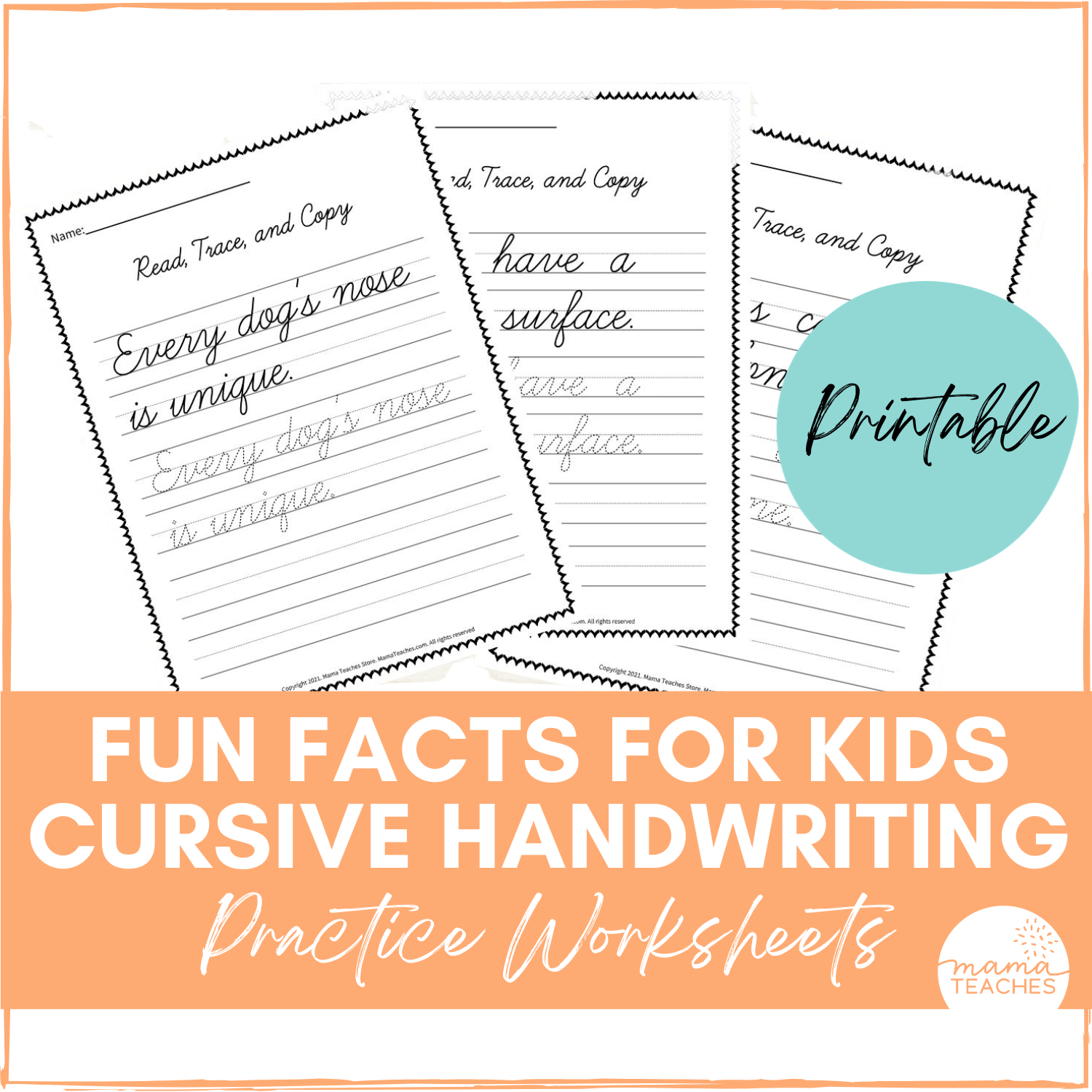
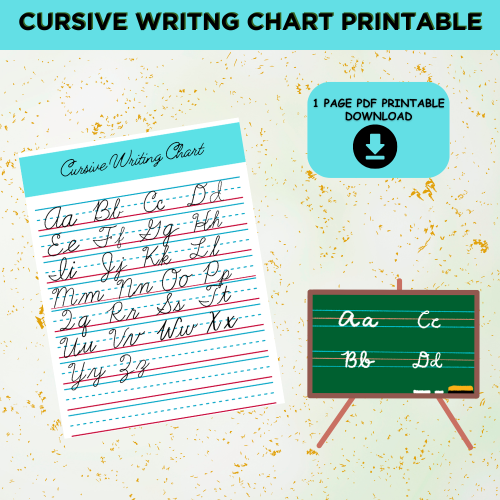
Unlike heavy workbooks, a printable chart functions as an immediate, clear dashboard. A student can mount it on the wall beside their desk, slip it under a transparent plastic sleeve for dry-erase tracing, or keep it flat on their workspace as an unobtrusive reference tool. This low-pressure format removes intimidation, letting learners focus on letter formations without worrying about filling up page after page of repetitive lines.
Key Features of an Effective Cursive Learning Chart
Not all reference printables deliver the same instructional value. When selecting or designing a cursive chart for your home or classroom, look for these foundational elements:
1. Clear Directional Cues
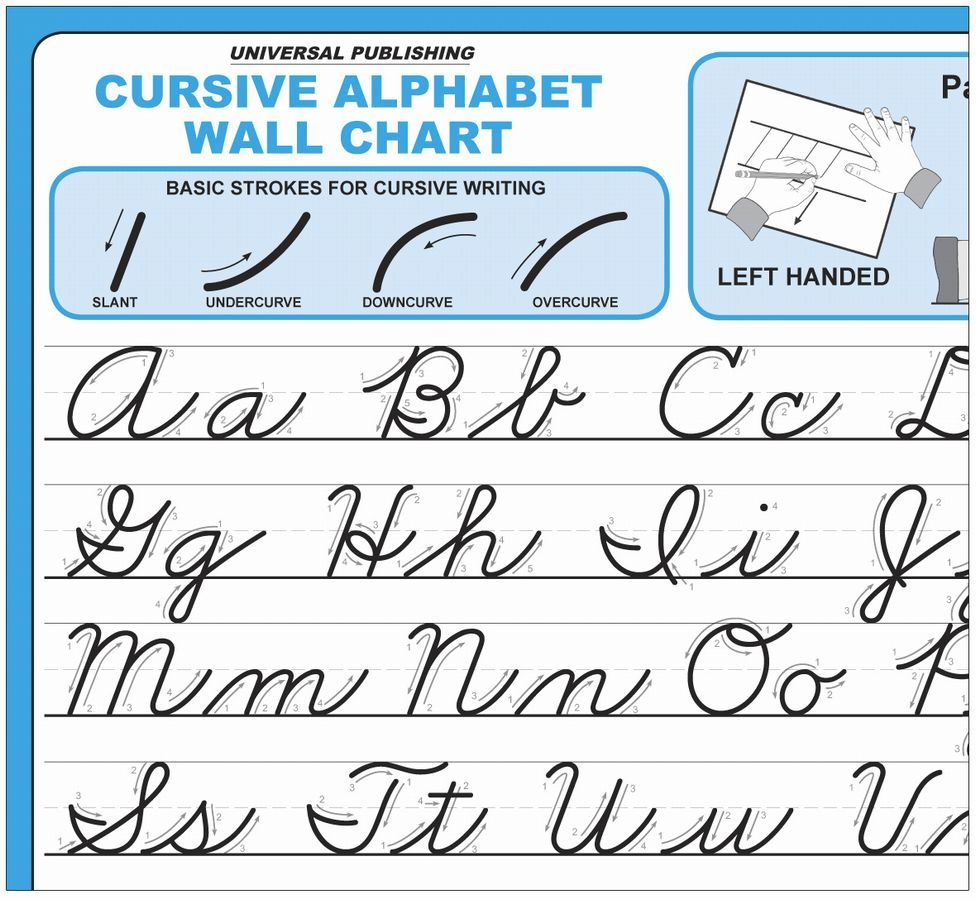
Letters must feature directional arrows and numbered stroke markers. In cursive, the entry stroke and exit loop dictate whether a letter will connect cleanly to the next character. Charts with visual start dots and flow arrows eliminate guesswork and prevent learners from ingraining incorrect stroke habits.
2. Standard Three-Line Proportions
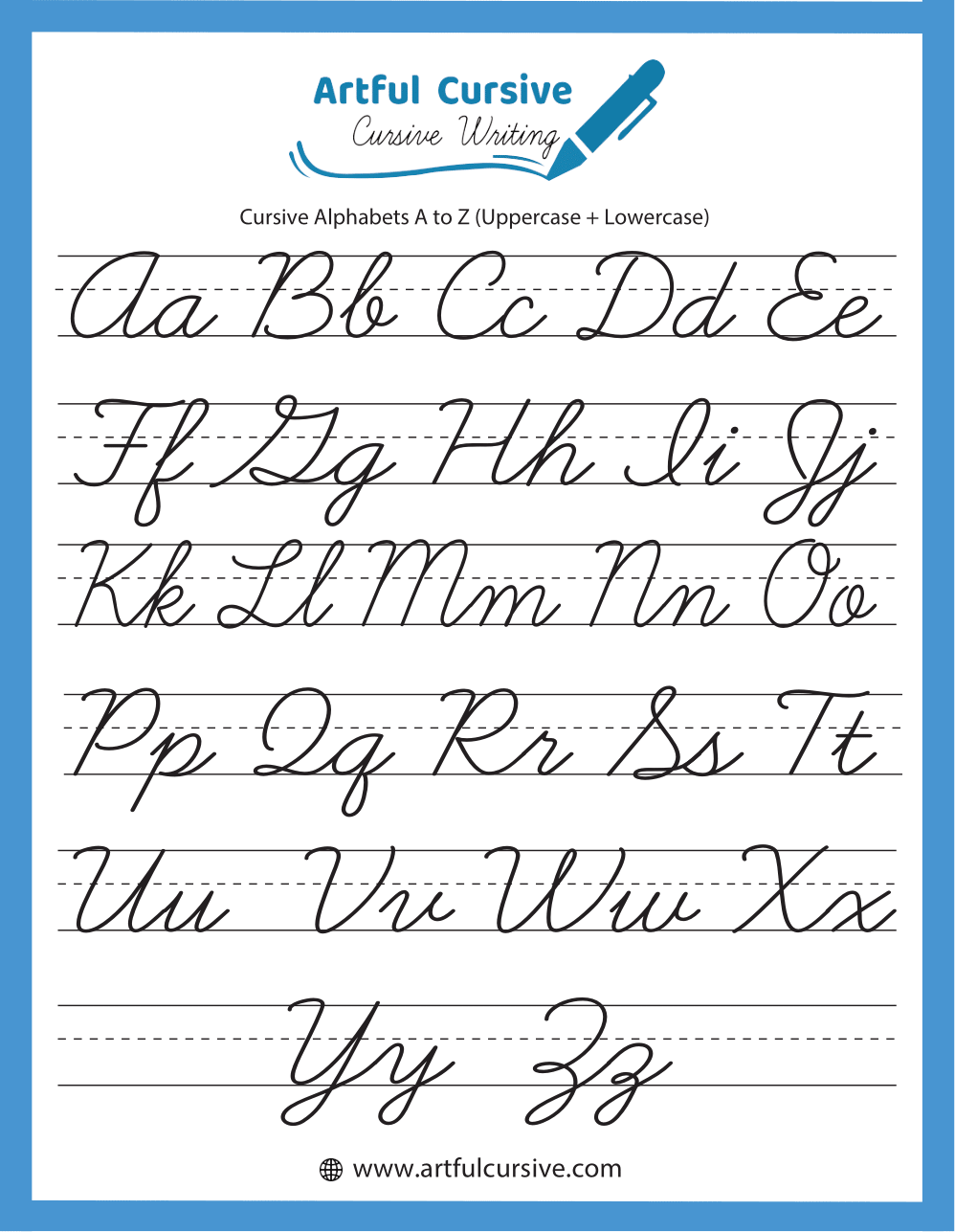
A reliable chart provides consistent ruling: a baseline, a midline (dashed line), an ascender line, and a descender line. Cursive letters rely on precise proportions—for instance, the uppercase G loops deep beneath the baseline, while the lowercase h reaches toward the top ascender. Proper proportional guidelines ensure neat, legible writing.
3. Letter Family Groupings
Video: Cursive writing a to z | Cursive writing abcd | Cursive abcd | Cursive letters | Cursive handwriting

Rather than presenting the alphabet purely from A to Z, well-designed charts frequently group letters by their fundamental movement patterns. Organizing letters into families helps muscle memory develop far more rapidly:
- The Wave Family (Downcurve letters): a, d, g, q, c, and o all begin with the same counterclockwise circular stroke.
- The Tree Climbers (Undercurve letters): i, t, u, w, and j share an initial upward sweeping stroke from the baseline.
- The High Loopers (Overcurve loops): l, e, h, k, b, and f extend gracefully upward before looping back down.
- The Humps and Hills: m, n, v, x, y, and z demand rhythmic rhythmic up-and-over motions.
Step-by-Step Routine to Master Cursive with Printables
Consistency and technique trump marathon practice sessions. To get the best results without causing hand fatigue or frustration, follow this structured routine:
- Establish the Dynamic Tripod Grip: Ensure the pencil sits between the thumb and index finger, resting gently on the middle finger. The grip should be relaxed—pressing too hard causes hand strain and jerky letterforms.
- Adjust Paper Tilt: Unlike manuscript printing where the paper remains upright, cursive requires an angled page. Right-handed writers should tilt the paper roughly 30 to 45 degrees counterclockwise; left-handed writers should tilt the paper clockwise. This natural angle allows the wrist to glide smoothly across the lines without smudging.
- Warm Up with Rhythm Strokes: Before tackling full letters, spend two minutes tracing fluid waves, continuous loops (like a row of cursive e's), and upward strokes on the chart. This loosens forearm muscles and builds rhythmic confidence.
- Master Connections Early: The true hurdle of cursive is not forming isolated letters, but mastering joins. Pay special attention to letters that finish at the midline rather than the baseline—specifically b, o, v, and w. Charts illustrating tricky pairings (such as br, on, and va) build the transition skills required for real-world writing.
Engaging Activities Beyond Repetitive Drills
Transforming script practice into an enjoyable ritual keeps motivation high. Here are practical ways to use printable charts creatively:
Dry-Erase Tracing Boards
Slide a full-color alphabet chart into a heavy-duty sheet protector or laminating pouch. Equip learners with fine-tip dry-erase markers in vibrant colors. The smooth surface minimizes friction, allowing pens to glide effortlessly while making mistakes easy to wipe away in a single swipe.
Rainbow Letter Tracing
Print a large-format outline chart. Instruct the student to trace a single letter using one colored pencil, then trace over the same path with another color, repeating the process five or six times. By the finish, the letter gleams like a rainbow, and the student has reinforced the motor pattern half a dozen times without boredom.
Real-Life Connection Challenges
Once basic letter families are familiar, shift from abstract drills to functional writing tasks. Have your learner use the chart as a reference guide to write out:
- Weekly grocery lists and recipe cards
- Birthday postcards to grandparents or relatives
- Secret codes where letters must link correctly to be deciphered
- Personalized signatures designed with flourishes and style
The Path to Lifelong Legibility
Mastering cursive handwriting does not require hours of exhausting drills. With the right visual tools, supportive pacing, and regular ten-minute sessions, learners build a graceful, expressive skill that stays with them for life. Download or print an intuitive reference chart today, clear a workspace, and discover firsthand how satisfying and relaxing putting pen to paper can truly be.