Discover the Molten Truth About Mantle Matter
When most people think of Earth's deep interior, they picture a fiery sea of liquid lava sloshing around beneath our feet. Hollywood movies and classic science fiction have long reinforced the image of a vast, glowing ocean of magma churning at the center of our planet. However, modern geology reveals a much more nuanced and fascinating reality. To truly understand our dynamic planet, we must discover the molten truth about mantle matter, separating scientific fact from popular misconception.

What is Earth's Mantle?
Sandwiched between the brittle outer crust and the super-dense metallic core lies the mantle, making up about 84% of Earth’s total volume. This colossal layer extends from roughly 10 kilometers (6 miles) beneath the ocean floor down to about 2,900 kilometers (1,802 miles) deep.
Composed primarily of silicate rocks rich in iron and magnesium—such as peridotite—the mantle is the engine room of planetary geology. It drives continental drift, fuels volcanic eruptions, and regulates the surface temperature that makes life possible. Yet, despite its immense heat, the vast majority of it is not actually a liquid.
The Great Misconception: Is the Mantle Liquid?
The short answer is no. If you could somehow take a sample from the upper mantle, it would not feel or act like a liquid. Under normal conditions, mantle matter is solid rock.
However, describing it as "solid" can also be misleading. In geology, solid does not always mean rigid or brittle. Because of the extreme pressures and scorching temperatures found deep underground, mantle rocks behave in a way that confounds everyday intuition.
Ductile Deformation and Viscosity
Over millions of years, under immense confining pressure, mantle rocks exhibit plasticity. They flow. This behavior is similar to how cold Silly Putty or extremely thick, heavy asphalt behaves: if you hit it with a hammer, it shatters like a solid, but if you leave it on a table, it slowly slumps and spreads like a fluid.
- Solid yet mobile: The mantle deforms ductilely, a property known as solid-state creep.
- Slow motion: Convection currents move mantle material at rates of just a few centimeters per year—roughly the speed at which human fingernails grow.
- High pressure: The immense weight of the overlying crust keeps these rocks from melting, despite temperatures that range from 500°C near the crust to over 4,000°C near the core.
How Magma Actually Forms
If the mantle is solid, where do volcanoes get their lava? This is where we uncover the true mechanics of melting underground. Magma is not just sitting in cavernous pools waiting for an opening; it is generated through specific physical processes that alter solid mantle rock.
1. Decompression Melting

As solid mantle rock slowly rises toward the surface—at divergent boundaries like the Mid-Atlantic Ridge or under mantle plumes—the pressure upon it decreases. Because the rock is already extremely hot, this drop in pressure lowers its melting point, causing a small fraction of the rock to liquefy. This newly formed melt then pools and rises to form basaltic crust.
2. Flux Melting
At subduction zones, where oceanic plates dive back into the mantle, water and other volatiles are dragged downward. These substances act like salt on icy winter roads, lowering the melting point of the surrounding mantle wedge. This triggers widespread melting, feeding explosive volcanic arcs like the Pacific Ring of Fire.
Convection Currents: The Planet's Thermal Engine
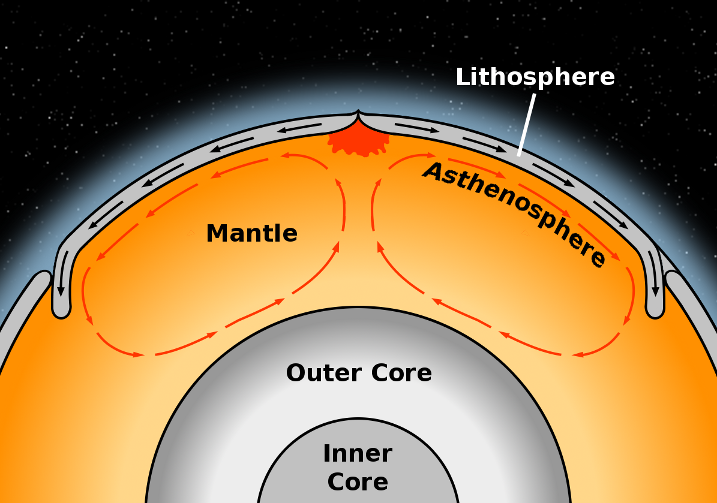
The movement within the mantle is driven by thermal convection. Heat from the radioactive decay of elements in Earth's deep interior and leftover heat from planetary formation warms the bottom of the mantle.
Hotter, less dense mantle matter slowly rises toward the crust. As it reaches the upper regions, it loses some of its heat, becomes denser, and sinks back down toward the core. This massive, planet-wide conveyor belt drags tectonic plates along with it, creating earthquakes, mountain ranges, and ocean basins.
Modern Scientific Insights
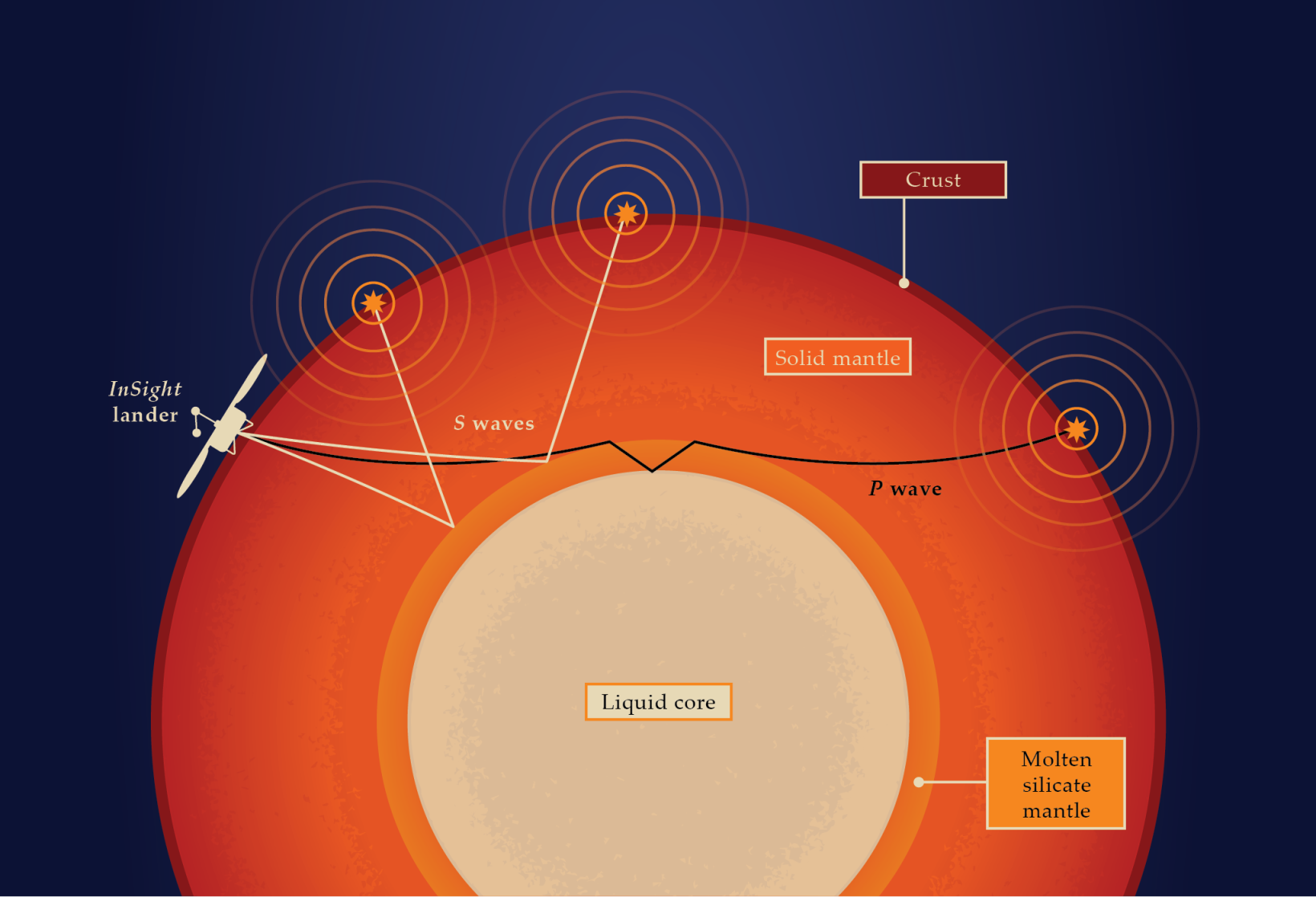
For decades, geologists had to rely on indirect evidence—such as seismic waves generated by earthquakes—to map the mantle. Today, advanced seismic tomography allows scientists to create three-dimensional "X-rays" of Earth's interior.
These studies have revealed massive structures deep within the mantle, including continent-sized blobs of unusual material sitting right above the core-mantle boundary. These large low-shear-velocity provinces (LLSVPs) play a crucial role in feeding deep mantle plumes, which in turn create hotspots like Hawaii and Yellowstone.
Conclusion
Earth is far more complex than a simple ball of rock with a liquid center. When we look past the Hollywood tropes and discover the molten truth about mantle matter, we find a realm of solid rock that flows like molasses, driven by primordial heat. Understanding this hidden engine not only explains the restless nature of our planet's surface, but also deepens our appreciation for the forces that shape habitable worlds across the universe.