DIY Daniel Boone Costume: Simple Step-by-Step Guide
Whether you need an outfit for a school history presentation, Pioneer Day, or a classic frontier-inspired Halloween look, creating a DIY Daniel Boone costume is both budget-friendly and surprisingly simple. The iconic 18th-century frontiersman look relies on rustic textures, earthy tones, and distinctive frontier gear that you can easily recreate using thrift store finds, craft felt, and a few basic household supplies.

While the real Daniel Boone famously disdained coonskin caps—preferring practical, wide-brimmed felt beaver hats—pop culture has permanently linked his legend to the fringed buckskin tunic and raccoon tail cap popularized by 1950s television. This guide shows you how to capture that recognizable, iconic frontiersman look with minimal sewing required.
Costume Materials and Sourcing Checklist
Before cutting or gluing, gather your base items. Visiting a local thrift store can save you significant time and money compared to buying pre-made polyester costumes.
- Top: An oversized tan, khaki, or brown long-sleeve cotton or suede-look shirt.
- Pants: Neutral-colored trousers, brown chinos, or tan leggings.
- Cap: Faux raccoon fur fabric, a strip of faux fur trim, or a basic brown beanie as a base.
- Belt: A wide brown leather belt with a simple brass or metal buckle.
- Fabric & Trim: Brown felt, microsuede scraps, or fringe trim from a craft store.
- Accessories: Thick twine, cardboard or paper mache, brown shoe polish, and a toy flintlock rifle.
- Tools: Fabric scissors, hot glue gun (with extra glue sticks), safety pins, and fabric glue.
Crafting the Shirt for Your DIY Daniel Boone Costume
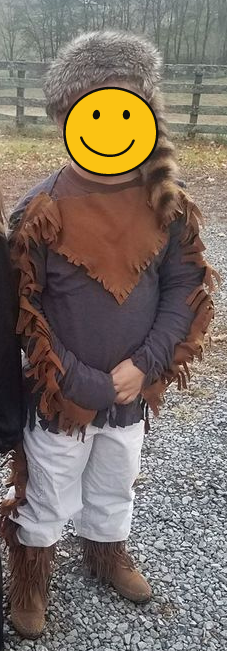
The centerpiece of any frontiersman outfit is the fringed hunting shirt, traditionally made from tanned deerskin (buckskin). You do not need real leather to get the authentic look; a heavy cotton canvas, fleece, or faux-suede thrifted button-down works brilliantly.
1. Modify the Collar and Placket
Modern dress shirts have sharp, structured collars that look out of place on an 18th-century frontiersman. Cut the collar points off carefully with fabric shears to leave a simple rounded band, or cut a shallow "V" slit straight down from the neck opening about four to six inches. Punch small holes along the slit and lace brown suede cord or twine through them in a crisscross pattern to mimic historical leather tunics.
2. Add the Signature Fringe
Fringe served a functional purpose on the frontier—it helped shed rainwater away from the seams of leather garments. On your costume, it provides instant visual recognition.
- Cut strips of brown felt or microsuede roughly 3 inches wide and the length of your shirt sleeves, chest, and hem.
- Use sharp scissors to make vertical cuts every 1/4 inch along each strip, leaving a 1/2-inch solid band at the top.
- Apply fabric glue or a bead of hot glue along the solid edge and affix the fringe across the chest seam (shoulder-to-shoulder), down the outer seam of each sleeve, and around the bottom hem.
If you prefer a rugged, worn-in appearance, lightly distress the fringe by rubbing it between your palms or gently brushing the raw edges with a wire pet brush.
Making the Coonskin Cap
The hat is the most distinct accessory of the costume. You can purchase a cheap novelty tail, but crafting the cap from scratch allows you to size it comfortably for children or adults.
Method 1: The Beanie Base (Fastest)
Purchase a cheap brown or gray knit beanie. Cut a strip of long-pile faux fur wide enough to wrap around the cuff of the hat. Glue it securely around the brim. For the tail, cut two elongated teardrop shapes from striped faux fur (or create bands using black fabric marker on brown fur), glue the edges together, stuff with a handful of cotton balls or polyester fiberfill, and anchor it securely to the back rim of the beanie with needle and thread or heavy-duty hot glue.
Method 2: Cut-and-Glue Faux Fur Cap
- Measure the circumference of your head just above the ears and add 1 inch for seam allowance.
- Cut an oval piece of faux fur for the crown (roughly 8x10 inches for an adult) and a long rectangular band (circumference length by 4 inches tall).
- Turn the pieces fur-side in and join them using hot glue or a simple whipstitch around the perimeter.
- Turn the hat right-side out, shaking out the fur fibers along the seam.
- Attach your faux raccoon tail directly to the center back seam.
Pants, Leggings, and Footwear
Frontier hunters needed practical legwear capable of enduring brush, thorns, and wet foliage. Keep the lower half of the costume subdued so it balances the textured top and cap.
Frontier Leggings
Pair tan, beige, or olive-drab pants with knee-high gaiters or leggings. You can create quick leggings by wrapping rectangular cuts of brown felt or burlap around your calves, securing them beneath your knees and around your ankles with leather cording or jute twine.
Footwear Options
Moccasins are ideal. If you do not own moccasins, a pair of plain brown leather boots, suede ankle boots, or even brown slip-on shoes work well. Avoid sneakers with bright white soles or modern logos. If modern footwear is unavoidable, pull brown knit wool socks over the shoe uppers to disguise logos and modern laces.
Frontier Accessories That Complete the Look
A pioneer lived out of what he carried. Adding authentic props elevates a basic DIY outfit into a believable historical portrayal.
The Powder Horn
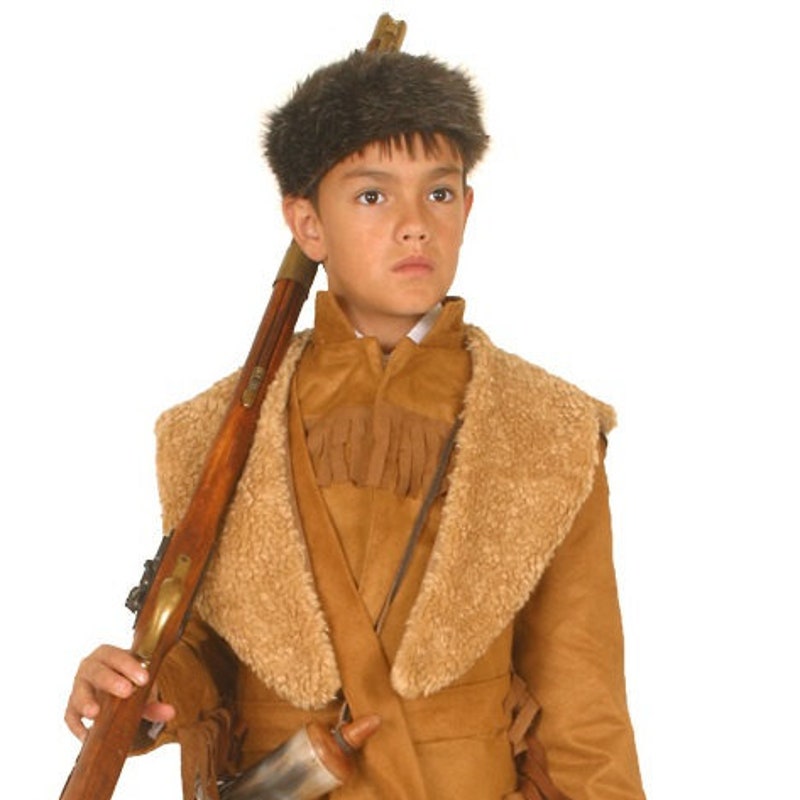
A powder horn carried gunpowder dry and ready for use. Create a faux horn using an empty party horn or a curved piece of cardboard wrapped in masking tape. Coat the form with a mixture of school glue and water, layer paper towels over it to create a smooth surface, and allow it to dry. Paint the base white or ivory and the tip dark brown or black. Tie a braided jute string to both ends and drape it over your shoulder.
Haversack (Hunting Bag)
Every long hunter carried a small shoulder pouch for flint, patches, and rations. Use a small canvas messenger bag, a brown crossbody purse, or sew a basic 8x10-inch pouch from leftover felt. Wear the strap diagonally across the chest so the bag rests comfortably against the opposite hip, balancing the powder horn on the other side.
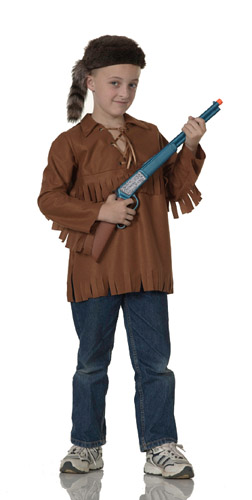
Toy Flintlock Long Rifle
Look for an inexpensive plastic flintlock rifle in costume shops. If it comes in bright neon colors, scuff the surface with medium-grit sandpaper, apply a coat of dark brown spray paint to the stock, and dry-brush silver acrylic paint onto the lock, hammer, and barrel to give it a realistic aged metal appearance.
Tips for School History Presentations
If this costume is being made for an educational wax museum or classroom biography report, consider leaning into historical accuracy:
- The Hat Clarification: Have the student mention during their presentation that Boone actually considered coonskin caps ungentlemanly and preferred black beaver felt hats. Carrying a felt hat while wearing the coonskin cap offers a great conversational hook!
- Safety Rules: Ensure school policies permit prop weapons before including the toy rifle. If realistic prop guns are prohibited, replace the rifle with a rolled-up antique paper map and a brass compass.
- Aging the Clothes: Dust a small amount of cocoa powder or cornstarch across the elbows and knees of the shirt and trousers to give the appearance of living in the wilderness.
With just an hour or two of assembly, your handmade Daniel Boone outfit will stand out with genuine rustic charm, durable comfort, and historic flair that looks far superior to flimsy store-bought alternatives.