Does Aspirin Clean Diamonds? The Truth & Risks
Scroll through social media or home-remedy forums, and you will inevitably find unusual household hacks for restoring fine jewelry. One tip that surfaces repeatedly leaves many ring owners asking: does aspirin clean diamonds, or is it an outdated myth that could quietly ruin a precious setting? While diamonds themselves are notoriously tough, using medication to restore your jewelry requires a closer look at chemical reactions, metal alloys, and gem safety.
Before you toss your engagement ring into an effervescent glass of dissolved tablets, it helps to understand how aspirin interacts with fine metals and whether it actually produces the brilliant sparkle you are after.
Does Aspirin Clean Diamonds Effectively?
The short answer is no, not particularly well—and certainly not better than standard, safer methods. While dissolved aspirin might remove a minute layer of surface dust, it is fundamentally ineffective at addressing the primary culprit behind dull diamonds: skin oils, lotions, soaps, and daily sebum.
The misconception typically stems from two factors:
- The confusion with effervescent cleaners: Many people confuse standard aspirin (acetylsalicylic acid) with effervescent hangover remedies or denture tablets (like Alka-Seltzer), which contain sodium bicarbonate and citric acid. The bubbling action of carbon dioxide in effervescent solutions can mechanically shake loose light dust, leading people to believe the chemical itself is a cleaner.
- Mild acidity: Acetylsalicylic acid creates a mildly acidic solution in water. While mild acids can break down light mineral deposits from hard water, they do not act as surfactants. Surfactants are necessary to break the chemical bond between grease, oil, and the carbon surface of a diamond.
A diamond is naturally lipophilic, meaning it attracts grease and repels water. When you apply hand lotion, cook, or wear cosmetics, a microscopic oil film forms on the diamond's facets, deadening its refractive index and stopping light from bouncing internally. Aspirin lacks the degreasing properties needed to emulsify these oils, leaving your stone nearly as dull as when you started.
The Hidden Risks of Using Aspirin on Jewelry
A pure diamond rates a 10 on the Mohs hardness scale and resists most acids at room temperature. The real hazard of using aspirin does not lie with the diamond itself, but with the setting holding it and any accent stones nearby.
1. Chemical Wear on Precious Metals
Fine jewelry is rarely made of pure element metals because pure gold and silver are too soft to hold gems securely. Instead, jewelers use alloys. For instance, 14k white gold contains gold mixed with nickel, palladium, or zinc, often coated in a micro-thin layer of rhodium for a mirror-like finish.
Exposing jewelry to repeated acid baths—even mild ones like acetylsalicylic acid—can gradually degrade base metal alloys, strip rhodium plating, and promote microscopic stress corrosion. Over time, this weakening can cause prongs to snap, risking the complete loss of your center stone.
2. Extreme Danger to Porous Accent Stones
Video: Expert Shares Top Mistakes when Cleaning Your Engagement Ring

Many diamond rings, pendants, and brooches feature secondary gems. If your piece contains pearls, opals, emeralds, turquoise, or tanzanite, an acidic aspirin solution can cause catastrophic, irreversible damage:
- Pearls: Composed of calcium carbonate (nacre), pearls dissolve rapidly when exposed to acidic solutions, turning cloudy and pitted.
- Opals: Highly porous and sensitive to chemical dehydration, opals can craze (develop internal cracking) or permanently discolor.
- Treated gems: Emeralds are frequently treated with oils or resins to fill natural fissures; acidic soaks strip these fillers away, making the gem brittle and visibly fractured.
3. Chalky Chemical Residue
Standard aspirin tablets contain binders, cornstarch, microcrystalline cellulose, and lubricants like magnesium stearate to hold the pill together. When you dissolve a pill in water, these binders do not vanish. Instead, they leave behind a milky, pasty film that can dry behind the diamond's pavilion and inside the open-work gallery of the setting, resulting in a stone that looks even cloudier than before.
The Gemologist-Approved Way to Clean Diamonds at Home
You do not need medicinal tablets or expensive commercial solutions to make a diamond look brand new. The safest, most effective cleaning method is endorsed by leading gemological institutes worldwide and relies on simple pantry items.
What You Need:
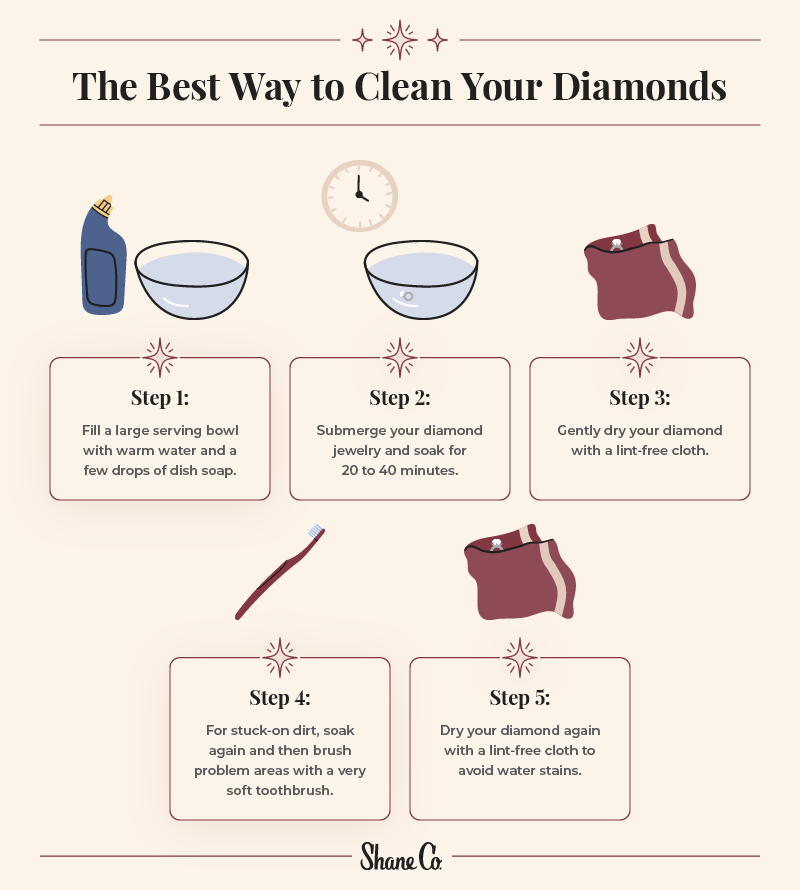
- A small bowl of warm (not boiling) tap water
- A few drops of gentle, degreasing liquid dish soap (plain blue formula is ideal)
- A brand-new, soft-bristled baby toothbrush
- A lint-free microfiber cloth
Step-by-Step Instructions:
- Prepare the Soak: Mix a few drops of dish soap into the warm water until suds form. Place your jewelry in the bowl and let it soak for 20 to 30 minutes. The soap acts as a surfactant, penetrating and breaking down body oils and hand creams.
- Gently Brush: Remove the piece from the bowl. Use the soft baby toothbrush to clean the stone. Focus heavily on the underside of the diamond (the pavilion), as this is where dirt and lotion accumulate most heavily. Never use stiff bristles or scrub aggressively.
- Rinse Safely: Rinse the jewelry under warm running water. Crucial step: Ensure the sink drain is securely plugged, or rinse the piece in a fresh bowl of clean water to eliminate the risk of dropping it down the pipes.
- Dry and Polish: Pat the item dry using a clean, lint-free microfiber cloth. Avoid paper towels, which contain tiny wood fibers that can create microscopic scratches on polished gold and platinum.
Common DIY Cleaning Hacks to Avoid
Aspirin is not the only internet remedy that poses risks to your jewelry collection. Avoid these popular but dangerous DIY techniques:
- Toothpaste: Toothpaste contains abrasives (such as silica or calcium carbonate) designed to scrub enamel. On precious metals, it acts like fine-grit sandpaper, dulling mirror polishes and eroding intricate filigree.
- Baking Soda and Aluminum Foil: While this electrochemical reaction works for heavily tarnished sterling silver flatware, it is far too harsh for fine diamond settings and can destroy antique patinas.
- Boiling Water: Diamonds can handle heat, but sudden temperature shifts (thermal shock) can fracture stones that contain natural inclusions or cause delicate metal prongs to expand and drop stones.
- Bleach and Chlorine: Chlorine chemically attacks the alloy metals in gold, causing stress-corrosion cracking that can lead to prong failure. Never wear fine jewelry in swimming pools or while cleaning with bleach.
When to Seek Professional Care
While gentle home cleanings are ideal for weekly maintenance, they cannot replace periodic professional inspections. Visit an experienced bench jeweler at least once a year. A jeweler can check prong tension, measure facet wear, and place the piece in an ultrasonic or high-pressure steam cleaner safely.
Ultimately, while an aspirin might cure a headache, it provides zero real benefit for a dull diamond. Keep your medications in the cabinet and stick to warm water and gentle soap to protect your jewelry's brilliance and structural integrity for decades to come.