Does Pregnenolone Cause Weight Gain? Facts vs Myths
When individuals begin supplementing with neurosteroids or bioidentical hormones for memory, fatigue, or mood, changes in body composition are often a top concern. Many patients and wellness seekers specifically ask: does pregnenolone cause weight gain? The short answer is that pregnenolone does not directly cause fat accumulation, but because it sits at the very top of the steroid hormone cascade, its downstream effects can influence your appetite, fluid retention, and metabolic rate.

To understand how this supplement interacts with your waistline, it is essential to look at how the body processes it, the pathways it triggers, and why individual biochemistry plays such a decisive role.
What Is Pregnenolone and What Does It Do?
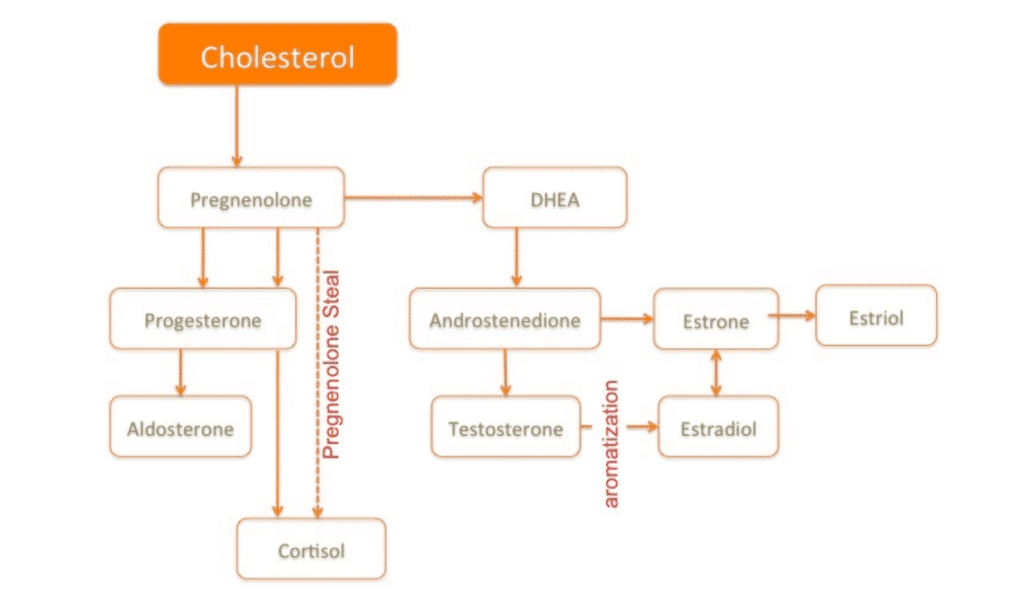
Pregnenolone is often referred to as the “mother of all hormones.” Synthesized primarily in the mitochondria of the adrenal glands, brain, and gonads from cholesterol, it serves as the raw starting material for nearly all steroid hormones in the human body.
Once produced, pregnenolone converts along two primary pathways:
- The Progesterone Pathway: Leads to the production of progesterone, cortisol, and aldosterone.
- The DHEA Pathway: Leads to dehydroepiandrosterone (DHEA), androstenedione, testosterone, and estrogens (estrone and estradiol).
Beyond acting as a precursor, pregnenolone functions directly in the central nervous system as a neurosteroid. It modulates GABA and NMDA receptors, influencing cognitive performance, memory retention, resilience to stress, and sleep quality.
Does Pregnenolone Cause Weight Gain? Key Biological Factors
Pregnenolone contains no calories and possesses no inherent mechanism that triggers adipogenesis (the creation of fat cells). In clinical settings, pure pregnenolone supplementation is far more likely to produce neutral weight changes or mild energy increases than sudden fat accumulation. However, some people do experience weight gain on the scale after starting it. This usually happens for three distinct reasons: fluid shifts, cortisol elevation, or hormonal imbalances downstream.
1. The Cortisol Connection
Under periods of chronic mental, physical, or emotional stress, the body prioritizes survival over reproduction and longevity. If you introduce supplemental pregnenolone into an environment dominated by high stress, your adrenal cascade may divert that raw material predominantly toward cortisol production.
Elevated cortisol levels can disrupt body composition in several well-documented ways:
- Visceral Fat Storage: Cortisol mobilizes triglycerides and relocates them to deep visceral fat stores around abdominal organs, where fat cells have a higher concentration of glucocorticoid receptors.
- Insulin Resistance: High cortisol inhibits insulin sensitivity, keeping blood sugar elevated and prompting the pancreas to release more insulin—a potent fat-storage hormone.
- Increased Appetite: Sustained cortisol spikes stimulate cravings for energy-dense, hyper-palatable foods rich in sugar and saturated fats.
2. Water Retention via Aldosterone and Progesterone
If you step on the scale a week after starting pregnenolone and notice a rapid jump of two to four pounds, you are almost certainly experiencing fluid retention, not adipose tissue growth. Pregnenolone converts into mineralocorticoids, particularly aldosterone, which regulates sodium and water balance in the kidneys.
Excessive aldosterone activity signals the kidneys to retain sodium and excrete potassium, causing intracellular and extracellular water buildup. Similarly, imbalances between progesterone and estrogen can cause vascular permeability changes that manifest as puffiness in the face, fingers, and ankles.
3. Estrogen Dominance Shifts
In women (and susceptible men), supplemental pregnenolone can occasionally cascade into estrone or estradiol without an equivalent balance of counter-regulatory hormones. Relative estrogen dominance can slow gallbladder motility, promote subcutaneous water retention in the hips and thighs, and lead to feeling bloated or sluggish.
Can Pregnenolone Promote Weight Loss Instead?
Interestingly, many clinicians prescribe pregnenolone specifically to help patients who struggle with sluggish metabolisms. In individuals whose baseline hormone production is depressed due to age, adrenal exhaustion, or prolonged illness, pregnenolone can exert a positive metabolic influence:

- Boosting DHEA and Testosterone: When pregnenolone follows the androgenic pathway, it elevates DHEA and testosterone. These hormones stimulate muscle protein synthesis, enhance lean muscle mass, and improve basal metabolic rate.
- Enhancing Energy and Activity: By reducing brain fog, improving neurochemical signaling, and alleviating fatigue, pregnenolone often encourages greater non-exercise activity thermogenesis (NEAT)—meaning you naturally move, walk, and exercise more throughout the day.
- Restoring Deep Sleep: Deep, restorative slow-wave sleep is essential for the nocturnal release of growth hormone, which manages fat breakdown. Pregnenolone's modulating effect on GABA receptors can improve sleep architecture, indirectly curbing daytime leptin/ghrelin dysregulation.
Dosage Matters: Where People Run into Trouble
Unwanted side effects, including sudden weight fluctuations and puffiness, are almost always linked to excessive dosage. Because pregnenolone is available over-the-counter in the United States, commercial supplements often come in doses ranging from 30 mg to 100 mg per capsule. For many individuals, these retail doses are unnecessarily high.
Physiological replacement doses typically sit much lower:
- Low/Starting Dose: 5 mg to 10 mg daily (often micro-dosed sublingually).
- Moderate Clinical Dose: 15 mg to 30 mg daily, tailored to lab findings.
- High Dose: 50 mg to 100 mg+ daily (usually reserved for monitored clinical protocols).
When high doses are taken without blood work, excess hormone substrate spills over into unintended downstream pathways, creating the exact side effects users hope to avoid.
Common Warning Signs of an Excess Dose
If your body is converting supplemental pregnenolone into excess downstream metabolites, you may notice symptoms alongside weight changes, such as:
- Facial puffiness or swollen extremities (fluid retention)
- Acne outbreaks along the jawline, chest, or upper back
- Sleep disruption, restlessness, or vivid, anxious dreams
- Irritability, heart palpitations, or unexplained anxiety
- Headaches or breast tenderness
If any of these symptoms appear shortly after initiating supplementation, the dosage is likely exceeding your body’s current capacity to clear or properly route the hormone.
How to Take Pregnenolone Safely
To capture the neuroprotective and energizing benefits of pregnenolone without unwanted weight gain or bloating, consider the following best practices:
1. Test, Don’t Guess
Before introducing an upstream hormone, obtain a baseline blood panel that includes Pregnenolone Sulfate, DHEA-S, Total and Free Testosterone, Estradiol, and morning Cortisol. If your natural pregnenolone levels are already within the optimal reference range, adding more will not provide added benefits and increases the likelihood of side effects.
2. Start Low and Titrate Slowly
Begin with a conservative dose, such as 5 mg to 10 mg per day. Monitor your physical and cognitive responses for two to three weeks before considering an adjustment. This allows your endocrine feedback loops to adapt without sharp hormonal spikes.
3. Manage Lifestyle Stressors
Because cortisol competes aggressively for precursor supply, mitigating psychological stress, prioritizing sleep, and avoiding excessive stimulants will help prevent pregnenolone from routing straight into stress-induced fat storage pathways.
Final Thoughts
Pregnenolone does not inherently cause weight gain. When weight gain does occur, it is usually temporary water retention from aldosterone activity or fat storage resulting from excessive cortisol conversion. When taken under professional guidance at appropriate physiological doses, pregnenolone is far more likely to support steady energy, cognitive clarity, and a balanced metabolism.