Dylann Klebold's Lost Tapes: Disturbing Truth
More than two decades after the April 20, 1999 tragedy at Columbine High School, few artifacts in modern criminal history have generated as much macabre fascination, speculation, and legal friction as the infamous "Basement Tapes." When researchers and true-crime observers look into Dylann Klebold's lost tapes: the disturbing truth revealed is not a trove of cinematic villainy, but rather an agonizing portrait of suicidal depression, toxic codependency, and a deliberate blueprint for terror that law enforcement fought for years to keep from circulating.

While Dylan Klebold (frequently misspelled online as Dylann) and Eric Harris intended these home videos to serve as their lasting manifesto, the vast majority of the public will never watch them. To understand why, one must look at what was captured in those private recordings, how authorities handled the evidence, and the profound criminological reasons behind their ultimate destruction.
What Were the Columbine Basement Tapes?
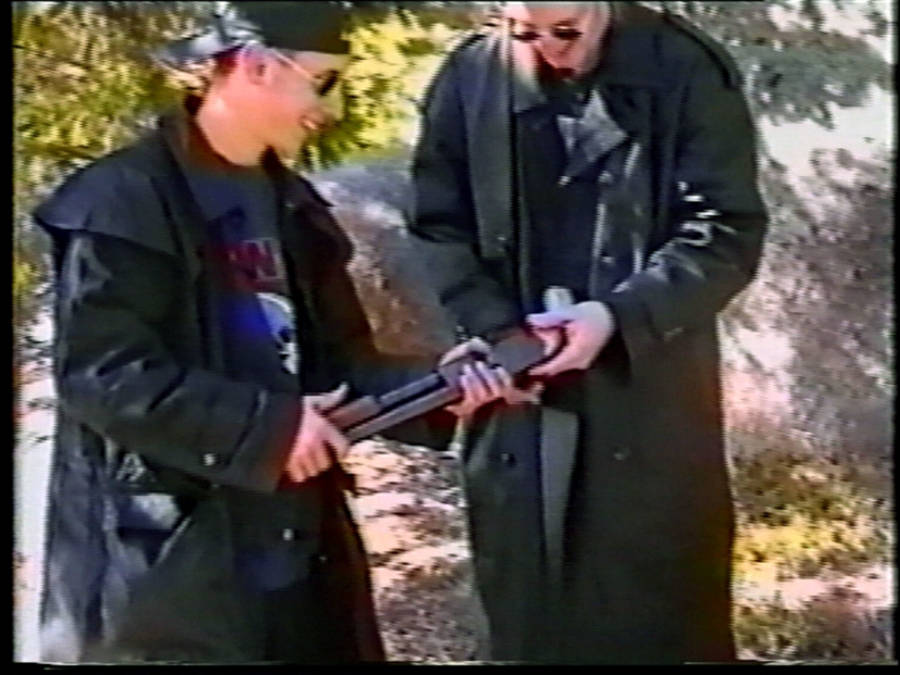
In the weeks and months leading up to the attack, Eric Harris and Dylan Klebold used an 8mm video camera to film themselves in Harris’s basement bedroom, Klebold’s house, and various outdoor locations around Littleton, Colorado. The recordings spanned five separate videotapes created between March and the morning of April 20, 1999.
Unlike the cafeteria surveillance video, which was widely broadcast after the massacre, these personal tapes were treated as highly classified investigative material by the Jefferson County Sheriff's Office (JCSO). They captured the pair:
- Displaying shotguns, carbines, and homemade pipe bombs hidden in furniture and coats.
- Practicing tactical maneuvers and testing weapons at an outdoor target area known as Rampart Range.
- Ranting against former classmates, society, and personal perceived slights.
- Detailing their operational plan to inflict mass casualties that would surpass the 1995 Oklahoma City bombing.
- Addressing their parents directly in deeply chilling farewell messages.
The Chilling Contrast: Klebold vs. Harris on Camera
For criminologists, psychologists, and the select journalists who were permitted to view the footage before it was locked away, the tapes provided a raw look into the psychological dynamics of the two shooters.
FBI special agent and lead criminal profiler Dwayne Fuselier noted that while Eric Harris presented as cold, narcissistic, and calculated, Klebold exhibited a distinct emotional volatility. On tape, Klebold frequently swung between theatrical outbursts of rage and profound lethargy. He wore an unbuttoned trench coat, backward baseball cap, and sunglasses, projecting an image of juvenile bravado that frequently slipped.
In one of the most cited sequences, Klebold sits drinking alcohol, offering quiet apologies to his mother and father. He recognized the devastation he was about to cause his family, yet he remained resolved to carry out the attack. This duality—Klebold’s intense suicidal ideation paired with Harris’s homicidal grandiosity—fueled a fatal codependency that the tapes explicitly documented.
Dylann Klebold's Lost Tapes: The Disturbing Truth Revealed Behind Their Destruction
For years after the shooting, public-record advocates, investigative journalists, and victims' families filed Freedom of Information requests and lawsuits demanding the full release of the recordings. Many argued that public analysis was necessary to understand how two suburban youths could orchestrate such an attack undetected.
However, when looking closely at Dylann Klebold's lost tapes: the disturbing truth revealed is why authorities made the radical decision to permanently erase them. In early 2015, Jefferson County officials confirmed that in 2011, under the direction of then-Sheriff Ted Mink, the original Basement Tapes and all known departmental copies were physically destroyed.

Why Officials Burned the Evidence
The decision to destroy the tapes was not a bureaucratic accident; it was a deliberate measure driven by two major concerns:
- Preventing Mass Contagion: Criminologists and threat-assessment experts increasingly recognized the "copycat phenomenon" surrounding Columbine. Authorities feared the tapes functioned less as a cautionary tale and more as an instructional manual and inspirational recruitment tool for disaffected youths worldwide.
- Denying Posthumous Notoriety: The killers explicitly stated on the tapes that they wanted Steven Spielberg or Quentin Tarantino to direct films about their lives, predicting the footage would turn them into global legends. Destroying the tapes denied them the lasting global audience they sought.
Sheriff Mink and county attorneys concluded that releasing the full audio and visual recordings posed an ongoing threat to public safety that vastly outweighed any historical or academic value.
What Survives of the Lost Recordings?
While the master video tapes were incinerated, the contents did not vanish entirely. Detailed transcriptions made by investigators were released as part of the massive 11,000-page Columbine report published by the state of Colorado. These transcripts document virtually every word spoken, every weapon shown, and every timeline reference made across the recording sessions.
Additionally, small fragments exist in the public sphere:
- Audio Leaks: Brief snippets of audio recorded secretly during private viewings—such as the infamous "Nixon Tape," recorded by Harris in his car—have circulated online.
- Parental Memoirs: Sue Klebold, Dylan's mother, wrote extensively in her 2016 memoir, A Mother’s Reckoning, about the agony of watching her son's recorded descent into homicidal nihilism, providing an intimate account of his behavior on camera.
- FBI Behavioral Analysis: Extensive notes by federal profilers remain archived, detailing body language, micro-expressions, and speech patterns observed during their reviews.
The Modern Legacy: The Policy of "No Notoriety"
The handling of the Basement Tapes ultimately reshaped how law enforcement and media organizations approach mass casualty manifestos today. In the late 1990s, the impulse of 24-hour news networks was to broadcast every piece of evidence recovered. Columbine proved that glorifying or distributing the theatrical output of violent extremists creates a dangerous contagion effect.
Modern law enforcement protocols, aligned with initiatives like the "No Notoriety" campaign, actively discourage the publication of mass shooters' manifestos, rants, and self-produced videos. Dylan Klebold and Eric Harris sought immortalization through magnetic tape; by withholding and eventually destroying that footage, authorities took a critical step toward deconstructing the mythology the killers attempted to manufacture.
Final Thoughts
The mystery surrounding Dylan Klebold’s lost tapes often breeds sensationalism, but the reality inside those recordings was neither glamorous nor profoundly complex. They documented two emotionally unstable teenagers preparing to destroy dozens of innocent lives alongside their own. The true revelation of the lost tapes is not that they contain hidden secrets, but that society finally recognized the danger of giving killers the platform they crave.