Edgar Allan Poe Empathy: A Look Inside His Dark Mind
When readers think of Edgar Allan Poe, words like terror, madness, murder, and premature burial usually come to mind. As the undisputed architect of the modern horror story and detective fiction, Poe specialized in the shadows of the human psyche. Yet, beneath the chilling surfaces of his most famous works lies a deeply misunderstood element: Edgar Allan Poe empathy. Far from being a cold-hearted creator of monsters, Poe possessed a profound capacity to mirror, understand, and validate deep psychological suffering.

By examining his characters, his critical essays, and his own tragic life, we can see that Poe's enduring appeal relies not just on shock value, but on emotional resonance. He did not merely frighten his readers; he forced them to inhabit the agonizing internal worlds of the alienated, the grieving, and the guilt-ridden.
The Psychology of Edgar Allan Poe Empathy in Classic Tales
Poe’s stories often plunge readers directly into the minds of unreliable, unstable narrators. While modern critics sometimes view these characters as flat studies in pathology, Poe grants them a startling degree of emotional validity. He asks us to look past their crimes and madness to witness the universal pain driving them.
Shared Guilt in 'The Tell-Tale Heart'
In 'The Tell-Tale Heart,' the unnamed narrator insists upon his sanity while meticulously describing the murder of an old man. Most analyses focus on the paranoia and the relentless ticking of the imagined heartbeat. However, the true driving force of the story is profound, overwhelming guilt.
Poe masterfully constructs a scenario where the reader experiences vicarious anxiety. We feel the suffocating atmosphere of the dark room, the tension of the police interrogation, and the psychological breakdown of a man cracking under the weight of his own conscience. Through this intense transfer of feeling, Poe creates a bridge between the reader and a murderer, proving that the capacity for remorse is fundamentally human.
Grief and Loss in 'The Raven'
Video: Understanding Empathy

Perhaps no work better illustrates emotional vulnerability than Poe’s most famous poem, 'The Raven.' The speaker is a man shattered by the loss of his beloved Lenore, sitting alone in his chamber amidst fading memories.
- Isolation: The speaker isolates himself in grief, a common psychological response to profound trauma.
- Desperation: Every question he poses to the raven is a manifestation of his desperate need for closure and comfort.
- Torment: The bird’s constant refrain of 'Nevermore' becomes an echo of the speaker’s own internal hopelessness.
Poe captures the exact mechanics of mourning. He demonstrates how grief can turn rational minds inward, torturing them with memories of what can never be recovered. Readers mourning their own losses find solace in this raw depiction of despair.
Poe’s View on the Human Condition
Poe’s literary criticism reveals a writer deeply concerned with the emotional impact of art. In essays like 'The Philosophy of Composition' and 'The Poetic Principle,' Poe argued that a work of art must elicit a specific emotional response from the audience—be it melancholy, beauty, or terror.
He believed that true artistic success depended on the creator's ability to touch the reader's soul. For Poe, horror was never an end in itself; it was a pathway to emotional truth. By stripping away societal pretenses, Poe exposed the raw nerves of humanity: fear of abandonment, terror of death, and the crushing weight of isolation.
Why Modern Readers Still Relate to Poe
Today, conversations about mental health, trauma, and emotional intelligence dominate cultural discourse. Modern readers are uniquely equipped to look past the Gothic tropes and recognize the psychological realism in Poe’s writing.
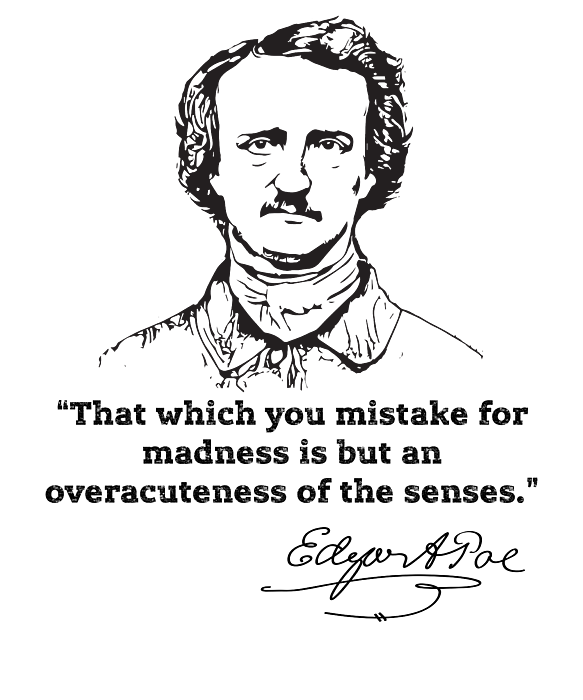
When a character suffers from hyper-acute senses, obsessive thoughts, or deep-seated depression, contemporary audiences recognize real-world struggles. Poe gave voice to the marginalized, the anxious, and the melancholic long before clinical psychology had names for their conditions. This timeless emotional accuracy is precisely why his stories continue to resonate across generations, proving that the master of horror was, at his core, a master of the human heart.