Edward Norton's Ethnicity Exposed at Last
For decades, Edward Norton has been celebrated as one of American cinema's most versatile, intensely intellectual performers. From his Oscar-nominated breakout in Primal Fear to cult landmarks like Fight Club and auteur achievements such as Birdman, Norton has maintained an enigmatic public persona that prioritizes the craft over celebrity gossip. However, public interest shifted dramatically from his filmography to his lineage when genealogists uncovered his complex personal background. With Edward Norton's ethnicity exposed at last through rigorous historical records and DNA analysis, fans were introduced to a family tree spanning centuries of American history.

While Norton's heritage had long been categorized broadly as white American of European descent, the precise branches of his ancestral tree hold extraordinary historical milestones, prominent civic leaders, and unexpected revelations that caught even the actor off guard.
The Pivotal Genealogical Discovery on PBS
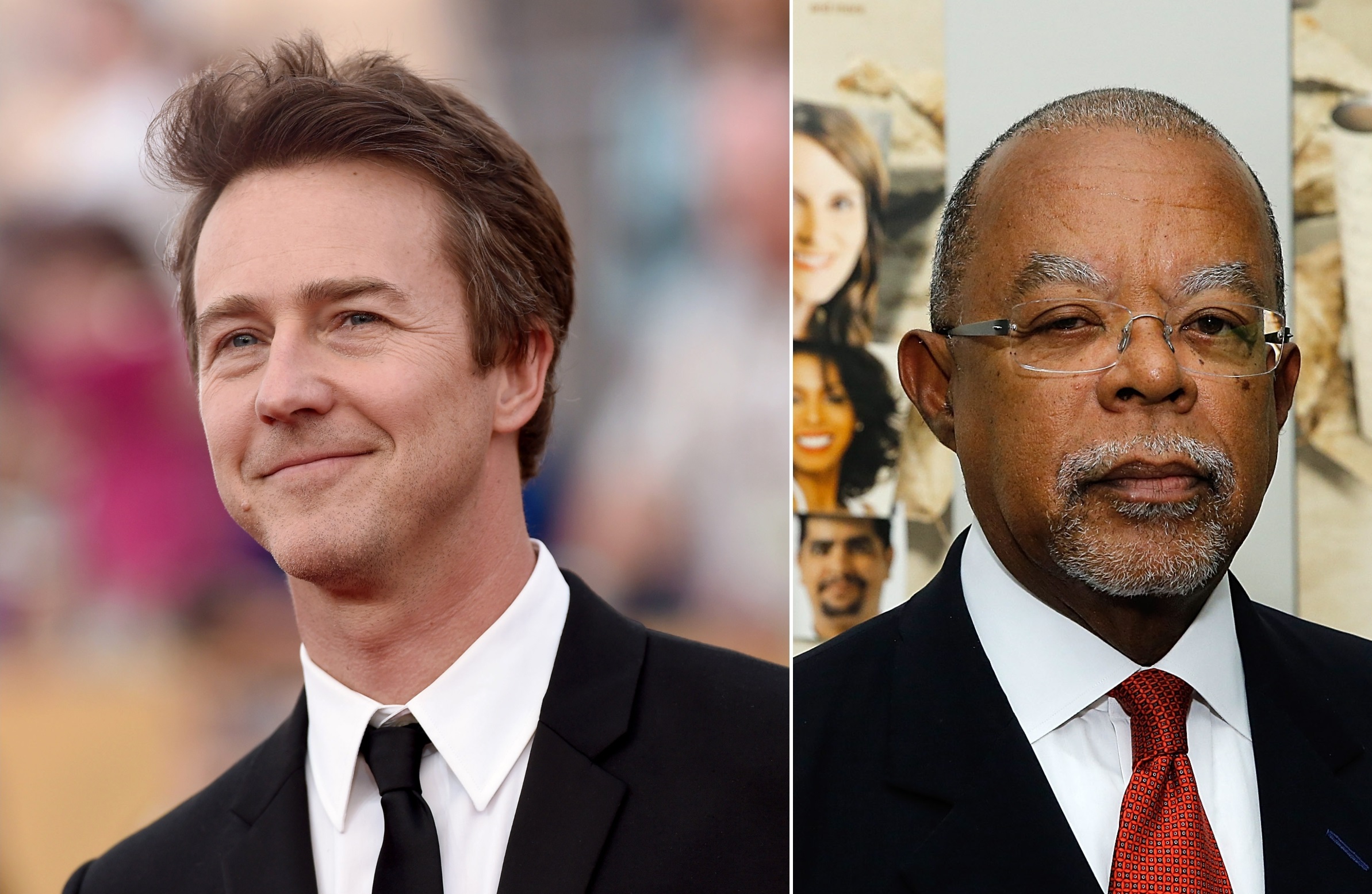
Much of the public fascination with Norton's lineage stems from his appearance on the season nine premiere of the PBS genealogy documentary series Finding Your Roots, hosted by historian Henry Louis Gates Jr. While many celebrities discover distant cousins or immigrant ports of entry on the show, Norton's episode delivered findings that made national headlines.
Gates and his research team presented Norton with verifiable paper trails establishing that his direct ancestry connects to foundational figures in early North American history. The findings offered concrete historical documentation to what had previously been considered mere family lore.
Edward Norton's Ethnicity Exposed at Last: The Full Breakdown
Ethnically, Edward Norton is predominantly of Northwestern European ancestry. His family lines trace heavily to the British Isles and Western Europe, reflecting deep colonial ties that predate the formation of the United States. A closer examination of his heritage reveals a mix of several specific backgrounds:
- English: The vast majority of Norton's paternal and maternal lines descend from early English settlers who arrived in Virginia and New England during the 17th century.
- German: Several branches of his maternal ancestry trace back to 18th-century German immigrants who settled in Pennsylvania and the Mid-Atlantic.
- Scots-Irish and Scottish: Like many families with colonial Southern roots, Norton carries ancestral lines from Protestant Scottish settlers who arrived via Northern Ireland.
- Swiss: Minor genealogical lines connect to Swiss-German lineages that integrated into colonial American communities.
- Native American (Pamunkey / Powhatan): Through an unbroken paper trail, Norton is a direct descendant of Pocahontas, confirming a small ancestral connection to the Indigenous peoples of Virginia.
The Pocahontas Lineage Confirmed
The standout revelation on Finding Your Roots was the confirmation of Norton's direct descent from Pocahontas (Matoaka) and English colonist John Rolfe. Norton grew up hearing family stories alleging a connection to the famous Powhatan woman, but he had dismissed it as romanticized folklore.
Historian Henry Louis Gates Jr. proved the claim mathematically and genealogically: Pocahontas and John Rolfe married in April 1614 in Jamestown, Virginia. Their son, Thomas Rolfe, had children who married into Virginia's prominent colonial families. Gates traced a direct, documented paper trail covering twelve generations, establishing Pocahontas as Norton's 12th great-grandmother.
While this ancestral connection represents a tiny fraction of Norton's overall genetic makeup today, it represents a remarkable cultural and historical link to the earliest cross-continental encounters on American soil.
Confronting a Painful Family History
Genealogical discoveries often unearth challenging truths, and Norton's ancestral investigation was no exception. Alongside the high-profile Pocahontas connection, Gates presented Norton with records revealing that his third great-grandfather, John Winstead, was an enslaver in 1850s North Carolina.
The historical census documentation listed Winstead as holding seven human beings in bondage: a 55-year-old man, a 37-year-old woman, and five young girls aged four, six, eight, nine, and ten. Norton responded to the finding with somber clarity, reflecting that confronting the painful realities of American history is an obligation for anyone examining their heritage.
Video: Edward Norton is related to pocahontas

"The short answer is these things are uncomfortable, and you should be uncomfortable with them," Norton remarked during the broadcast. "It’s not a judgment on your own life, but it’s a judgment on the history of this country and it needs to be acknowledged first and foremost, and then it needs to be contended with."
A Lineage of Prominent American Changemakers
Beyond early colonial settlers, Norton's recent ancestry is equally notable for its profound impact on modern American society, urban development, and legal reform.
The Rouse Family Heritage
Norton's maternal grandfather was James Rouse, a visionary real estate developer, urban planner, and philanthropist. Rouse is credited with coining the term "shopping mall" and designing some of the nation's earliest planned communities, including Columbia, Maryland, where Norton was raised.
Rouse was not an ordinary developer; he was a pioneer of affordable housing and social integration. In 1982, he founded the Enterprise Foundation (now Enterprise Community Partners), a non-profit dedicated to creating affordable housing and revitalizing underserved urban neighborhoods. Norton has cited his grandfather's progressive values as a defining influence on his own worldview and charitable endeavors.
Legal and Environmental Advocacy
Norton's father, Edward Mower Norton Jr., served as a federal prosecutor in the Carter administration and later became a leading environmental lawyer and conservation advocate. He played a significant role in establishing the Grand Canyon Trust, reinforcing an intergenerational family tradition focused on civic engagement and conservation.
How Lineage Informs the Actor's Life and Perspective
Understanding ancestry goes deeper than simple curiosity about bloodlines. For Norton, discovering the detailed composition of his family tree has provided context for the complex historical forces that shaped the United States.
Norton has spent much of his adult life using his public platform and wealth to support conservation initiatives, affordable housing projects, and cultural preservation. Rather than treating his ancestry as trivia, Norton has viewed his family history—both its triumphs and its historical transgressions—as a reminder of the responsibilities that accompany privilege.
Summary of Edward Norton's Heritage
Edward Norton's ancestry is a sweeping cross-section of American history. From 17th-century Jamestown through the Civil War era to 20th-century urban innovation, his roots include:
- A primary ethnic background of Northwestern European heritage (predominantly English, German, and Scots-Irish).
- A verifiable direct descent from Pocahontas and John Rolfe via his maternal ancestry.
- Documented colonial ties to early North Carolina and Virginia families.
- A modern lineage rooted in progressive urban design, philanthropy, and environmental law.
Ultimately, Edward Norton's background highlights how personal identity is shaped by layered, often contradictory histories. By examining his roots honestly, Norton provides a thoughtful example of how modern Americans can embrace their complex ancestry with historical accountability and self-awareness.