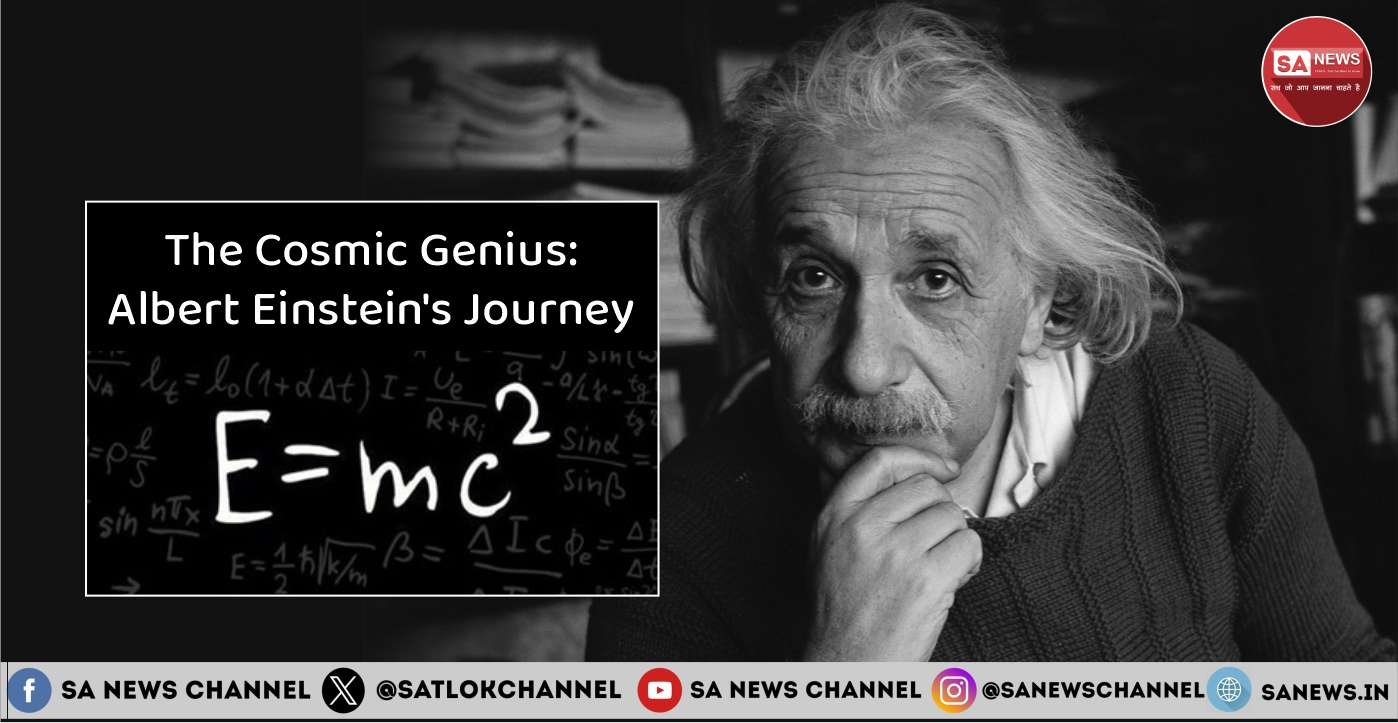
Einstein the Millionaire: Genius into Financial Power
Popular culture remembers Albert Einstein as the quintessential absent-minded professor: unruly hair, mismatched socks, violin in hand, completely detached from the material world. We imagine him scribbling equations on chalkboards, oblivious to earthly concerns like bank balances and contract negotiations. Yet the historical record reveals a far more shrewd reality. When examining Einstein the Millionaire: How Genius Translated Into Financial Power!, we uncover a man who possessed a sharp understanding of his market value, negotiated fierce contracts, and laid the groundwork for an estate that generates millions of dollars to this day.

The Myth of the Impoverished Patent Clerk
The story of Einstein's humble beginnings is true, but often incomplete. In 1902, fresh out of the Zurich Polytechnic and struggling to secure an academic position, Einstein took a job at the Swiss Federal Patent Office in Bern. His starting salary was 3,500 Swiss francs per year, later raised to 4,500 francs. While modest, this was solid middle-class compensation for a young man in Switzerland at the time.
During his famous Annus Mirabilis (Miracle Year) in 1905, Einstein published four groundbreaking papers while working eight-hour shifts reviewing technical patents. He was not starving in a garret; he was financially solvent, using his stable clerical income to fund his intellectual pursuits. Once the academic world recognized his brilliance, Einstein waste zero time trading scientific prestige for financial elevation.
Einstein the Millionaire: How Genius Translated Into Financial Power
Between 1909 and 1914, Einstein navigated a rapid succession of university appointments, moving from the University of Zurich to Charles-Ferdinand University in Prague, back to ETH Zurich, and ultimately to the prestigious Prussian Academy of Sciences in Berlin. With every move, he demanded higher compensation, reduced teaching obligations, and complete research autonomy.
By the time he accepted the appointment in Berlin in 1914, Einstein had negotiated an extraordinary package:
- A top-tier salary: 12,000 Prussian marks annually, placing him among the best-compensated scholars in Europe.
- No mandatory teaching duties: He was paid purely to think, write, and mentor select researchers.
- Directorship privileges: He served as director of the Kaiser Wilhelm Institute for Physics, commanding institutional resources and administrative budgets.
Einstein understood that scarce intellectual capital created pricing power. When institutions competed for his endorsement, he consistently leaned into his exclusivity to command premium terms.
The 1921 Nobel Prize: A Masterstroke of Financial Escrow
Nothing illustrates Einstein's financial self-assurance quite like his 1919 divorce settlement with his first wife, Mileva Marić. By the late 1910s, Einstein wanted out of the marriage to marry his cousin, Elsa Löwenthal. Mileva was initially reluctant to grant a divorce.
Einstein presented an audacious proposal: if Mileva consented to an uncontested divorce, he would give her the entirety of the cash award from the Nobel Prize in Physics—a prize he had not yet won. He was so confident in his theoretical breakthroughs that he effectively treated future scientific accolades as liquid collateral.
When the Swedish Academy awarded him the 1921 Nobel Prize (delivered in 1922), the prize money amounted to 121,572 Swedish kronor, roughly $32,000 at the time (equivalent to over $550,000 in modern purchasing power). True to the contract, the funds were placed into a trust that purchased real estate in Zurich and provided living expenses for Mileva and their two sons. Einstein leveraged future intellectual equity to resolve an expensive personal crisis.
Mastering American Leverage: The Princeton Negotiations

In 1933, as the Nazi regime seized power in Germany, Einstein permanently relocated to the United States. He was courted aggressively by elite academic institutions, but the newly founded Institute for Advanced Study (IAS) in Princeton, New Jersey, emerged as the victor.
The negotiations between Einstein and IAS founding director Abraham Flexner provide a masterclass in professional valuation. When Flexner asked Einstein what salary he required, the physicist—humorous as ever—suggested around $3,000 per year (roughly $70,000 today), believing it was plenty to live on. Fortunately, his second wife, Elsa, intervened along with his close financial advisors.
Recognizing Einstein's unmatched global profile, Flexner bypassed the modest request and granted him an annual salary of $10,000, later adjusted upward toward $15,000. In the middle of the Great Depression, this put Einstein firmly in the top 0.1% of American income earners. He was provided with staff, private offices, and absolute freedom from administrative burdens.
Publishing, Royalties, and Modern Merchandising
Einstein did not rely solely on academic salaries. He actively monetized his writing and public persona across multiple commercial avenues:
- Best-Selling Books: His popular science volume, The Evolution of Physics (co-authored with Leopold Infeld in 1938), was a commercial hit that generated substantial worldwide royalties.
- Paid Lectures and Columns: Media outlets and public institutions paid handsome honorariums for his thoughts on science, pacifism, philosophy, and international politics.
- Philanthropic Leverage: During World War II, Einstein personally hand-copied his original 1905 paper on Special Relativity. It was auctioned by the Book and Author War Bond Committee for $6.5 million in war bonds, showcasing the astronomical value tied to his autograph.
The Posthumous Multi-Million Dollar Empire
When Albert Einstein passed away in 1955, his personal liquid estate was valued at approximately $65,000 (roughly $750,000 today)—comfortable, but far from billionaire status. However, his real financial genius lay in the disposition of his intellectual property.
In his last will and testament, Einstein bequeathed the rights to his personal papers, manuscripts, and the commercial use of his name and likeness to the Hebrew University of Jerusalem, an institution he had helped establish. Decades later, that decision proved to be an economic goldmine.
Today, Einstein consistently ranks among Forbes' annual list of the world's highest-earning dead celebrities. Licensing deals for his image—ranging from luxury timepieces, calculators, and educational software to global advertising campaigns—generate tens of millions of dollars in recurring revenue for the university's endowment.
Key Financial Lessons from Einstein's Career
While Einstein never chased wealth for luxury's sake, his financial trajectory offers powerful principles for modern professionals and creators:
- Know the Value of Rare Skills: Einstein did not lower his rates when European universities competed for his presence; he demanded more freedom and higher compensation.
- Delegate Negotiation: When his personal instinct was to ask for too little at Princeton, he allowed trusted associates and family to negotiate on his behalf.
- Focus on Long-Term IP: Einstein understood that ideas, copyright, and name rights have indefinite earning potential that often outlasts a physical career.
Albert Einstein proves that profound intellectual idealism and pragmatic financial acumen are not mutually exclusive. By converting groundbreaking physics into global prestige, he transformed pure intellect into lasting financial power.