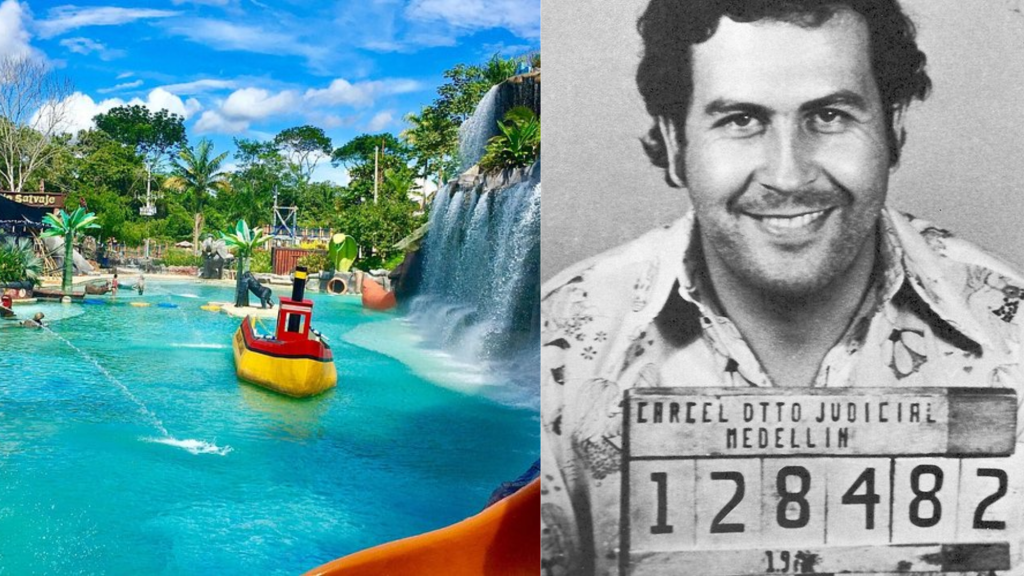
Escobar's Dark Fate: Inside His Birthplace
Introduction to a Criminal Legacy

When the name Pablo Escobar is mentioned, images of private zoos, sprawling Colombian mansions, tons of cocaine, and narco-terrorism immediately come to mind. Yet long before the private armies and billions of dollars, there was a quiet, rural beginning. Understanding the shocking birthplace that shaped Pablo Escobar’s dark fate requires looking far beyond the glitz of the Medellín Cartel’s peak, tracking back to a volatile era of Colombian history that forged a ruthless mind.
Geography, family dynamics, and a society on the brink of civil war all collided in the early life of the world's most infamous drug lord. By examining where and how he grew up, we gain vital context into the psychological foundation of a man who would alter global drug enforcement forever.
The Shocking Birthplace That Shaped Pablo Escobar’s Dark Fate
Pablo Emilio Escobar Gaviria was born on December 1, 1949, in the small town of Rionegro, located in the Antioquia department of Colombia. However, his upbringing quickly shifted to the nearby rural settlement of San Vicente del Ferrer and eventually the outskirts of Medellín. Far from a luxurious urban setting, his earliest years were grounded in modest, often precarious circumstances.
Antioquia in the late 1940s and 1950s was not a peaceful place. The region was engulfed in La Violencia—a brutal, decade-long civil war between the Liberal and Conservative parties that claimed the lives of an estimated 200,000 to 300,000 Colombians. This bloody backdrop saturated the air young Pablo breathed. Political assassinations, rural massacres, and total lawlessness were daily occurrences, teaching him early on that institutional authority was weak and survival favored the ruthless.
Humble Roots and Early Ambition
Escobar’s parents were working-class people trying to navigate a collapsing rural economy. His father, Abel de Jesús Escobar, was a humble farmer, while his mother, Hermilda Gaviria, worked as a schoolteacher. Despite the family's respectable, albeit poor, standing, young Pablo displayed an intense drive to escape poverty by any means necessary.
Video: Hacienda Nápoles: How Sledgehammers and Feral Hippos Destroyed a Cartel Fortress
Even as a boy in the rugged landscapes of Antioquia, Escobar exhibited traits that would later define his criminal empire:
- Rejection of Authority: He frequently clashed with schoolteachers and local figures, refusing to accept traditional societal boundaries.
- Early Hustles: Accounts from his youth suggest he engaged in small-scale illicit activities, including selling contraband lottery tickets and stealing gravestones from local cemeteries to sandblast the names off and resell them.
- Charismatic Persuasion: He possessed a natural magnetism, convincing neighborhood kids to follow his schemes and establishing himself as a leader early on.
The Transition to the Streets of Medellín
As the family moved closer to Medellín—Colombia’s industrial heartland—the city was undergoing rapid, chaotic urbanization. Millions of rural peasants migrated to the city fleeing the violence of La Violencia, creating massive, impoverished shantytowns known as *barrios*.
This environment acted as a crucible for crime. In the streets of Medellín, Escobar found fertile ground for his expanding ambitions. He transitioned from petty street crime—such as car theft and cigarette smuggling—into the lucrative world of kidnapping and extortion. The harsh, dog-eat-dog reality of the Medellín slums reinforced a lesson learned in his birthplace: the state could not protect the weak, and power belonged to those willing to seize it.
How Early Conditions Forged a Narco-Empire
The transition from a small-time Antioquian hustler to the head of the Medellín Cartel did not happen in a vacuum. The traits forged during his upbringing directly influenced his criminal strategies:
- Paranoia and Survivalism: Growing up amidst political terror taught Escobar to trust no one outside a tight inner circle.
- The Robin Hood Complex: Eager to gain the acceptance that eluded his modest family, he later built houses and football pitches for the poor in Medellín, echoing his mother's community values warped through a criminal lens.
- Total Disregard for Human Life: The violence of La Violencia normalized bloodshed for a generation of young Colombians, desensitizing Escobar to the human cost of his cartel operations.
Conclusion
Pablo Escobar’s legacy is one of the darkest chapters in modern history, characterized by bombings, corruption, and immense human suffering. Yet, the seeds of this empire were planted long before his first shipment of cocaine reached international waters. By examining the violent, impoverished, and unstable environment of his early years, we see how a rural Antioquian upbringing ultimately birthed a global monster.