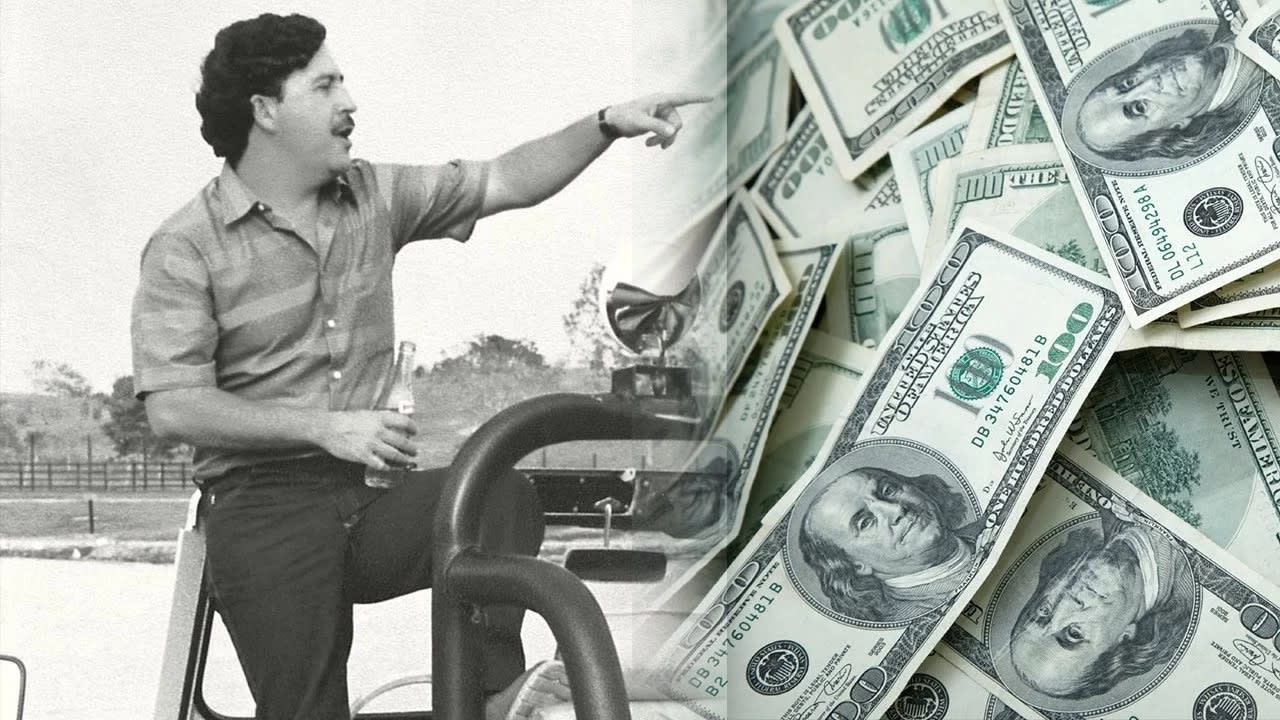
Escobar's Shadow: El Chapo's Rise to Notoriety
When historians of the global drug trade look back at the late 20th century, two names inevitably tower above all others: Pablo Escobar and Joaquín "El Chapo" Guzmán. While Escobar ruled the skies and streets of Colombia during the 1980s, a younger, more calculated operator was quietly learning the ropes in the mountains of Sinaloa, Mexico. To understand how Guzmán Loera transformed from a low-level cultivator into a billionaire cartel CEO, one must examine Pablo Escobar’s cosmic influence over El Chapo’s rise to notoriety.
It was not merely a matter of mentorship or direct partnership. Rather, Escobar created the modern blueprint for transnational drug trafficking. He proved to the underworld that cocaine could be moved on an industrial scale, generating wealth that rivaled legitimate sovereign nations. El Chapo studied this template, learned from Escobar’s catastrophic errors with law enforcement and politics, and ultimately adapted those foundational lessons to build an even more resilient enterprise.
The Blueprint of Narco-Industrialization
Before Pablo Escobar revolutionized the cocaine trade, smuggling was largely a fragmented, regional business. Independent operators moved small quantities across borders using crude methods. Escobar changed the paradigm by viewing the drug trade through the lens of corporate logistics. He integrated every step of the supply chain—from coca leaf cultivation in Peru and Bolivia to processing labs in the Colombian jungle, and finally, distribution networks into the United States.
El Chapo inherited this industrial mindset. When Mexican traffickers initially served as middlemen for Colombian cartels in the late 1980s, Guzmán was positioned perfectly to absorb Escobar's operational philosophy. He saw firsthand how vast fleets of aircraft, maritime vessels, and advanced communication systems could bypass traditional border controls.
- Vertical Integration: Controlling production, transport, and wholesale distribution to maximize profit margins.
- Technological Innovation: Utilizing advanced radar, encrypted communications, and custom-built transport methods.
- Logistical Redundancy: Establishing multiple alternative routes to ensure that the loss of one shipment did not cripple the business.
By studying Escobar's successes, El Chapo realized that survival in the high-stakes cartel world required treating contraband like any legitimate multinational corporation treats consumer goods.
Learning from Escobar's Fatal Mistakes
While Escobar provided the inspiration for scale and audacity, his eventual downfall served as an equally powerful masterclass for El Chapo. Escobar’s strategy relied heavily on terror, open warfare against the Colombian state, and a desire for public adulation. He built soccer fields, posed for photographs, and ran for political office, ultimately making himself a high-visibility target for international intelligence agencies.
El Chapo took the exact opposite approach to public relations, yet maintained Escobar's ruthless efficiency behind the scenes. Where Escobar launched car bombs in Bogotá, El Chapo preferred bribery, discretion, and the quiet subversion of government institutions.
The Power of Discretion vs. Open War
Escobar’s decision to declare war on the Colombian government united local law enforcement, the United States DEA, and rival vigilante groups against him. El Chapo observed this geopolitical suicide and adopted a philosophy of low-profile dominance. He understood that dead politicians draw intense investigations, whereas paid politicians turn a blind eye.

This operational subtlety allowed the Sinaloa Cartel to expand its territory across dozens of countries while avoiding the kind of direct, existential military assault that finally brought down the Medellín Cartel in 1993.
Evolution of Smuggling: From Planes to Tunnels
Escobar famously utilized private airstrips, landing small planes on remote jungle highways and even dropping packages of cocaine offshore for fast boats to retrieve. When Escobar's air dominance was neutralized by improved radar technology, the cartel suffered massive supply chain bottlenecks.
El Chapo solved this logistical puzzle by innovating beneath the earth. Drawing on the foundational wealth and market demand established by Escobar's generation, Guzmán invested heavily in sophisticated cross-border engineering. He pioneered the use of subterranean drug tunnels equipped with electricity, ventilation, and rail systems running beneath the US-Mexico border.
Furthermore, while Escobar relied heavily on Caribbean routes through Florida and the Bahamas, El Chapo diversified globally. He secured maritime supply chains originating from Asia and South America, landing products on Mexico's Pacific coast and routing them through an impenetrable web of inland distribution hubs.
The Legacy of Narco-Culture
Beyond logistics and strategy, Escobar fundamentally altered the cultural perception of the drug lord, transforming the criminal into a folk anti-hero—a template that El Chapo would later refine. Both men leveraged philanthropy in their home regions to secure the fierce loyalty of local populations, turning impoverished farmers into protective human shields against law enforcement.
Corridos (traditional Mexican ballad songs) that once glorified the exploits of Pancho Villa soon shifted to praising the daring escapes and immense wealth of modern kingpins, starting with the Colombian legends and culminating in the mythology surrounding El Chapo.
Conclusion
Pablo Escobar did not simply traffic cocaine; he invented a modern template for global organized crime. Without the structural ambition, brazen scale, and logistical innovations pioneered by the Medellín boss, the landscape in which El Chapo operated would look entirely different. By studying both Escobar's triumphs and his catastrophic errors, El Chapo engineered a more adaptable, elusive, and enduring criminal empire that forever changed the history of the international drug trade.