Fabulous Net Worth: How to Train for the Journey
Building a fabulous net worth isn’t just a goal it’s a journey—here’s how to train for it! Many people view wealth accumulation like buying a winning lottery ticket: an instantaneous, dramatic transformation. In reality, creating enduring financial independence mirrors marathon training. It demands consistent conditioning, strategic pacing, nutritional discipline with your cash flow, and the mental stamina to push through economic headwinds.

When you shift your perspective from a static target to a continuous training program, money stops being an elusive mystery. Instead, it becomes a measurable skill set you can develop through deliberate daily practice. Whether you are just beginning to track your balance sheet or preparing to scale existing assets, here is your comprehensive training manual for long-term financial success.
Phase 1: The Financial Fitness Assessment
Before an athlete begins an Olympic training cycle, they undergo a thorough physical evaluation to establish baseline health, identify vulnerabilities, and set realistic benchmarks. Building wealth requires the exact same diagnostic honesty.
Calculating Your True Baseline
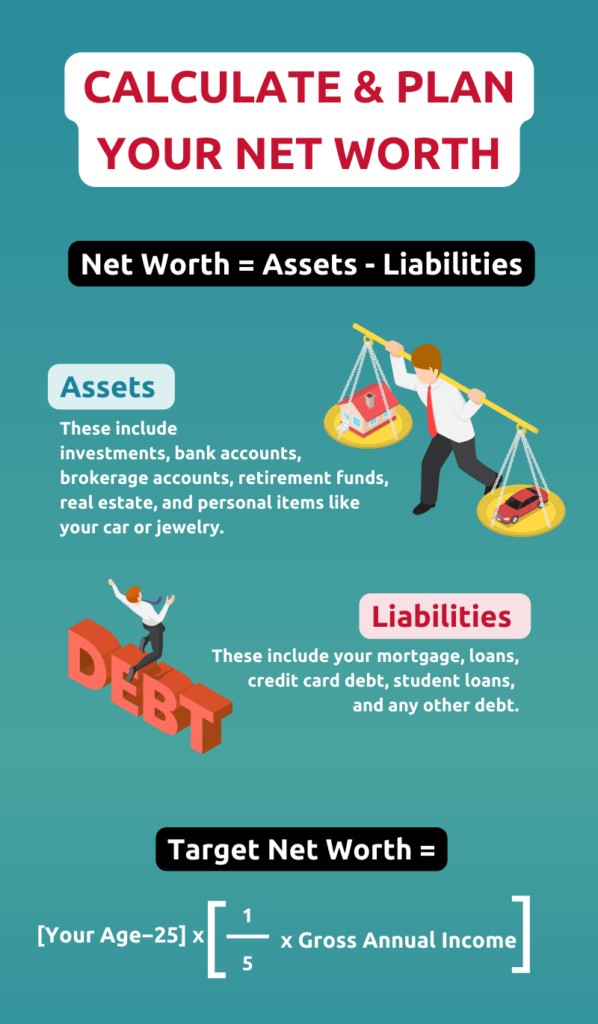
Your net worth is the fundamental scorecard of personal finance. It is calculated simply as:
Net Worth = Total Assets − Total Liabilities
To obtain an accurate reading, catalog everything you own and owe without vanity or denial:
- Liquid Assets: Checking accounts, high-yield savings accounts, and cash equivalents.
- Invested Assets: 401(k) plans, IRAs, taxable brokerage accounts, and business equity.
- Use Assets: Primary residence equity and vehicle equity (conservatively valued at wholesale prices).
- Liabilities: High-interest credit card balances, personal loans, student debt, and mortgages.
A high salary does not equal a high net worth. Earning $300,000 annually while spending $310,000 leaves you with a negative trajectory. True wealth is determined by what you keep, compound, and protect.
Phase 2: Conditioning Your Cash Flow
In athletic conditioning, your cardiovascular base supports every intense effort. In personal finance, your cash flow margin is that aerobic engine. Without a consistent gap between what you earn and what you consume, your portfolio cannot grow.
Expanding Your Savings Margin
Traditional financial advice suggests saving 10% of your earnings. However, if your ambition is to build genuine financial sovereignty, you should treat your savings rate as an athletic metric to improve gradually over time. Strive to push your savings rate from 15% toward 30%, 40%, or even 50% through two simultaneous levers:
- Targeted Expense Optimization: Eliminate high-cost friction without sacrificing the things that genuinely enrich your life. Focus on the big three expenses: housing, transportation, and recurring subscriptions.
- Income Acceleration: You can only cut expenses to zero, but your income upside is mathematically limitless. Negotiate your primary compensation, acquire high-value technical skills, or launch scalable side ventures.
Automate this process so willpower never compromises your progress. Configure your payroll systems so investments are deducted the day your paycheck arrives. When you treat investing as a non-negotiable fixed expense, you build financial endurance on autopilot.
Fabulous Net Worth Isn’t Just a Goal It’s a Journey—Here’s How to Train for It!
Training for sustainable wealth is fundamentally about habit architecture, progressive overload, and resilience under pressure. When market downturns arrive or life hands you unexpected setbacks, your training regimen determines whether you capitalize on opportunity or panic.
Applying Progressive Overload to Your Portfolio

Weightlifters grow stronger by incrementally adding resistance to the barbell each week. Apply this identical principle—progressive overload—to your investment strategy:
- Step-Up Contributions: Whenever you receive a raise, bonus, or tax refund, allocate at least 50% of the increase directly into productive assets before lifestyle inflation absorbs it.
- Broad-Market Equity Compounding: Anchor your core holdings in low-cost, globally diversified index funds (such as total stock market or S&P 500 funds). Reinvest all dividends automatically to harness the exponential power of compounding interest over decades.
- Strategic Asset Diversification: As your capital base matures, systematically integrate asset classes with low correlation, such as income-producing real estate, Treasury securities, or private business equity.
Mental Conditioning Against Market Volatility
Every athlete encounters fatigue, physical pain, and external conditions they cannot control. In finance, that adversity manifests as market corrections and recessions. The S&P 500 historically experiences a 10% correction roughly once every two years, and a 20% bear market every six to seven years.
Untrained investors treat pullbacks as catastrophic emergencies, selling at cyclical bottoms and locking in permanent capital losses. Disciplined wealth builders view downturns as retail discounts. Conditioning your psychology means embracing volatility as the entry fee for superior long-term returns. When market headlines scream panic, your training plan dictates that you maintain your automated buying schedule without hesitation.
Phase 3: Rest, Recovery, and Avoiding Burnout
No athlete trains at maximum heart rate indefinitely without risking career-ending injury. Similarly, relentless financial austerity leads to psychological fatigue, binge spending, and eventual surrender.
Building Guilt-Free Fun into the Budget
A sustainable wealth-building journey requires designated recovery periods. Allocate a fixed portion of your cash flow—typically 10% to 15%—purely for present-moment enjoyment. Spend this guilt-free capital on travel, culinary experiences, or hobbies that recharge your creativity and relationships.
Milestone Celebrations
Break your long-term target into discrete psychological waypoints. Celebrate reaching milestones such as:
- Eliminating all consumer debt.
- Funding a comprehensive 6-month liquid emergency reserve.
- Reaching your first $100,000 in invested assets (often the hardest milestone due to slow early compounding).
- Crossing your first $500,000 and $1,000,000 thresholds.
Acknowledging these achievements reinforces the neural pathways associated with financial discipline, proving that the habits you practice every week are steadily transforming your reality.
Core Rules of the Wealth Training Program
As you progress on this path, keep these five non-negotiable training rules top of mind:
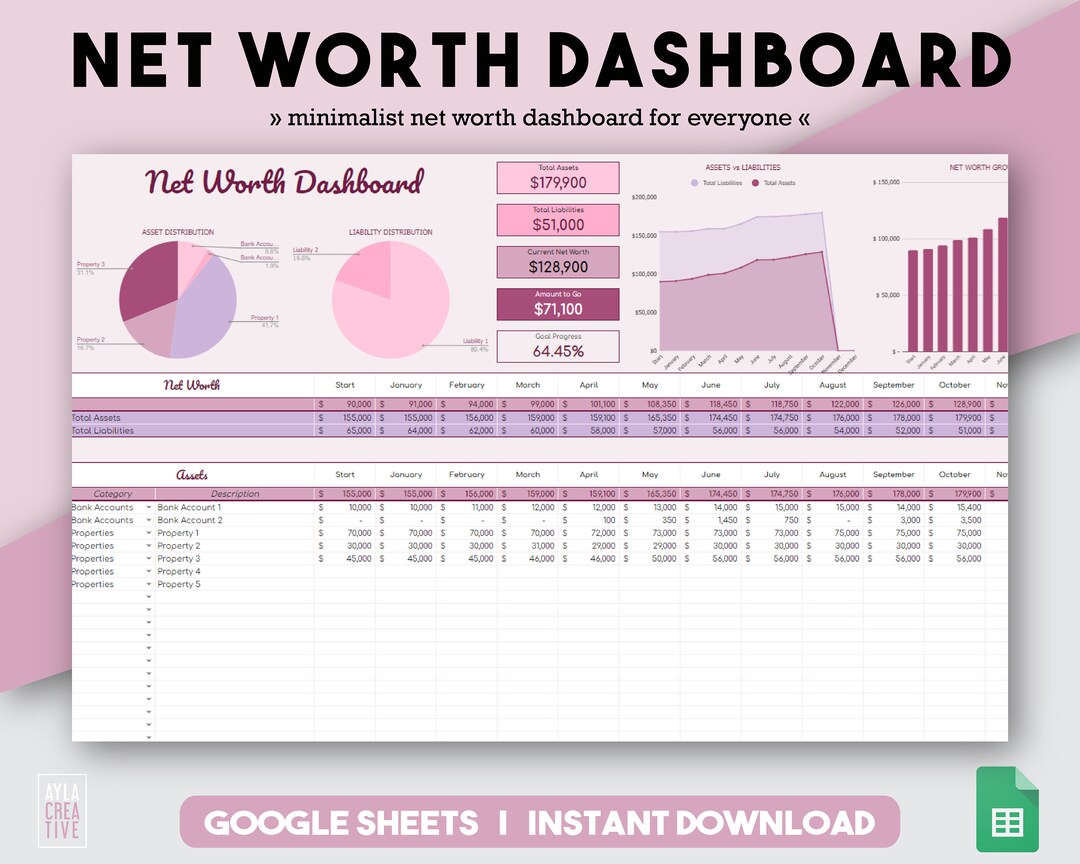
- Measure What Matters: Review your net worth statement quarterly, not daily. Daily tracking amplifies noise; quarterly tracking reveals true trajectory.
- Eliminate Toxic Liabilities: Treat high-interest consumer debt (rates above 7%) as an acute financial injury that requires immediate, aggressive treatment.
- Maintain Cash Buffers: Keep three to six months of nondiscretionary living expenses in a secure, liquid account so you never have to liquidate investments in a downturn.
- Protect Your Downside: Carry appropriate health, disability, liability, and term life insurance. An unhedged catastrophe can erase a decade of financial training overnight.
- Focus on Longevity Over Speed: The most successful investors are not the ones who take reckless risks to strike it rich quickly; they are the ones who stay invested continuously over decades.
The Finish Line Moves—Enjoy the Process
The paradox of net worth accumulation is that reaching your ultimate numerical goal rarely brings the satisfaction you anticipate if you despised the process of getting there. The true value of building wealth lies in the person you become along the way: disciplined, resourceful, forward-thinking, and autonomous.
Treat your finances as an ongoing discipline rather than a one-time race. Train your habits, optimize your cash flow, stay resilient through every economic cycle, and let compounding time do the heavy lifting.