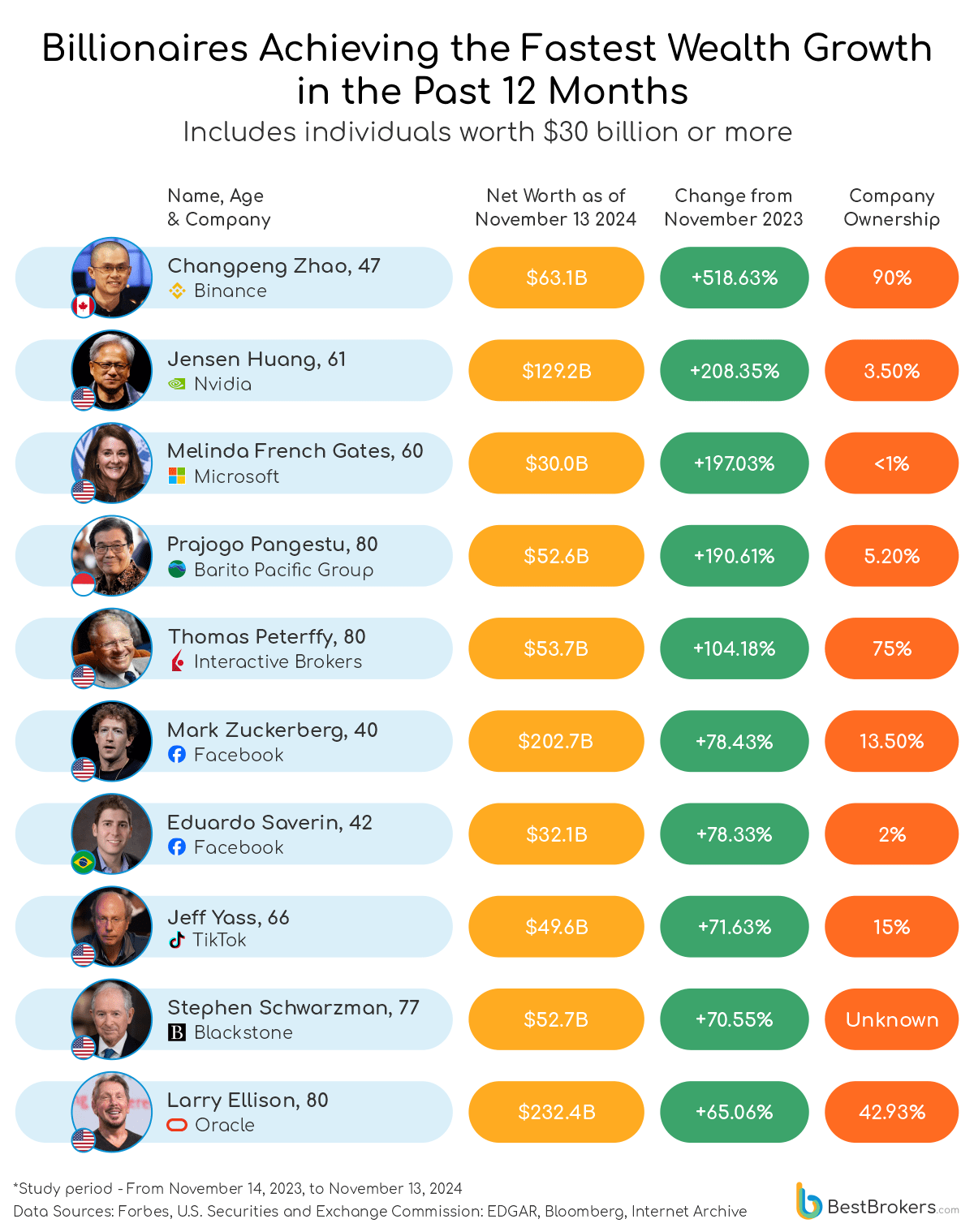
Fastest Wealth Build of the Era: $100M to $10B
For most of economic history, building a ten-billion-dollar enterprise required generations. Industrial giants took decades to optimize supply chains, capture regional markets, and achieve multi-billion-dollar valuations. Even the early tech boom of the late 1990s and 2000s saw companies spend ten to fifteen years grinding toward decacorn status.

Today, the rules have been entirely rewritten. A new breed of founders is executing the fastest wealth build of the era, leaping from $100 million to $10 billion in valuation in just a handful of years. This velocity is not an accident of luck; it is the result of compounding network effects, software-driven leverage, and radical shifts in global capital deployment.
The Anatomy of Modern Hyper-Growth
To understand how companies compress decades of growth into single-digit years, we must look at the mechanics of modern leverage. Traditional businesses scaled linearly with headcount and physical assets. Modern decacorns scale exponentially through digital infrastructure.
Zero Marginal Cost of Distribution
Historically, reaching a global audience meant building international distribution networks, physical storefronts, or local logistics hubs. Today, a software product, a platform business, or a digitally native brand can deploy globally on day one.
- Cloud infrastructure allows instant scaling without building data centers.
- Global app stores and programmatic advertising provide immediate access to billions of consumers.
- Viral loops and social sharing replace expensive traditional marketing departments.
When a company hits $100 million in revenue, it usually possesses a proven product-market fit. In the past, scaling that product required building out massive regional sales teams. Today, digital product-led growth (PLG) allows the product to sell itself, drastically accelerating the trajectory toward $10 billion.
Venture Capital Supercharging
The availability of private capital has fundamentally transformed. Mega-rounds led by sovereign wealth funds, massive hedge funds, and crossover investors inject billions of dollars into private companies. This capital allows founders to artificially accelerate growth, capturing market share with a speed that previous generations of entrepreneurs could only dream of.
Instead of relying on retained earnings to fund expansion, modern startups use pre-IPO liquidity to acquire competitors, hire elite global talent instantly, and subsidize user acquisition until network monopolies are secured.
The Playbook Behind the Fastest Wealth Build of the Era
Examining the outliers who achieve this meteoric rise reveals a distinct playbook. These companies share common operational characteristics that differentiate them from standard high-growth startups.

1. Network Effects as a Moat
The fastest-scaling companies do not just offer a good product; they build ecosystems. Every new user increases the value of the platform for all existing users. Think of two-sided marketplaces, developer platforms, or communication tools. Once a critical mass is reached, the growth curve goes vertical because the competitive advantage becomes insurmountable.
2. Capital Efficiency Meets Aggressive Scaling
Paradoxically, the companies achieving the fastest wealth build combine extreme capital efficiency in their early stages with hyper-aggressive spending once product-market fit is validated. They spend millions—sometimes billions—not on operations, but on land-grab customer acquisition designed to lock out competitors permanently.
3. Founder-Led Agility
Unlike legacy corporations burdened by bureaucratic inertia, these high-velocity companies are typically still run by their original founders. Decision-making happens in hours, not quarters. Pivots are executed swiftly, allowing the business to capture emerging technological waves—such as artificial intelligence, cloud computing, or decentralized finance—before legacy players even understand the threat.
The Downside of Hyper-Velocity
While the financial metrics are staggering, the race from $100M to $10B carries unique risks. Rapidly scaling an organization often outpaces its cultural and operational maturity. Burnout is rampant, governance can be weak, and regulatory scrutiny usually follows close behind.
Furthermore, companies valued at $10 billion on paper based on hyper-growth projections must eventually deliver fundamental, profitable cash flows. When market conditions shift—as seen in recent macroeconomic tightening—the companies that prioritized growth at all costs face brutal corrections if their unit economics do not ultimately make sense.
Conclusion
The phenomenon of leaping from $100 million to a $10 billion valuation in just a few years represents a new peak in capitalist evolution. Driven by infinite digital leverage, massive pools of private capital, and powerful network effects, the fastest wealth build of the era has permanently altered our expectations of business velocity. As technology continues to accelerate, the timeline for creating multi-billion-dollar value will only continue to shrink, setting a new standard for the entrepreneurs of tomorrow.