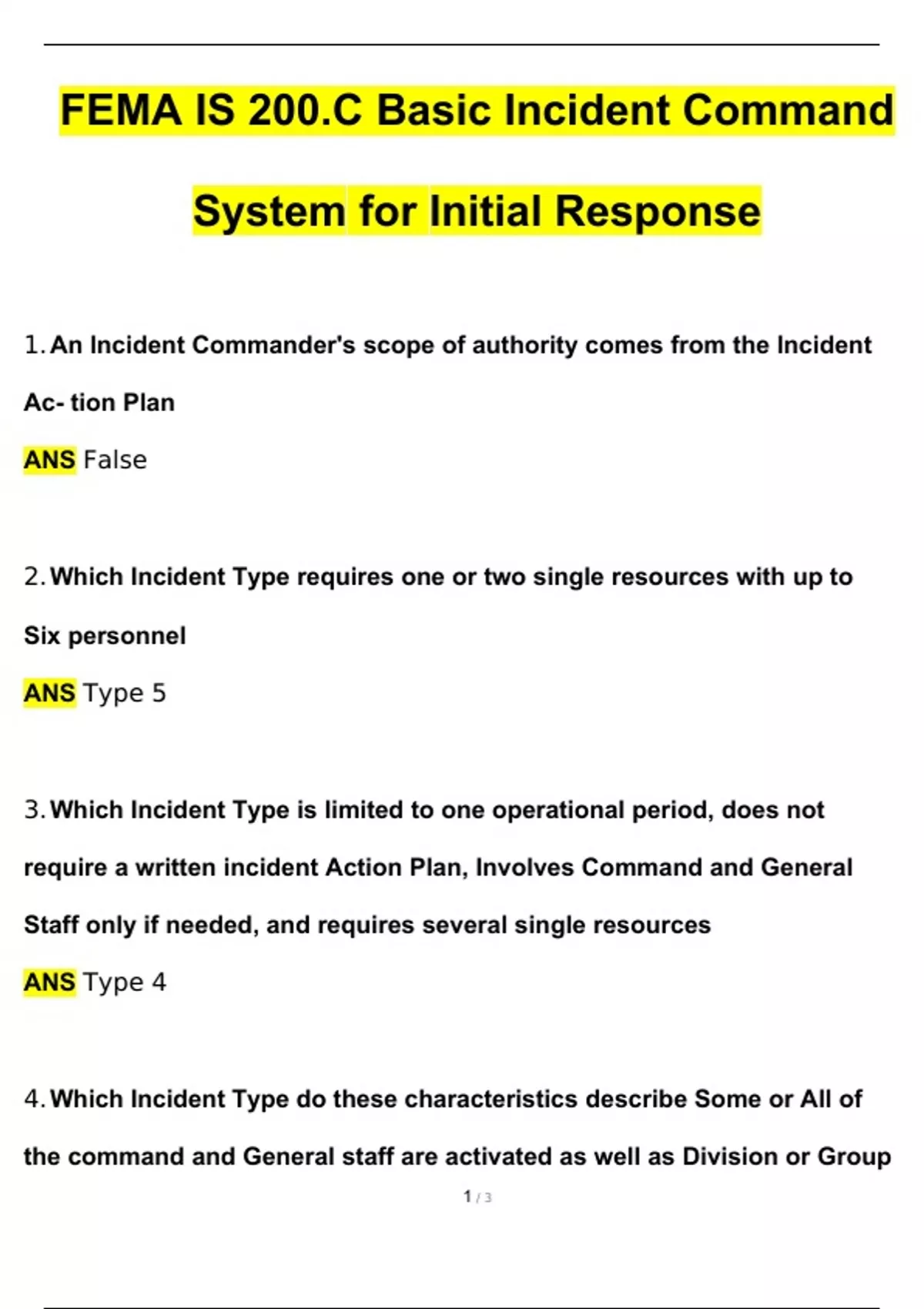
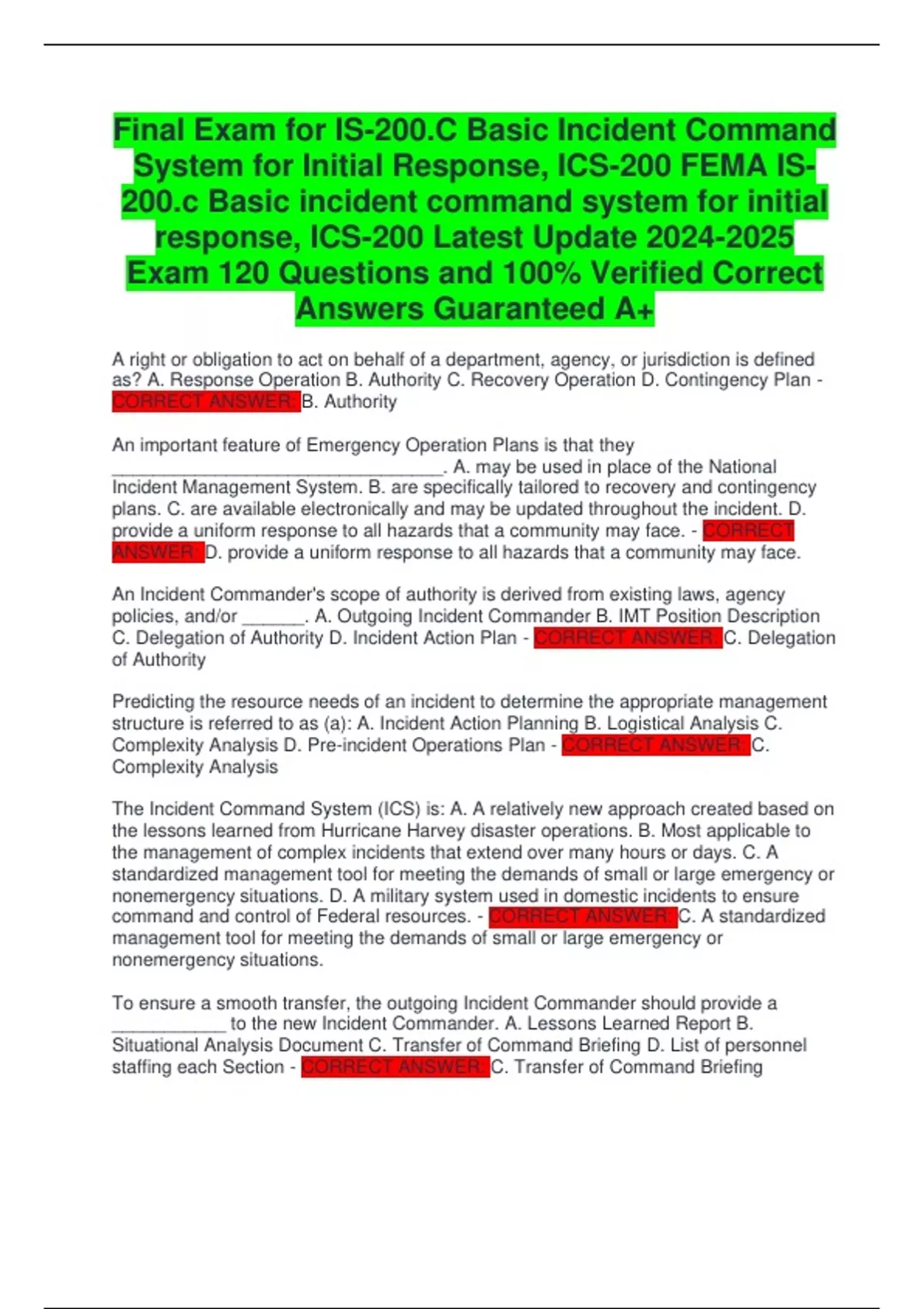
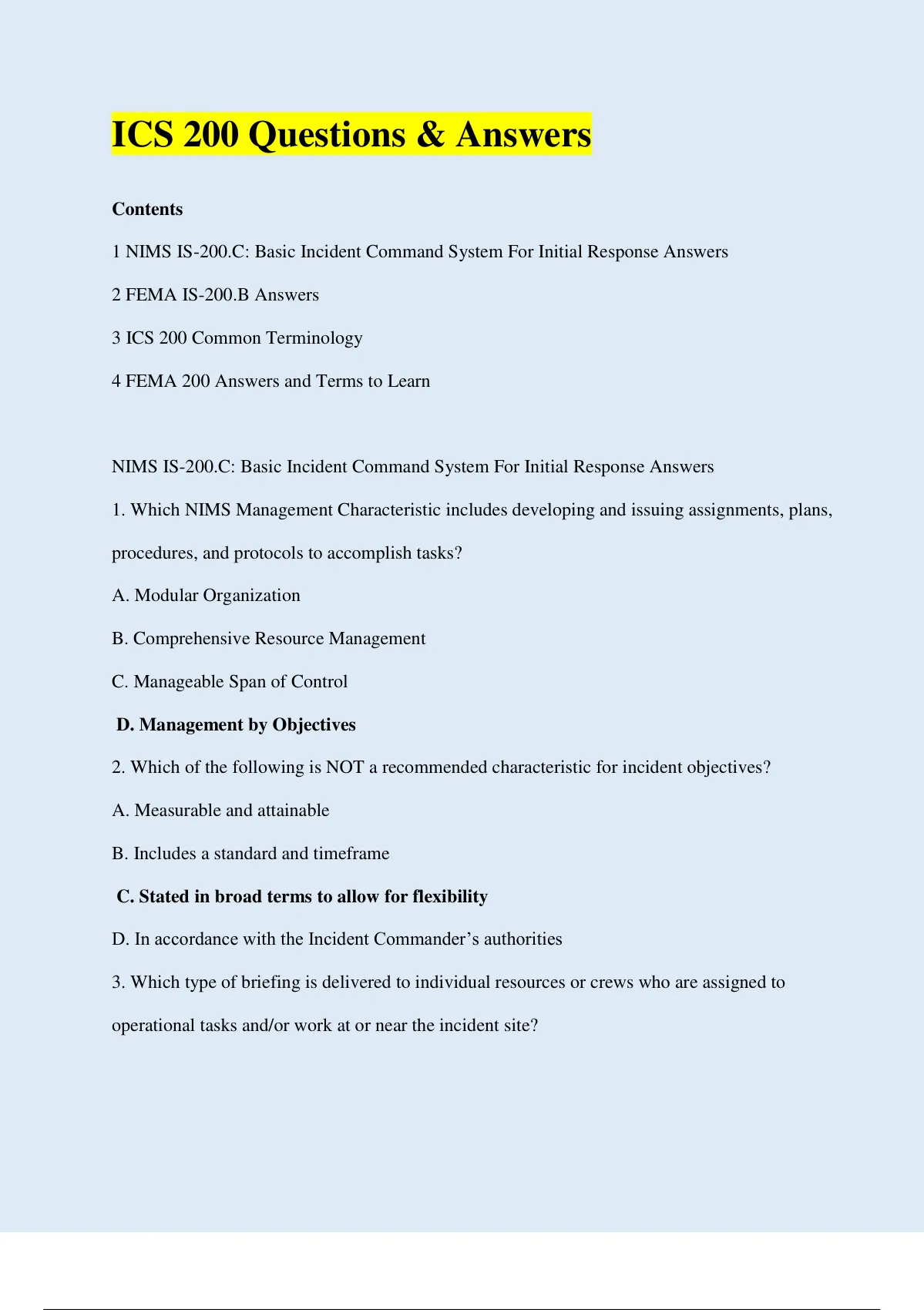
FEMA ICS 200 Answers: Study Guide & Exam Overview
Passing the Federal Emergency Management Agency (FEMA) Independent Study courses is a critical requirement for many professionals in emergency management, public safety, healthcare, and government sectors. If you are preparing for the IS-200.c course—titled Basic Incident Command System for Initial Response—you might find yourself searching for fema ics 200 answers to verify your understanding. While simply looking up an answer key won't teach you how to manage a developing incident, reviewing key concepts, structure rules, and core principles will ensure you pass the final exam legitimately and retain the knowledge you need in the field.

Understanding FEMA IS-200.c
The Incident Command System (ICS) is a standardized, on-scene, all-risk incident management approach. While ICS 100 introduces the overarching system and basic terminology, ICS 200 focuses on the supervisory level for initial response incidents. The course enables personnel to operate efficiently during an incident or event within the ICS structure.
To successfully complete the course, you must read the online lessons, complete the knowledge checks, and pass a multiple-choice final exam administered online through the FEMA Emergency Management Institute (EMI) portal. A passing score typically requires getting 75% or higher on the final assessment.
Core Concepts Covered in ICS 200
Before attempting the test, you should be familiar with several fundamental operational areas. Most exam questions test your application of these principles rather than rote memorization.
1. Leadership and Management
ICS 200 emphasizes effective leadership within an incident command environment. Key topics include:
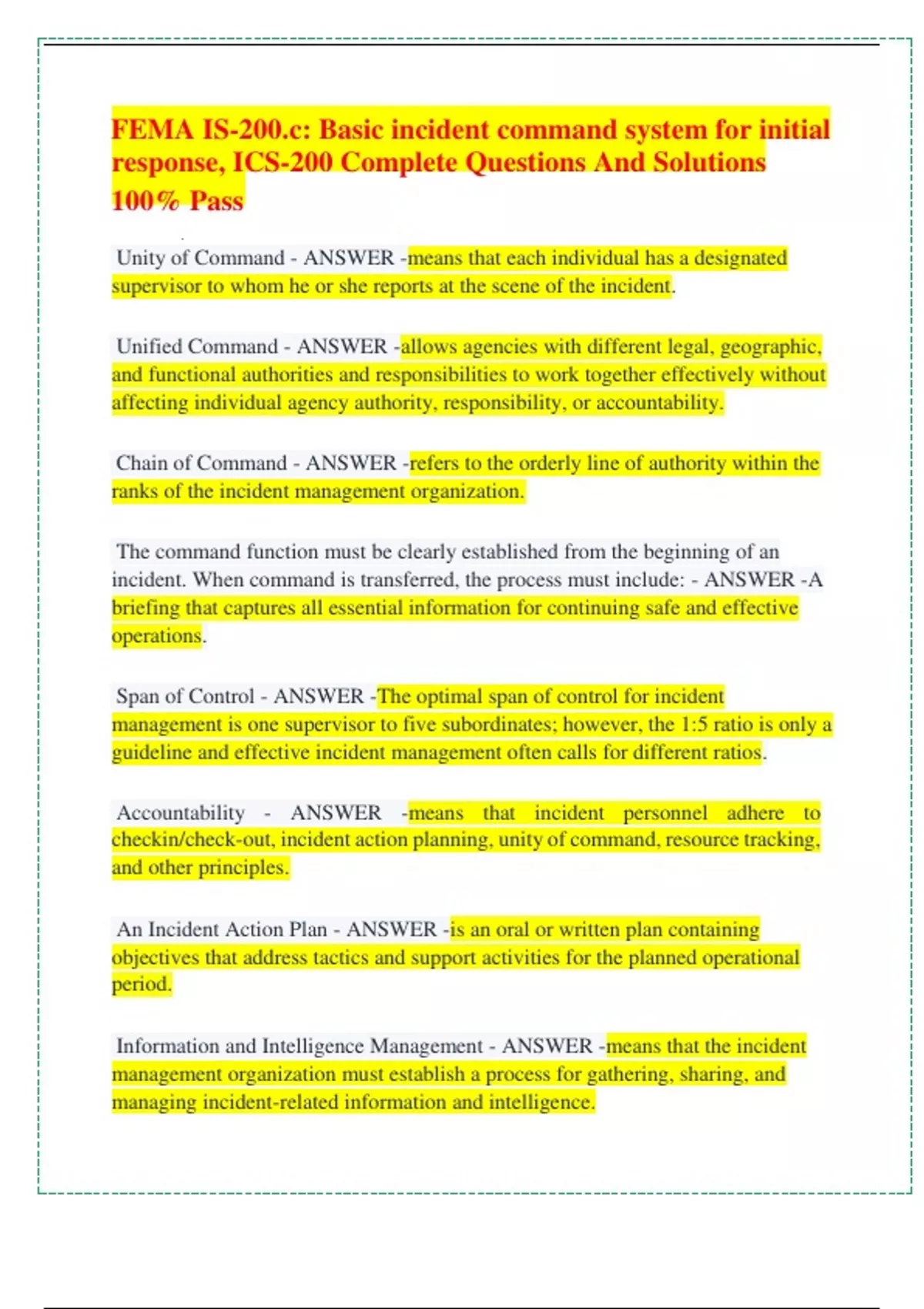
- Unity of Command: Every individual has a designated supervisor to whom they report at the scene of an incident.
- Chain of Command: A line of authority exists in the organization from the Incident Commander down to the lowest-level responder.
- Accountability: Strict adherence to check-in/check-out procedures, operational tracking, and following assigned tasks.
2. Delegation of Authority and Management by Objectives
During larger or expanding incidents, the Incident Commander must delegate tasks to maintain a manageable span of control. Management by objectives dictates that each operational period relies on clear, measurable goals established by the Incident Commander or Unified Command.
3. Functional Areas of ICS
You must understand how the four primary General Staff sections interact under the Incident Commander:
- Operations: Directs tactical actions to carry out the incident objectives.
- Planning: Collects, evaluates, and displays incident situation information; prepares the Incident Action Plan (IAP).
- Logistics: Provides resources and all other services needed to support the incident.
- Finance/Administration: Tracks incident-related costs, procurement, and accounting needs.
Tips for Passing the Exam Without Relying on Answer Keys
Relying exclusively on leaked or scraped fema ics 200 answers can leave you unprepared for real-world emergency responses. Instead, use these proven study strategies to master the material:
- Open the PDF Printable Version: FEMA provides a full downloadable PDF of the course material. Use this document to search for specific terms using Ctrl+F while you complete the online course.
- Take Notes on Knowledge Reviews: At the end of each unit, FEMA provides self-assessments. Pay close attention to these questions, as the final exam features very similar phrasing.
- Understand Span of Control: Expect questions regarding the ideal span of control (typically 1 to 5 subordinates per supervisor, with a flexible range of 3 to 7).
- Distinguish Between Incident Types: Understand the differences between Type 5, Type 4, Type 3, Type 2, and Type 1 incidents based on complexity, resource requirements, and jurisdictional involvement.
Frequently Asked Questions
Can I use my course notes during the FEMA ICS 200 exam?
Yes. The FEMA Independent Study exams are open-book. You can keep the printable course materials or your handwritten notes open in a separate window while taking the test.
How many questions are on the IS-200.c final exam?
The final exam typically consists of 25 multiple-choice questions. You need 19 correct answers (75%) to pass.
What happens if I fail the exam on the first attempt?
If you fail, FEMA allows you to retake the exam. You will be given another opportunity to review the questions you missed and submit a new attempt through the EMI student portal.
Conclusion
While finding quick fema ics 200 answers online might seem tempting, taking the time to understand the core mechanics of the Incident Command System ensures you are genuinely prepared for real-world emergency deployment. Utilize the official course materials, study the functional sections of command, and make use of the open-book format to secure your certification honestly and effectively.