Finding Solace in Traditional Irish Farewell Songs
Few cultures possess a relationship with death, parting, and sorrow quite as profound as Ireland's. For centuries, music has served not merely as entertainment on the island, but as an essential vessel for communal processing, storytelling, and emotional survival. When faced with the finality of death or the ache of permanent emigration, the Irish turned to song. Today, finding solace in traditional Irish farewell songs remains a universal pathway for people across the globe to navigate grief, honor departed loved ones, and find a strange, comforting beauty in sorrow.

The Cultural Roots of Irish Parting Songs
To understand why Irish laments and farewell songs carry such potent emotional weight, one must look at the nation's history. Generations of Irish people experienced forced displacement, famine, and the devastating reality of the 'American Wake'—a party held for individuals leaving home for the New World, knowing they would likely never return.
Similarly, the ancient tradition of the *caoineadh* (keening)—women wailing rhythmically over the deceased—embedded a raw, vocalized expression of grief deep into the cultural psyche. Parting was treated not as a quiet inconvenience, but as a monumental rupture in the fabric of the community. Music became the bridge across that rupture, allowing communities to articulate the unspokens of a broken heart.
Classic Irish Farewell Songs and Their Meanings
Traditional Irish repertoire is rich with compositions dedicated to saying goodbye. Whether addressing a lover, a homeland, or a soul departing this earth, these tracks offer distinct emotional landscapes for listeners.
The Parting Glass
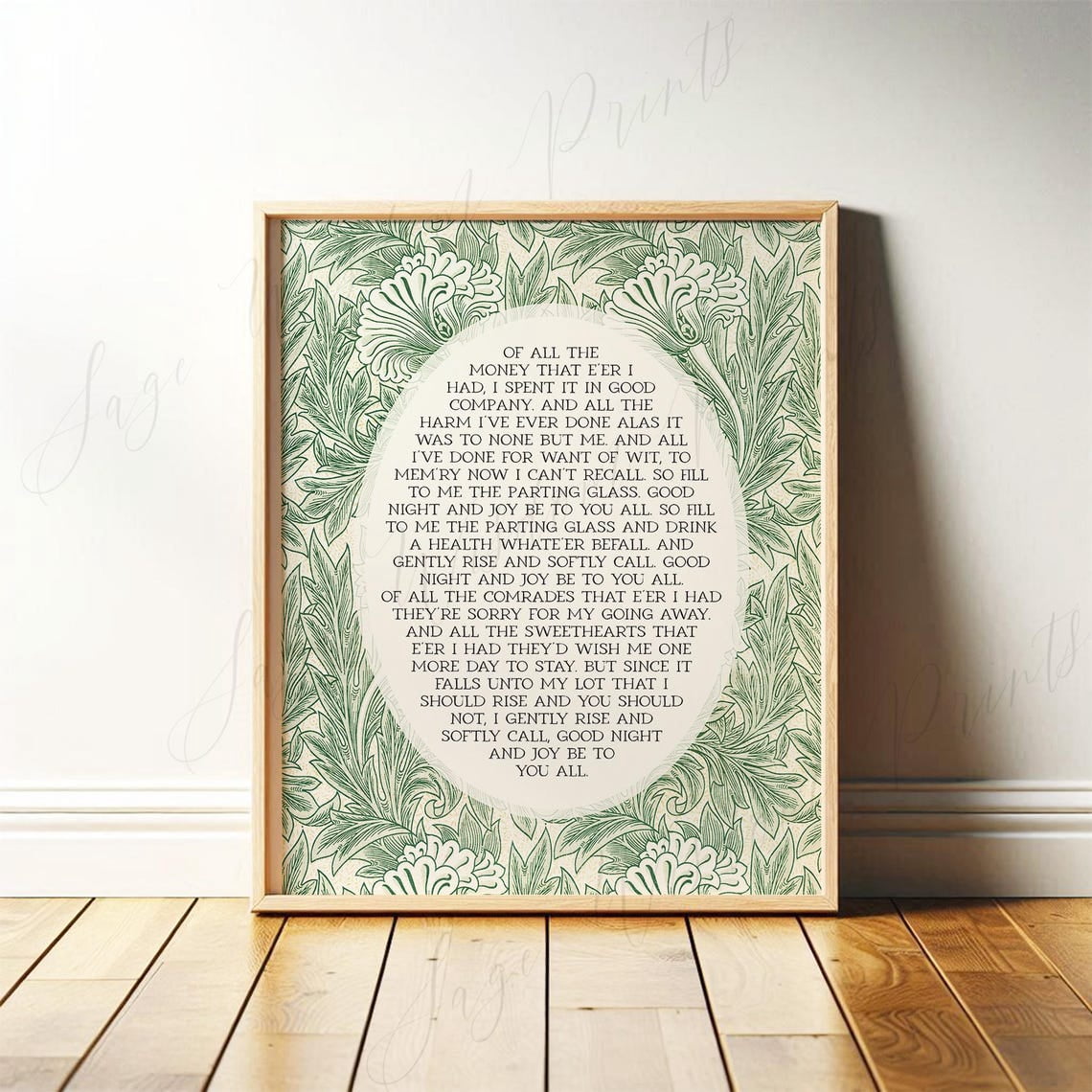
Perhaps the most famous closing song in the Celtic canon, 'The Parting Glass' is an absolute anthem of gracious departure. Unlike many dirges that focus entirely on the agony of loss, this song looks back on a life well-lived and friendships deeply cherished with gratitude.
- The Message: It celebrates the joy of shared company rather than dwelling solely on the end.
- The Comfort: Lines like 'Good night and joy be with you all' offer a gentle, blessing-filled closure that brings immense peace to mourners.
She Moved Through the Fair
With its haunting, modal melody, 'She Moved Through the Fair' blurs the line between romantic separation and ghostly visitation. Based on traditional poetry collected by the poet Padraic Colum, the narrator speaks of a lost love who returns in spirit, promising to meet them 'soon by the door.'
The song's eerie, unresolved quality mirrors the psychological state of early grief. It validates the lingering presence of someone who has passed away, offering comfort to those who feel their loved one is never truly gone.
Danny Boy
Set to the tune of 'Londonderry Air,' 'Danny Boy' is arguably the most recognized Irish farewell song in the world. Though its exact origins are debated, its emotional architecture is undeniably universal. It captures the heart-wrenching perspective of a parent waiting for a son who may return only to find them gone.
The plea for the son to 'come back when summer's in the meadow, or when the valley's hushed and white with snow' anchors grief in the cyclical rhythm of nature. It reminds the listener that sorrow, too, passes through seasons.
Why Music Heals: The Psychology of the Irish Lament
There is a distinct psychological mechanism at play when we lean into sad music during times of distress. Studies in music psychology show that listening to mournful songs can trigger the release of prolactin and oxytocin—hormones associated with empathy, comfort, and bonding. This biological response helps mitigate feelings of isolation.
Traditional Irish songs excel at this because they avoid toxic positivity. They do not rush the listener to 'cheer up.' Instead, they sit in the darkness of the room, validating the pain. When you listen to a sean-nós (old style) singer hold a raw, unaccompanied note, you feel understood. The music carries the weight so that, momentarily, your shoulders do not have to.
Bringing Tradition into Modern Goodbyes
Today, many people incorporate these timeless melodies into modern celebrations of life and memorial services. Selecting a traditional Irish air allows families to introduce a sense of timeless dignity and collective history into a deeply personal moment.
- Choose live instrumentation if possible: The rustic tones of a uilleann pipes, tin whistle, or solo fiddle add an organic, breathing quality to the farewell.
- Focus on the lyrics: Choose a song whose specific message—whether it's travel, safe passage, or gratitude—aligns with the personality of the person being honored.
- Allow communal listening: Songs like 'The Parting Glass' invite quiet humming or collective singing, turning a solitary grief into a shared community embrace.
Conclusion
Grief is a heavy burden, but it is one that humanity has carried collectively for millennia. Through the preservation of our cultural artistry, we are never truly starting from scratch when heartbreak hits. By listening to, singing, and sharing these historic pieces of poetry, we tap into a deep well of resilience. Ultimately, these melodies remind us that love outlasts parting, and that even the saddest goodbyes can be met with grace, beauty, and enduring peace.