Finding the Right Blue Rhino BBQ Grill Parts
When your trusty outdoor cooker starts showing signs of uneven heating, rust, or ignition failure, you don't necessarily need to buy a brand new unit. Often, a quick refresh using the right Blue Rhino BBQ grill parts will bring your favorite backyard appliance back to life. Blue Rhino is a well-known name in outdoor living, producing various gas grills and outdoor heating appliances over the years. Because these grills endure high heat, grease, and changing weather conditions, components like burners, heat tents, and cooking grates naturally degrade over time.

Sourcing the correct replacement components can seem daunting given the variety of models on the market. However, with a methodical approach to identifying your model number and understanding what needs replacement, you can complete a DIY repair in no time. This guide covers how to find the right components, common items you may need, and tips for extending the lifespan of your renewed grill.
Identifying Your Grill Model
Before you spend money on any replacement hardware, you must verify the exact model number of your appliance. Manufacturers often make subtle design changes from year to year, meaning parts from one model might not fit another, even if the grills look nearly identical from the outside.
Where to Find the Model Number
To ensure you purchase compatible Blue Rhino BBQ grill parts, look for the silver or white rating label attached to the grill. Common locations for this sticker include:
-
p>Inside or on the side of the cabinet doors
- On the back panel of the grill body
- Underneath the control panel console
- On the inside of the cart framing
Write down the complete model number, SKU, and any serial numbers listed. Having this information handy prevents costly ordering mistakes and ensures a proper fit for components like burners and heat shields.
Common Replacement Components
Over several seasons of grilling burgers, steaks, and vegetables, certain components take the brunt of the wear and tear. Knowing what typically fails helps you inspect your grill thoroughly and order everything you need in a single shipment.
Burners and Venturi Tubes
The burners are the heart of your gas grill. If you notice yellow flames, uneven heat distribution, or holes clogged with rust and food debris, it is time for a replacement. Stainless steel and cast iron burners eventually rust through. When replacing burners, check the igniter electrodes and collector boxes to ensure reliable startup.
Heat Tents and Flavorizer Bars
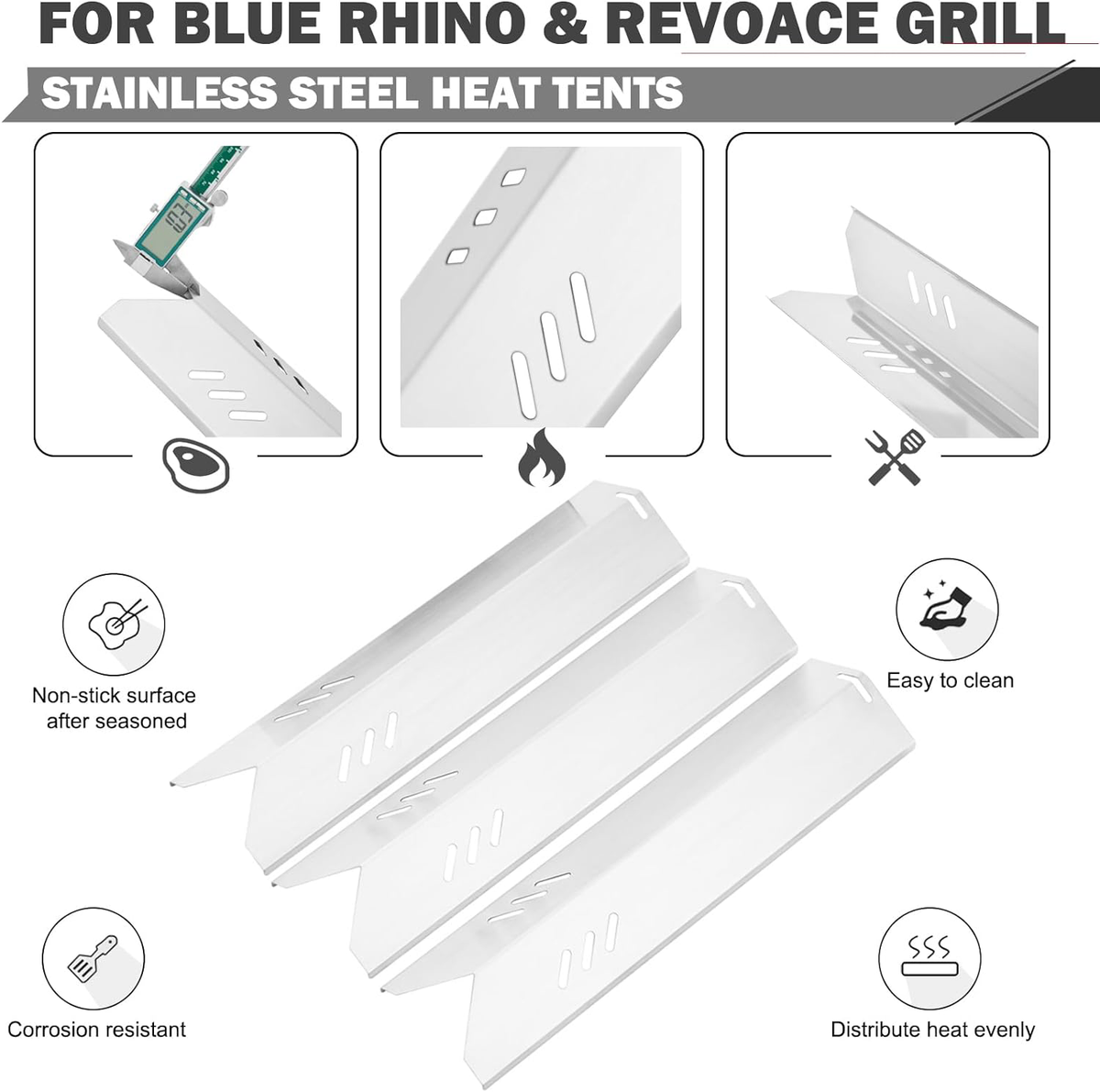
Located directly above the burners, heat plates (also known as flame tamers or vaporizers) protect your burners from dripping grease and help distribute heat evenly. Because they catch corrosive drippings, they tend to rust out faster than other components. Replacing warped or rusted heat tents will instantly improve your grill's temperature control and reduce flare-ups.

Cooking Grates
Whether your grill came with porcelain-coated cast iron, stainless steel rods, or heavy cast iron grates, these surfaces eventually chip, crack, or rust. Upgrading your grates not only improves food safety and hygiene but also gives you those classic, professional sear marks on your steaks and chops.
Igniters and Valves
If your push-button ignition or electronic igniter module stops clicking, you may just need a new battery or a replacement electrode wire. Inspect the wiring harness and ceramic tips for cracks before assuming you need a whole new ignition system.
OEM vs. Aftermarket Parts
When shopping for components, you will generally encounter two choices: Original Equipment Manufacturer (OEM) parts and universal aftermarket alternatives.
OEM Components: These are made directly by the manufacturer or their authorized suppliers. They guarantee an exact fit and match the original specifications of your grill. While they sometimes cost slightly more, they take the guesswork out of installation.
Aftermarket Components: Third-party manufacturers produce these universal or model-specific alternatives. Many aftermarket brands use heavy-duty 304 stainless steel that may actually outlast the original factory parts. Just ensure you carefully measure your old parts (length, width, and mounting style) before purchasing universal items.
Tips for Installing New Grill Components
Once your replacement hardware arrives, a few basic preparation steps will make the installation process smooth and safe.
- Disconnect the Gas: Always turn off the propane tank valve or disconnect the natural gas line before starting any maintenance work.
- Clean the Interior: Take advantage of having the old parts removed by scraping out accumulated grease, ash, and debris from the bottom of the firebox using a putty knife and a shop vacuum.
- Wear Gloves: Rusted metal edges can be sharp. Protect your hands with sturdy work gloves while handling old burners and grates.
- Perform a Leak Test: After installing new gas-carrying components like burners or manifolds, apply a soapy water solution to the connections with the gas turned on. If bubbles form, tighten the fittings immediately.
Maintaining Your Renewed Grill
Protecting your investment ensures you won't need to shop for replacement hardware again anytime soon. Always keep your grill covered with a heavy-duty, weather-resistant cover when not in use. Burn off residual food particles by heating the grill on high for 10-15 minutes after every cooking session, then brush the grates clean with a non-wire or stainless steel grill brush. By performing routine maintenance and replacing worn components as needed, your grill will continue delivering great meals for years to come.