FL New Hire Reporting: Employer Guide & Requirements
FL New Hire Reporting: Complete Guide for Employers

As a business owner or manager in the Sunshine State, staying on top of state and federal regulations is crucial for smooth operations. One critical administrative duty is FL new hire reporting. Whether you just hired your first full-time employee or you onboard staff seasonally, Florida law requires you to report this information promptly.
Failing to report new employees on time can lead to state and federal penalties. Fortunately, the process is straightforward once you know the rules, deadlines, and submission methods. This comprehensive guide breaks down everything you need to know about Florida's new hire reporting mandates.
Why Florida Requires New Hire Reporting
Federal law (enacted under the Personal Responsibility and Work Opportunity Reconciliation Act of 1996) requires all employers to report newly hired and rehired employees to a designated state agency. In Florida, this data is collected by the Florida Department of Revenue (FDOR).
The primary purpose of new hire reporting is to assist state agencies in locating parents who owe child support. However, the database is also used to:
- Prevent fraudulent unemployment compensation and workers' compensation payments.
- Locate individuals with outstanding federal or state debts.
- Maintain an accurate employment directory at both the state and national levels.
Who and What Must Be Reported
Clarity around who qualifies as a "new hire" helps prevent missed submissions and unnecessary filings. In Florida, the reporting requirements apply to a specific set of workers.
Defining a New Hire in Florida
You must report any employee who resides or works in Florida to whom you anticipate paying earnings. This includes:
- Full-time and part-time employees: Anyone newly added to your payroll.
- Rehires or recalled employees: Anyone who returns to work after being separated from your payroll for 60 consecutive days or more (or seasonal workers returning after a break in service).
- Temporary and seasonal workers: Even if they only work for a few days, if they fill out a W-4 form, they generally must be reported.
Independent contractors and 1099 workers typically do not need to be reported for state new hire compliance unless they operate under specific state mandates, though standard W-2 employees are the primary focus.
Required Information
When submitting a report to the state, you will need to provide specific data points for each employee. Gather the following information during your onboarding process:
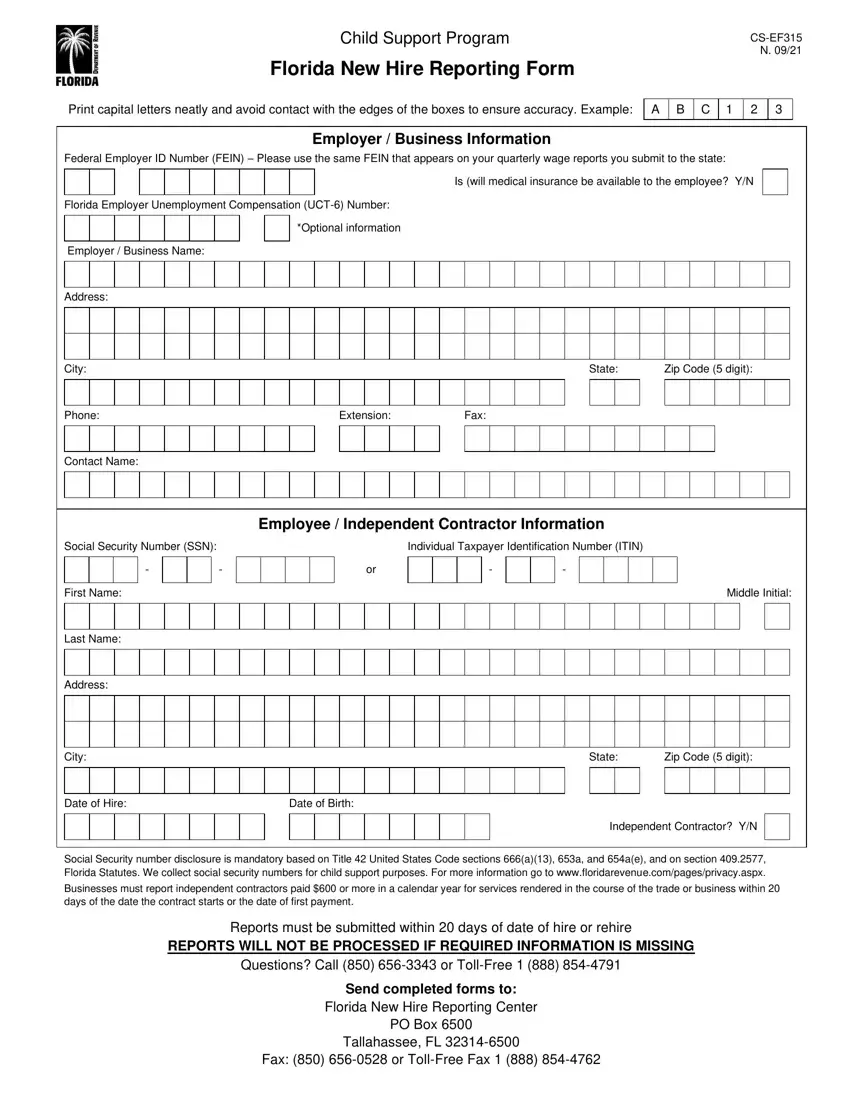
- Employee’s Full Name (First, Middle, Last)
- Employee’s Address
- Employee’s Social Security Number (SSN)
- Employee’s Date of Hire (the first day services are performed for wages)
- Employer’s Name
- Employer’s Address
- Employer’s Federal Employer Identification Number (FEIN)
Florida New Hire Reporting Deadlines
Timing is everything when it comes to compliance. Florida employers must submit new hire information within 20 days of the employee’s hire date.
If you submit your reports electronically, you have an even better workflow: Florida law allows employers to make two transmissions per month, if necessary, provided the time between transmissions does not exceed 16 days. However, reporting each employee immediately upon hiring is the safest way to avoid missing the 20-day window.

How to Submit New Hires in Florida
Florida offers several convenient ways to submit new hire data, allowing you to choose the method that best fits your business size and administrative setup.
1. Online Portal (Recommended)
The fastest and most efficient way to report is through the Florida New Hire Reporting Center website. Employers can create an account, enter single employee records manually, or upload batch files (such as text files or spreadsheets) if they are onboarding large groups of workers at once. The online portal provides instant confirmation of receipt.
2. Mail or Fax
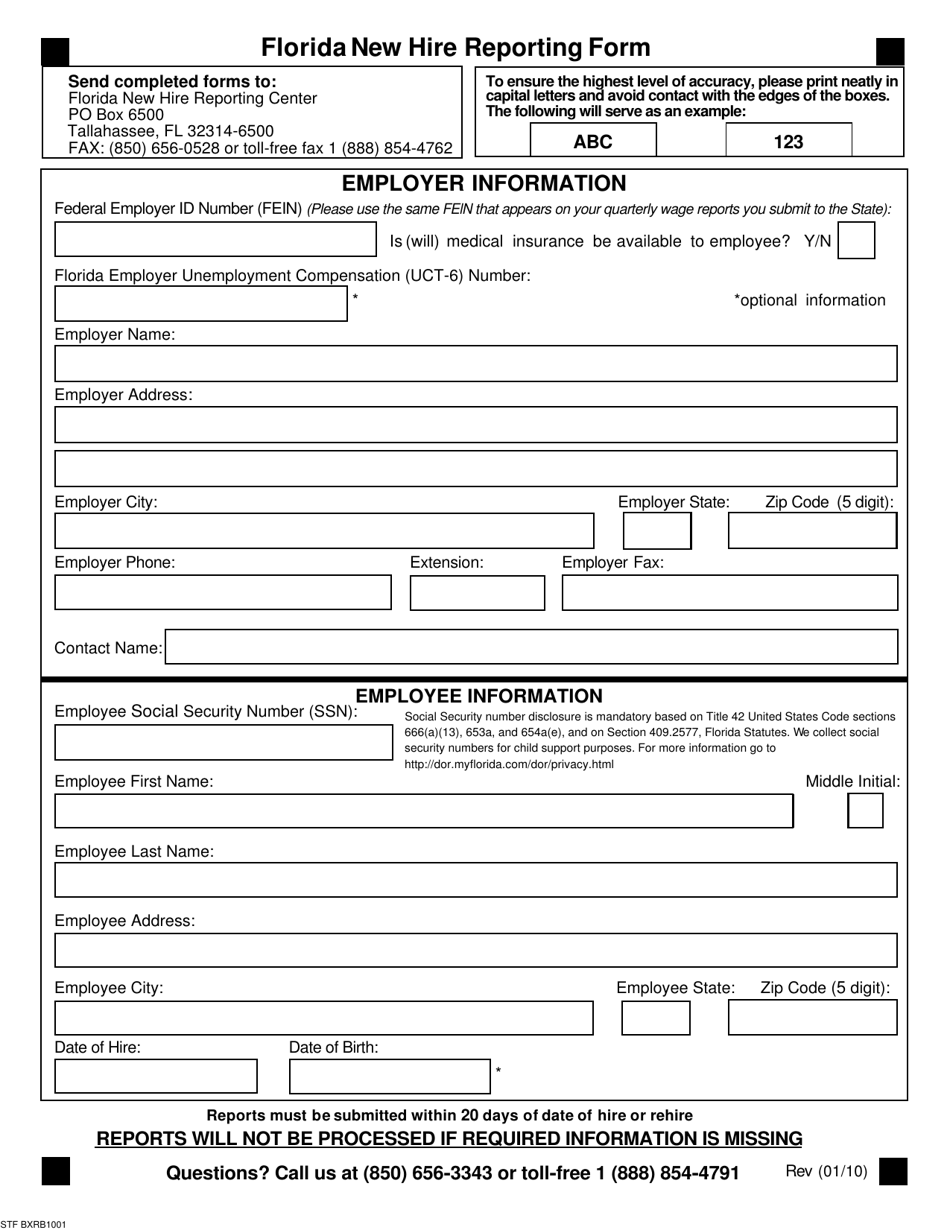
If you prefer traditional methods, you can download a New Hire Reporting Form from the state website, fill it out manually, and either mail or fax it to the Florida Department of Revenue. While this works well for very small businesses with low turnover, it lacks the instant tracking of the online portal.
- Mail Address: Florida New Hire Reporting Center, P.O. Box 6500, Tallahassee, FL 32314-6500
- Fax Number: 888-865-1243
3. Payroll Service Providers
Many third-party payroll and HR software solutions (such as ADP, Gusto, or QuickBooks Payroll) handle FL new hire reporting automatically as part of their onboarding workflow. If you use a payroll provider, check your settings to ensure this feature is enabled so the software transmits the required W-4 data to the state on your behalf.
Penalties for Non-Compliance
Failing to report new hires or submitting incorrect data can result in financial consequences for your business. In Florida, civil penalties can be assessed if an employer fails to report a new employee due to a conspiracy or negligence between the employer and employee.
Beyond state-specific fines, federal penalties can also apply. Consistent failure to comply creates unnecessary administrative red tape and increases your risk of audits from state agencies.
Best Practices for Employers
Streamlining your onboarding checklist ensures you never miss a deadline. Implement these best practices to maintain compliance effortlessly:
By prioritizing FL new hire reporting as a standard part of your hiring routine, you protect your business from penalties, support vital public programs, and maintain a seamless administrative process for your growing team.