Flint’s Water Crisis Is America’s Greenfield Failure
When the people of Flint, Michigan, turned on their taps and received discolored, foul-smelling, and ultimately lead-tainted water, the nation reeled in horror. Headlines flashed across the globe, citizens organized protests, and government inquiries began. For years, the disaster was dissected through the narrow lenses of municipal mismanagement, emergency management cost-cutting, and regulatory negligence by state and federal agencies.

However, reducing the Flint tragedy to a few bad decisions in 2014 misses the deeper, structural rot. The crisis was decades in the making, rooted in demographic shifts, eroding tax bases, and a national addiction to outward expansion. This is why Flint’s water troubles are America’s greenfield failure—a glaring testament to how our obsession with building new suburbs starves legacy cities of the resources they need to maintain basic human survival.
The Anatomy of Urban Decline and Sprawl
To understand how Flint’s pipes began leaching neurotoxins, one must look at how American cities grow. For the latter half of the 20th century, federal policy, banking practices, and cultural preferences favored suburbanization. Developers bulldozed pristine agricultural land and forests at the urban fringe—creating what planners call greenfield developments—while abandoning the urban core.
This pattern of growth created a catastrophic zero-sum game for legacy industrial cities like Flint:
- Tax Base Evaporation: As middle-class residents and major employers fled to new greenfield subdivisions, Flint's tax revenue plummeted.
- Deferred Maintenance: With shrinking budgets, city officials were forced to defer maintenance on critical infrastructure, including aging water mains and service lines.
- Oversized Footprint: Flint was built to support nearly 200,000 residents, but by the time of the crisis, its population had dropped by more than half, leaving an oversized pipe network servicing a fraction of the users.
When a city loses population, the physical infrastructure does not automatically shrink. Water treatment plants, miles of underground pipes, and pumping stations still require maintenance. Spreading those fixed costs over a dwindling population creates an unsustainable economic burden.
Subsidizing the Fringe at the Expense of the Core
The tragedy of greenfield development is that it is heavily subsidized by federal and state policies, often at the direct expense of older urban centers. New subdivisions require new roads, electrical grids, stormwater management systems, and water connections. Taxpayers across the state—including those living in legacy cities like Flint, Detroit, and Saginaw—help subsidize the infrastructure for these shiny new outer-ring suburbs.
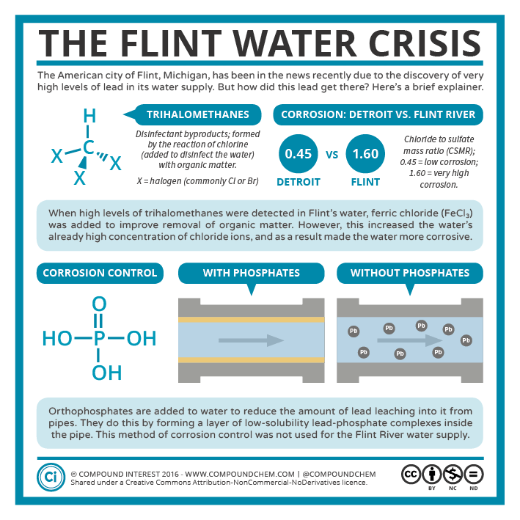
Meanwhile, the urban core is left to rot from the inside out. When local governments face budget shortfalls caused by this outward migration, they look for ways to cut costs. In Flint's case, switching the municipal water source from the Detroit Water and Sewerage Department to the Flint River—and failing to properly treat the corrosive water for lead—was a desperate cost-saving measure enacted by a state-appointed emergency manager.
The emergency manager system itself is a symptom of greenfield failure. State governments create the conditions that bleed core cities dry, and when those cities inevitably face fiscal insolvency, the state steps in not with reinvestment, but with austerity measures that prioritize ledger balances over public health.
Video: Here's how Flint's water crisis happened

The Invisible Infrastructure Crisis Across America
Flint is not an outlier; it is a preview. Across the United States, thousands of municipalities are grappling with aging water systems that were installed during the mid-20th-century boom. According to the American Society of Civil Engineers (ASCE), a water main bursts every two minutes in the U.S., and billions of gallons of treated water are lost daily to leaks.
Many of these systems are reaching the end of their design lifespans simultaneously. Yet, local governments continue to approve new greenfield developments that promise short-term property tax boosts while locking the municipality into long-term infrastructure liabilities they cannot afford.
The Financial Ponzi Scheme of Sprawl
Urban analysts often describe sprawling greenfield growth as a financial Ponzi scheme. New developments generate upfront impact fees and construction jobs, giving local politicians a temporary win. However, once those subdivisions mature—usually after 25 to 30 years, when roofs need replacing, roads need repaving, and water lines need upgrading—the tax revenue generated is rarely enough to cover the long-term maintenance costs.
Cities are then forced to rob Peter to pay Paul, shifting funds away from older neighborhoods and core infrastructure maintenance to service the debt of newer expansions. Eventually, the system breaks down. In Flint, it broke down at the kitchen tap, poisoning a generation of children with lead.
Shifting the Paradigm: From Greenfield to Renewal
If America is to prevent another Flint, our approach to growth, infrastructure, and public investment must undergo a fundamental paradigm shift. We must stop treating greenfield expansion as the default mode of economic development and start prioritizing the health and resilience of existing communities.
Conclusion
The water crisis in Flint was a man-made catastrophe born of institutional neglect, racial inequity, and systemic fiscal failure. But above all, it was a warning about the hidden costs of America’s obsession with greenfield expansion. Until we recognize that abandoning our core cities to build ever-outward is a recipe for infrastructural collapse, we will continue to find more Flints hiding in plain sight across the American landscape.