Florida Bolete: Identification, Habitat, and Facts
When mushroom hunters venture into the warm, humid forests of the American Southeast, they often encounter a diverse array of fascinating fungi. Among the most striking is the Florida Bolete, a visually distinct mushroom known for its vibrant colors and unique ecological relationships. Whether you are an experienced mycologist or a curious nature lover, understanding this southern species adds a new layer of appreciation for the region's rich biodiversity.

What is the Florida Bolete?
The Florida Bolete (scientifically known as Boletus floridanus, though taxonomy within the *Boletaceae* family is frequently updated by DNA sequencing) is a pored mushroom. Unlike standard grocery store mushrooms that possess gills under their caps, boletes feature a spongy layer of vertical tubes and pores. This characteristic allows them to drop millions of spores as they mature.
This particular species is prized by photographers and nature enthusiasts because of its vivid hues. While many forest fungi blend into the drab background of decaying leaves and soil, this mushroom often stands out due to its striking contrast of warm caps and brightly colored pores or stipes (stems).
Identification and Key Features
Accurately identifying bolete mushrooms can be notoriously difficult due to the sheer number of similar-looking species. However, the Florida Bolete possesses a specific combination of physical traits that help set it apart from lookalikes.
Cap Characteristics
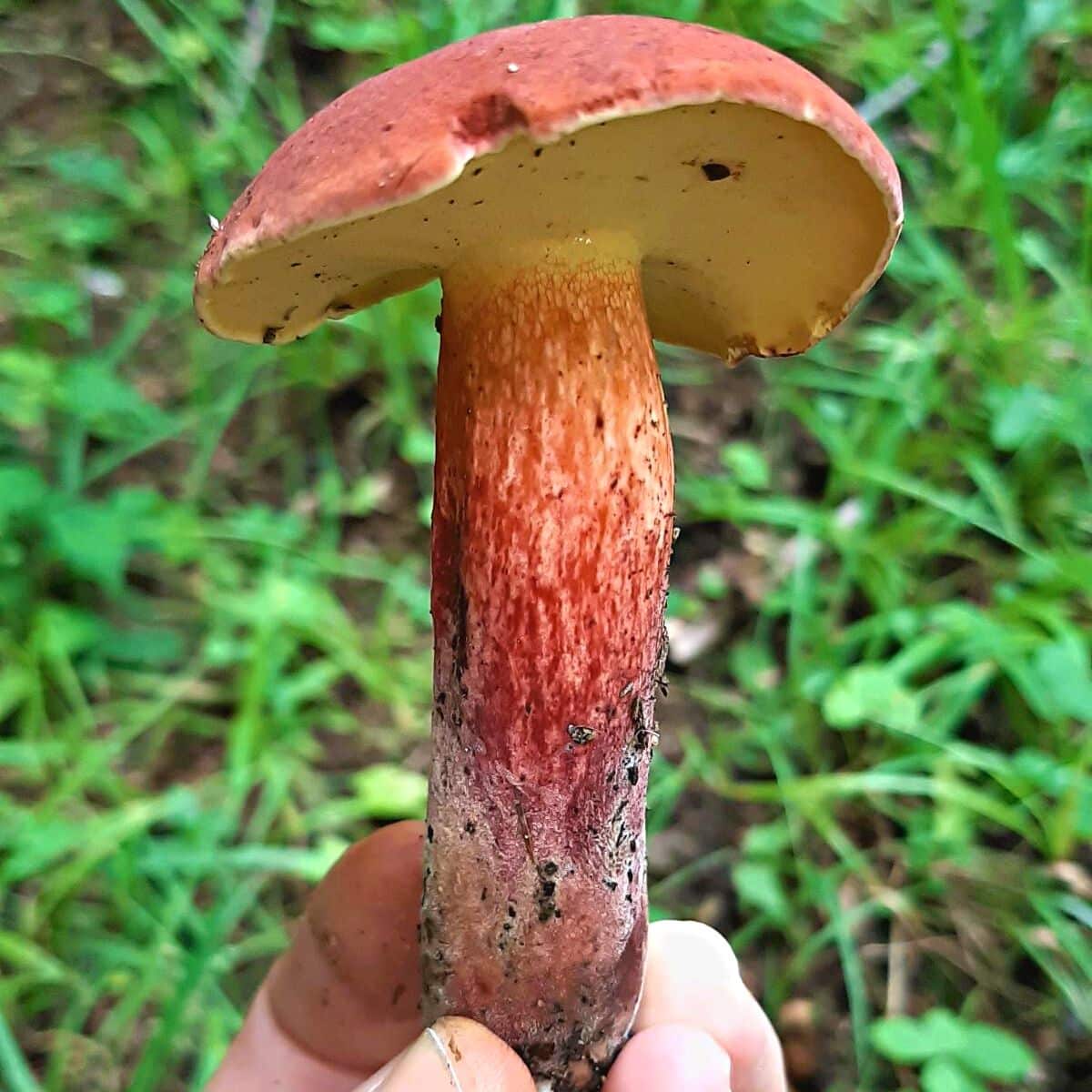
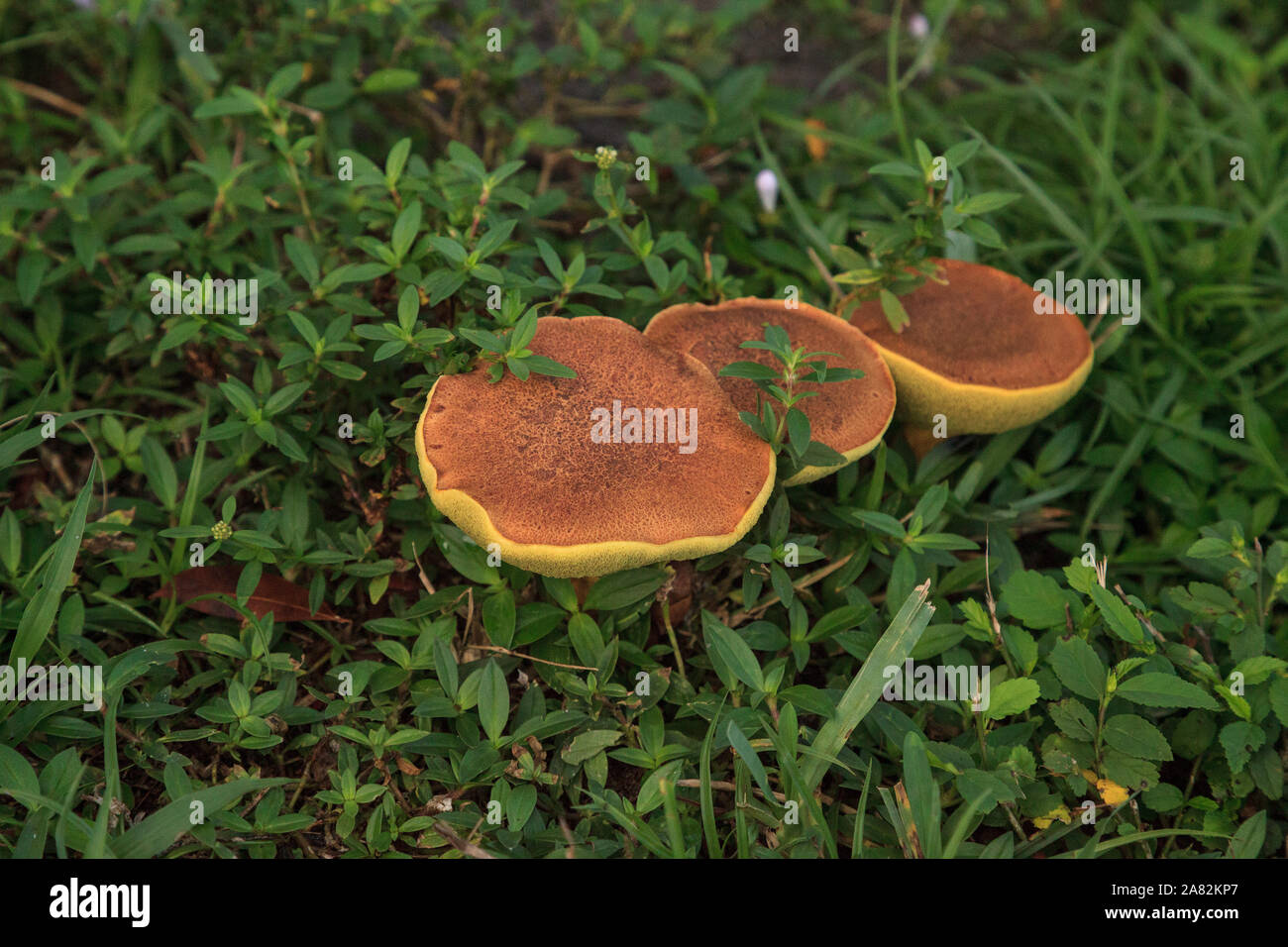
The cap of the Florida Bolete typically ranges from golden-brown to deep reddish-brown or chestnut. When young, the cap is convex and firm, eventually flattening out as it ages. The surface is often dry to slightly velvety, though it can become tacky or sticky during the heavy summer rains common in its native range.
Pores and Surface
Beneath the cap lies the pore surface. In the Florida Bolete, these pores are often a bright yellow when young, sometimes aging to olive-yellow. A crucial diagnostic test for many boletes is bruising: when you press or cut the pore surface of certain species, they rapidly stain blue. Forager notes and field guides often highlight staining reactions as a primary key to separating species within the *Boletus* genus.
Stipe (Stem) and Flesh
The stem is generally robust, tapering or equal in width, and frequently adorned with a reticulate pattern—a raised, net-like webbing near the top. The flesh of the mushroom is typically white to pale yellow. Depending on the exact specimen and its reaction to air, the internal flesh may or may not change color when sliced.
Video: Florida king bolete

Habitat and Ecology
As its common name suggests, the Florida Bolete is primarily found in the southeastern United States, with a strong concentration in Florida and neighboring coastal plain states. However, its range extends northward into parts of the Gulf Coast and the Carolinas wherever suitable subtropical or warm-temperate forest conditions exist.
Mycorrhizal Partnerships
Like the vast majority of bolete mushrooms, the Florida Bolete does not simply grow on dead wood or soil as a decomposer. Instead, it forms a vital, mutually beneficial mycorrhizal relationship with the roots of specific trees.
- Primary Tree Partners: Look for these mushrooms in mixed pine-hardwood forests. They frequently associate with various species of oak (*Quercus*) and pine (*Pinus*).
- Soil Preference: They favor acidic, sandy soils typical of the coastal plain and flatwoods ecosystems.
Through this underground network, the fungal mycelium exchanges water and essential minerals—such as phosphorus and nitrogen—for sugars produced by the tree through photosynthesis. Without these living host trees, the mushroom cannot survive.
Seasonality and Growth Habits
Timing is everything when searching for fungi in the subtropics. While some regions experience a rigid autumn mushroom season, the climate of the American Southeast dictates a different schedule.
- Summer Rains: The Florida Bolete primarily fruits during the summer and early autumn months. This coincides with the rainy season, when daily afternoon downpours saturate the warm soil.
- Temperature Triggers: Sustained warmth combined with high humidity acts as the primary catalyst for fruiting.
- Growth Pattern: They typically emerge as single specimens or in small, scattered groups rather than massive fairy rings.
Foraging and Safety Considerations
Many nature enthusiasts are drawn to bolete mushrooms because several species—such as the prized Porcini (*Boletus edulis*)—are considered choice edibles. However, caution is paramount when dealing with wild fungi.
If you are considering foraging for the Florida Bolete or any related species, keep these safety rules in mind:
Conclusion
The Florida Bolete is a wonderful example of the ecological richness hidden within southeastern forests. From its intricate underground partnerships with pines and oaks to its vibrant coloration punctuating the summer forest floor, it plays a key role in maintaining healthy woodland ecosystems. By respecting its habitat and observing it with a careful eye, nature lovers can deeply appreciate one of Florida's most charismatic native fungi.