Form 2848 Guidance: Transform Your Tax Strategy
When individuals and business owners think about tax planning, they frequently focus on deductions, credits, entity structures, and retirement contributions. However, the operational side of tax management is just as critical. When disputes arise, notices arrive, or complex negotiations with the Internal Revenue Service (IRS) become necessary, having the right professional legally authorized to speak on your behalf is invaluable. You can fundamentally transform your tax strategy with Power of Attorney Form 2848 guidance, shifting your approach from reactive panic to strategic, insulated compliance.

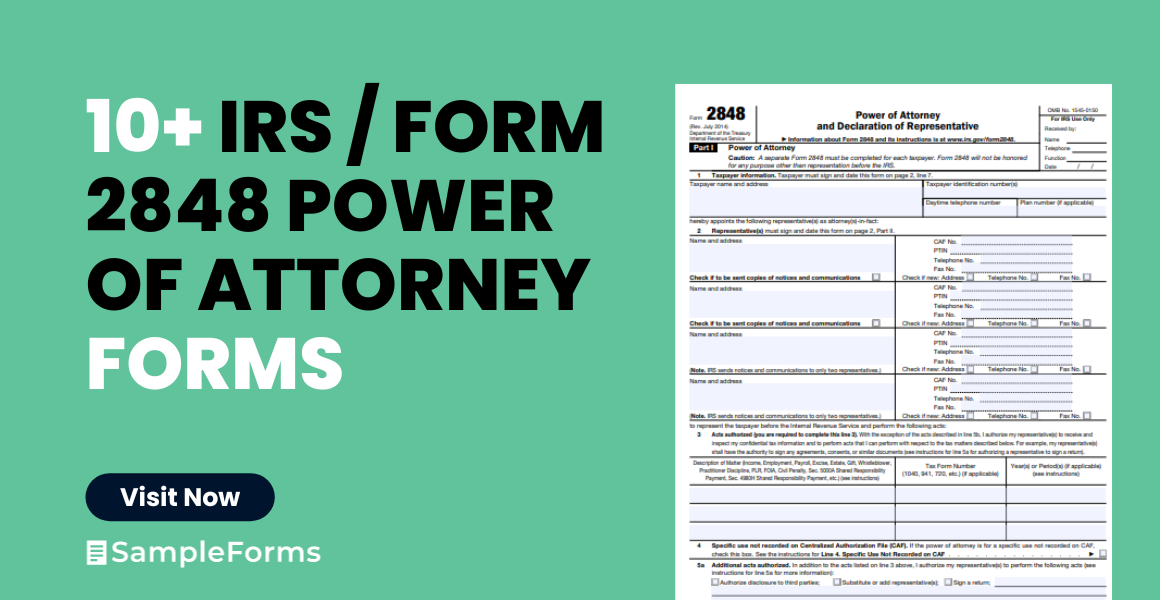
IRS Form 2848 (Power of Attorney and Declaration of Representative) is not merely an administrative document; it is an advocacy tool. When executed thoughtfully, it bridges the gap between high-level tax planning and boots-on-the-ground IRS representation, protecting your time, reducing liability, and ensuring seamless advocacy before federal authorities.
Understanding IRS Form 2848: Beyond Basic Representation
Form 2848 authorizes eligible professionals to represent a taxpayer before the IRS. Representation in this context means more than simply receiving information; it grants your representative the legal authority to advocate on your behalf, negotiate resolutions, execute certain agreements, and respond directly to examinations and appeals.
Form 2848 vs. Form 8821: Knowing the Difference
A frequent point of confusion among taxpayers is the distinction between Form 2848 and Form 8821 (Tax Information Authorization). Selecting the wrong form can stall your tax strategy at a critical juncture:
- Form 8821: Authorizes an individual or entity to receive and inspect confidential tax data. It creates a passive recipient. They cannot speak on your behalf, contest an auditor's determination, or negotiate payment plans.
- Form 2848: Authorizes an eligible representative to actively step into your shoes. They can present evidence, dispute IRS findings, sign consents extending assessment statutes, and submit settlement offers.
For taxpayers seeking comprehensive protection and execution of tax strategies, Form 2848 is the definitive instrument.
Transform Your Tax Strategy with Power of Attorney Form 2848 Guidance
Viewing Form 2848 purely as an emergency measure during an audit limits its actual potential. Integrating power of attorney authorizations into your broader financial operations delivers distinct strategic advantages.
1. Insulating Yourself from Costly Direct Interactions
Interacting directly with an IRS revenue agent or revenue officer is fraught with risk for taxpayers who are unfamiliar with tax procedure. Unrehearsed answers or informal explanations can inadvertently expand the scope of an examination. Authorizing an experienced representative through Form 2848 establishes a professional buffer. Your representative controls the narrative, ensures requests are within statutory guidelines, and prevents accidental disclosures.
2. Proactive IRS Account Monitoring
With an active Form 2848 on file and linked to the Centralized Authorization File (CAF) system, your designated representative gains access to your IRS transcripts, including wage and income transcripts, account transcripts, and tax return transcripts. This access allows your advisor to identify unposted payments, premature collection notices, or reporting discrepancies months before they spiral into enforcement actions.
3. Strategic Resolution of Historical Liabilities
If you or your business face historical tax debts, Form 2848 allows your representative to evaluate and execute complex collection alternatives, such as Offers in Compromise (OIC), Partial Payment Installment Agreements (PPIA), or Currently Not Collectible (CNC) designations. A representative who understands the Internal Revenue Manual (IRM) can negotiate terms far more effectively than an unrepresented taxpayer.
Who Can Serve as Your Representative Under Circular 230?

The IRS maintains strict standards regarding who can represent a taxpayer under Form 2848. Treasury Department Circular No. 230 establishes the categories of recognized representatives:
- Certified Public Accountants (CPAs): Licensed by state boards to represent taxpayers in all matters before the IRS.
- Attorneys: Members in good standing of a state bar, particularly useful when disputes involve legal interpretation or potential litigation in the U.S. Tax Court.
- Enrolled Agents (EAs): Federally authorized tax practitioners empowered by the Department of the Treasury to represent taxpayers across all federal tax matters.
- Enrolled Actuaries or Retirement Plan Agents: Limited to specific practice areas concerning pension and retirement plan compliance.
- Unenrolled Return Preparers (AFSP): Individuals who participate in the Annual Filing Season Program have limited representation rights and can only represent taxpayers whose returns they prepared and signed.
For advanced tax planning and audit defense, working with a CPA, tax attorney, or Enrolled Agent is standard practice.
Key Sections of Form 2848 to Complete with Precision
Errors on Form 2848 are a leading cause of IRS rejection, which can delay urgent representation by weeks. Strategic precision is required across several core sections:
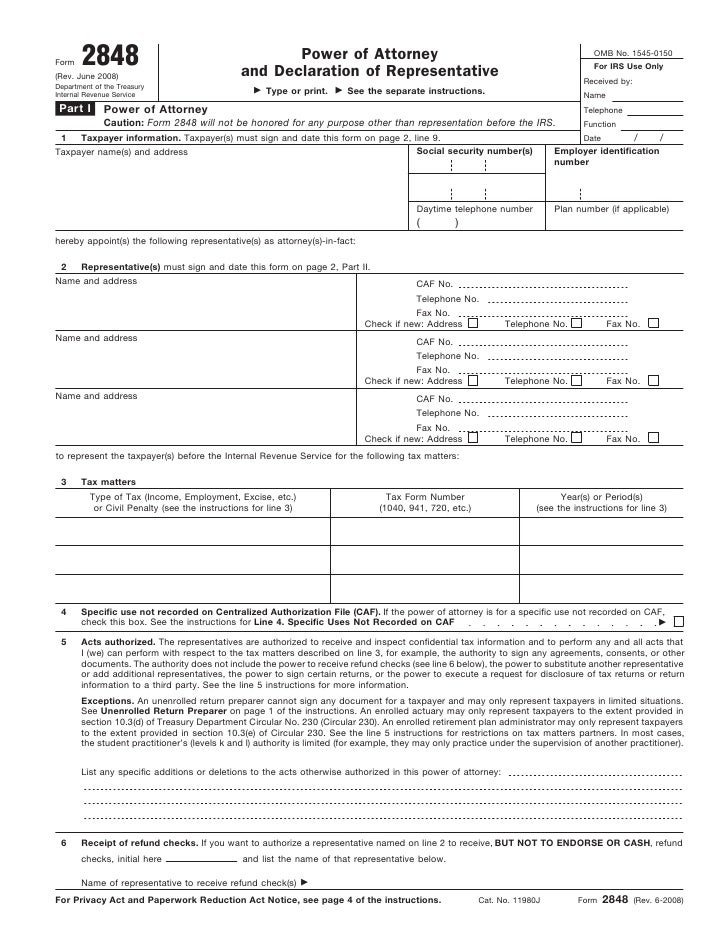
Line 3: Tax Matters
This is where precision is most vital. You must explicitly list:
- Type of Tax: Specify the exact nature (e.g., "Income," "Employment," "Civil Penalty"). Do not write "All Taxes."
- Tax Form Number: State the exact return number (e.g., "1040," "1120-S," "941").
- Year(s) or Period(s): Detail specific calendar or fiscal periods (e.g., "2021, 2022, 2023"). General terms like "all years" or "future years" will result in immediate rejection by the CAF unit. You may include up to three future calendar years ending after the date the form is received.
Line 5a: Additional Acts Authorized
Form 2848 automatically confers broad power, but certain specific acts require explicit checks or language. These include authorizing your representative to substitute or delegate authority to another qualified professional, sign specific returns under strict conditions, or receive refund checks (though representatives are rarely authorized to endorse or cash them).
Line 5b: Specific Acts Not Authorized
If you want your representative to handle negotiations but retain personal sign-off on final closing agreements or extensions of assessment statutes, you must explicitly delineate those limitations in Line 5b. A customized tax strategy often involves carving out specific limits to maintain client oversight.
Common Pitfalls That Derail Form 2848 Filings
Avoid these common administrative errors to ensure your representation takes effect immediately:
- Missing or Incorrect CAF Numbers: If your representative already has an IRS Centralized Authorization File number, ensure it matches IRS records exactly. First-time representatives must write "None" to have one assigned.
- Mismatched Taxpayer Identification: The name and Social Security Number (SSN) or Employer Identification Number (EIN) on Line 1 must match the tax return for the periods specified. For joint returns, each spouse must execute their own separate Form 2848 if both are designating the representative.
- Outdated Signatures: Both the taxpayer (Part I) and the representative (Part II) must sign and date the document. Digital signatures must comply with strict IRS electronic signature standards, or original "wet" signatures must be used.
- Unintended Revocation: Filing a new Form 2848 automatically revokes any previous authorizations for the same tax matters and years unless you attach a copy of the prior authorization and check the retention box on Line 6.
How to Submit Form 2848 for Faster Processing
Historically, Form 2848 had to be mailed or faxed to designated IRS service centers based on the taxpayer's residence, often taking weeks to be entered into the CAF database. Today, the IRS provides digital pathways:
- IRS Submit Forms 2848 and 8821 Online: Taxpayers and representatives can securely upload scanned or electronically signed forms directly through IRS.gov.
- IRS Tax Pro Account: Qualified tax professionals can initiate an online power of attorney authorization request that taxpayers review and approve digitally in their own IRS Online Account, linking authorizations almost in real time.
- Direct Submission to Revenue Officers: If you are actively engaged with an assigned revenue agent or officer, you can provide the executed form directly to them for immediate recognition while CAF processing is pending.
Elevate Your Long-Term Tax Posture
Form 2848 is not an admission of error or a concession of wrongdoing. Instead, it is an assertive declaration that your financial interests are managed by qualified counsel. By incorporating structured Power of Attorney Form 2848 guidance into your broader wealth and business planning, you eliminate administrative friction, protect your statutory rights, and ensure that every interaction with the IRS aligns with your overall financial objectives.