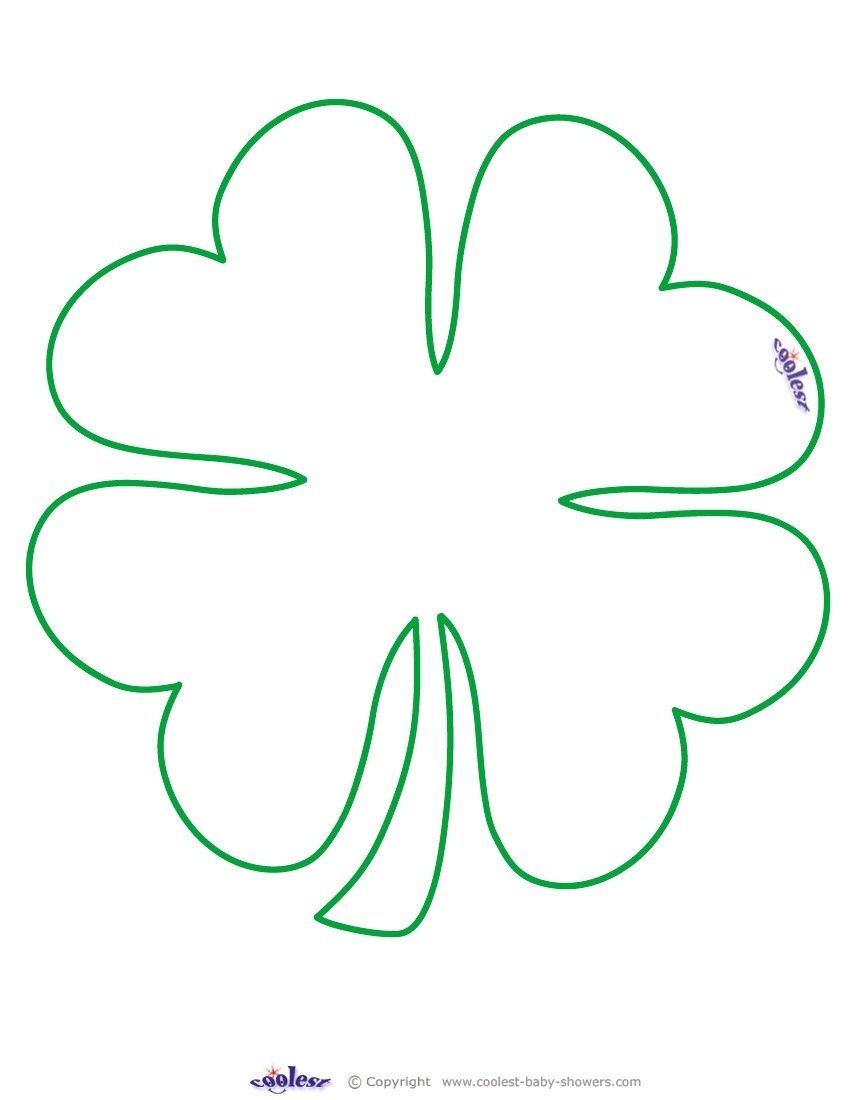
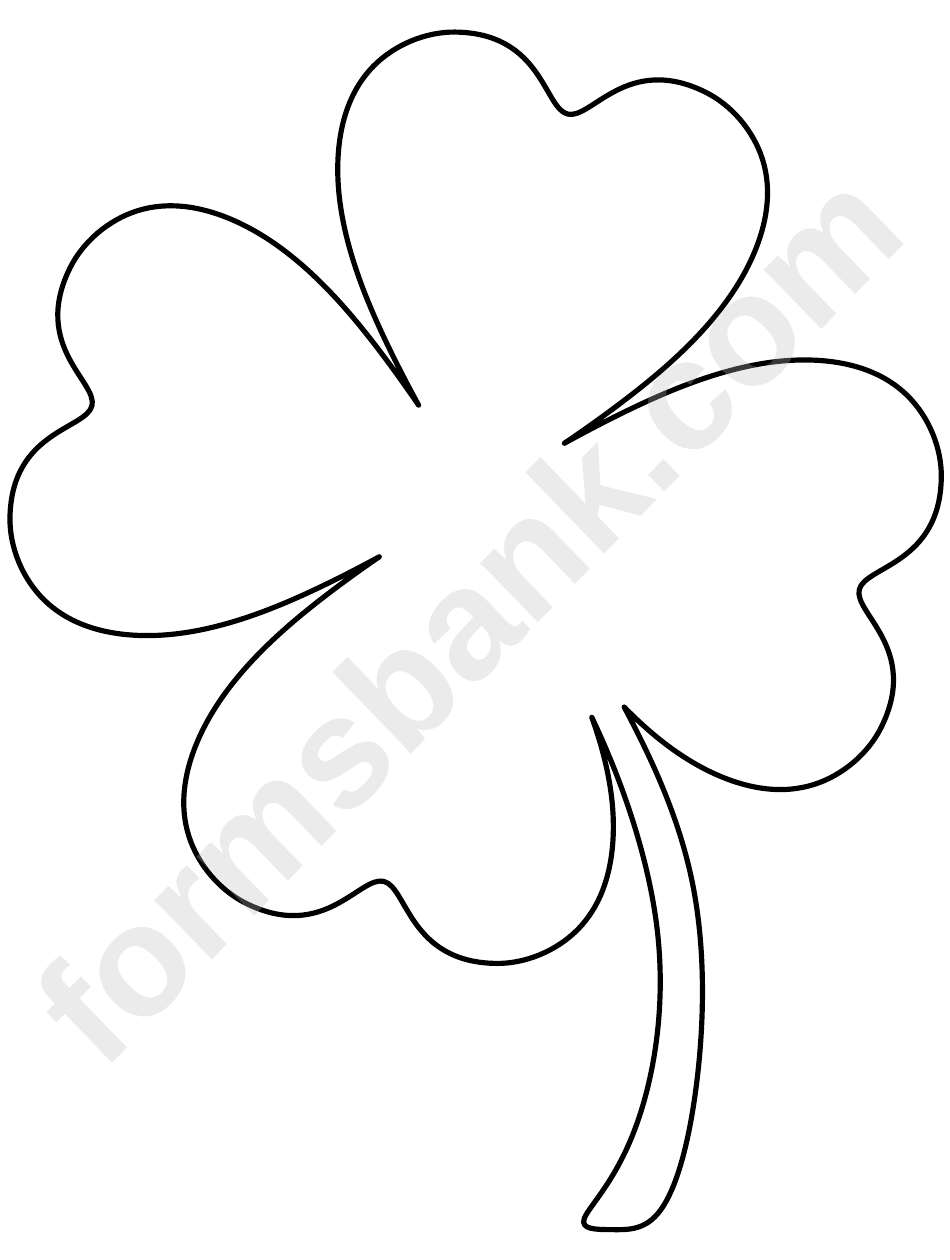
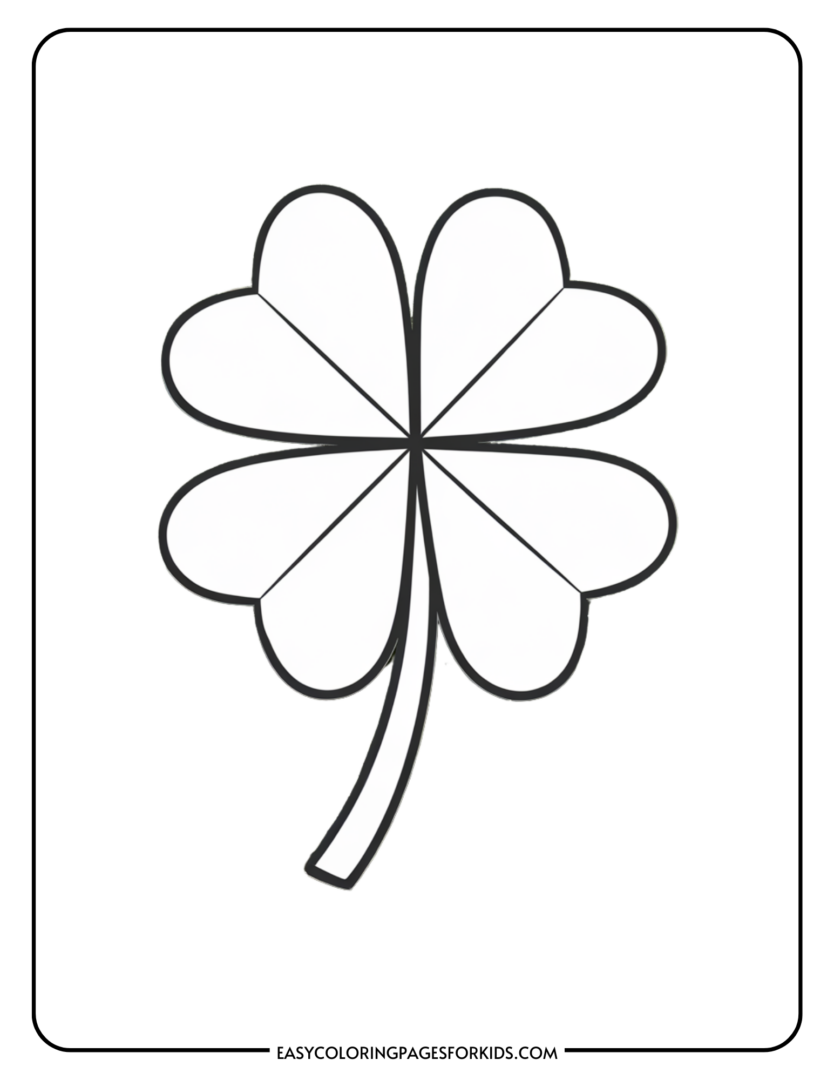
Four Leaf Clover Outline: Free Templates & Craft Ideas
Finding a real four leaf clover in the grass is a rare stroke of luck, but creating your own luck is much easier. Whether you are preparing decorations for St. Patrick's Day, designing a custom t-shirt, or looking for a fun drawing exercise for kids, a reliable four leaf clover outline is an essential tool. Clean, simple line art gives you the freedom to trace, cut, color, and customize your designs however you see fit.

In this guide, you will find everything you need to know about using clover shapes, from drawing your own from scratch to choosing the right template for your specific craft project.
Understanding the Four Leaf Clover Shape
Before diving into templates, it helps to understand the geometry of the plant. A true four leaf clover consists of four heart-shaped or rounded leaflets arranged symmetrically around a central point, connected to a slender stem. Unlike the standard three-leaf shamrock, the four-leaf variety requires a balanced, cross-like composition to look natural and visually appealing.
Anatomy of a Clover Outline
When looking at a well-designed clover vector or stencil, certain proportions make it stand out:
- Symmetry: The opposing leaflets should be roughly mirror images to maintain visual balance.
- Leaf Shape: Each leaf typically features a rounded heart shape with a subtle indentation at the outer tip.
- Negative Space: A tiny gap should exist where the four leaves meet the center, preventing the design from looking like a solid block.
- Stem Placement: The stem usually extends from the base between two of the lower leaves, gently curving to one side for a natural look.
How to Draw a Four Leaf Clover Step-by-Step
If you prefer to draw your own outline by hand, you do not need to be an expert artist. By breaking the process down into simple geometric steps, anyone can sketch a clean clover in minutes.
- Draw a light guideline cross: Lightly sketch two intersecting lines on your paper to create a plus sign (+). This will help you position the four leaves evenly.
- Sketch the top leaf: At the top end of your vertical line, draw a heart shape pointing outward. The point of the heart should touch or nearly touch the center intersection.
- Add the side leaves: Repeat the heart shape on the left and right ends of your horizontal line, angling them outward slightly.
- Complete the bottom leaf: Draw the final heart shape at the bottom.
- Add the stem: Draw two parallel lines curving down from the center point, tapering slightly as they reach the bottom.
- Ink and erase: Trace over your final lines with a permanent marker or dark pen, then erase your pencil guidelines.
Popular Uses for Clover Outlines
Once you have a clean outline, the possibilities for crafting and design are practically endless. Here are some of the most popular ways makers use these templates:
Video: Four Leaf Clover Pattern by OneMinuteCrafts.com

St. Patrick's Day Decorations
March brings a high demand for Irish-themed decor. You can print out large clover outlines onto green cardstock, cut them out, and string them together to create a festive garland for a mantelpiece or classroom. Alternatively, use smaller outlines as stencils to paint wooden signs or window glass.
Appliqué and Sewing Projects
Sewers and quilters frequently use simple line art as pattern pieces. Pin a clover outline to felt, cotton, or faux leather, cut around the edges, and stitch the shape onto pillows, table runners, or holiday garments.
Digital Design and Cricut Crafts
If you use cutting machines like a Cricut or Silhouette, a vector-based silhouette of a clover is invaluable. You can import the file into design space to cut vinyl decals, stencils for mugs, or iron-on transfers for custom tote bags and apparel.
Tips for Choosing the Right Template
Not all clover outlines are created equal. Depending on your project, keep these tips in mind when searching for or creating your template:
- Line Weight: If you are using the outline for coloring books or tracing with kids, look for bold, thick black lines. If you are cutting intricate shapes with a craft knife, a thinner line works better.
- File Format: For digital printing, a standard JPG or PNG is fine. If you plan to resize the image without losing quality—such as blowing it up into a poster—look for an SVG (Scalable Vector Graphic) format.
- Simplicity: Avoid overly detailed designs unless your project specifically requires realism. Simple, clean vectors are much easier to cut, paint, and modify.
Whether you draw your own freehand sketch or download a ready-made digital file, having a go-to four leaf clover outline opens the door to countless creative projects. Grab your supplies, pick your favorite template, and bring a little extra luck into your next creative endeavor.