Fraction Marks on a Ruler: What You Are Missing
Understanding Fraction Marks on a Ruler
Most of us learned how to use a standard imperial ruler back in elementary school, but many people still struggle when it comes to reading the smaller fraction marks on a ruler. If you have ever stared at a tape measure or a wooden ruler, hesitating because you are not sure whether a tick mark represents three-eighths or five-sixteenths, you are definitely not alone. Precision measurement is a foundational skill for woodworking, sewing, home improvement, and crafting, yet those tiny lines often cause unnecessary frustration.
The secret to mastering these measurements isn't natural talent; it is understanding the underlying binary system of the imperial scale. Once you realize how the lines relate to one another through simple division by twos, reading a ruler becomes second nature. Let's break down everything you might be missing and transform how you measure.
The Anatomy of an Imperial Ruler
To read fraction marks accurately, you first need to look past the numbers and focus on the hierarchy of the tick marks. On a standard 12-inch ruler, the lines are not all the same length. Manufacturers deliberately vary the height of the lines to create a visual roadmap that guides your eye to the correct measurement.
The Inch and Half-Inch Lines
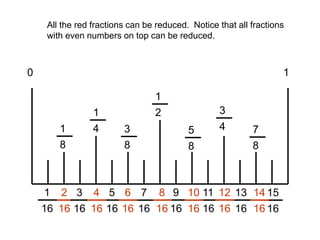
The longest vertical line on the ruler marks the whole inch. Right behind it in terms of prominence is the half-inch mark, located exactly halfway between the whole inch numbers. If you look closely, the half-inch line is noticeably shorter than the inch line, but longer than all the rest. This is your primary anchor point when dividing any inch in half.
Quarter-Inch and Eighth-Inch Marks
Continuing down the hierarchy, the quarter-inch marks sit halfway between the half-inch and whole inch marks. They are the third-longest lines on the scale. Directly between the quarter-inch marks lie the eighth-inch marks. By paying attention to these varying line heights, your brain can quickly narrow down the neighborhood of your measurement before you even count the individual ticks.
Decoding the Smallest Ticks: Sixteenths and Beyond
The area where most people make mistakes involves the sixteenth-inch marks—the smallest standard divisions found on most common rulers and tape measures. Because they are packed so closely together, it is easy to miscount or misread them.

Here is what you are likely missing: you don't actually need to count every single sixteenth mark from the zero point. Instead, use the larger landmark lines as your starting point. For example, if your measurement falls one tick past the three-quarter-inch mark, you immediately know you are looking at thirteen-sixteenths ($3/4$ is equal to $12/16$, plus one more tick makes $13/16$).
- Locate the nearest major fraction: Find the closest 1/4 or 1/2 inch mark.
- Count the micro-ticks: Move forward or backward by sixteenths from that landmark.
- Simplify the fraction: Always reduce your fractions when possible (e.g., $4/16$ becomes $1/4$).
Common Mistakes When Reading Fraction Marks
Even experienced DIYers occasionally fall into traps when reading measuring tools. Avoiding these common errors will instantly improve your project accuracy.
Ignoring the Starting Point
Many cheap tape measures have a sliding hook at the end. This hook is designed to shift back and forth to account for its own thickness when you push it against an object or hook it over an edge. If your tape measure is bent, gummed up with adhesive, or worn out, your starting zero point will be inaccurate, rendering even the most precise fraction reading incorrect.
Forgetting to Reduce Fractions
If your measurement lands on the fourth sixteenth mark past an inch, calling it "one and four-sixteenths inches" is technically correct, but practically inefficient. In professional trades, leaving unreduced fractions leads to confusion and potential cutting errors. Always convert $4/16$ to $1/4$.
Tips for Fast and Accurate Measuring
Improving your speed with fraction marks on a ruler comes down to practice and adopting a few smart habits. Try these techniques on your next project:
- Use a sharp pencil: A thick carpenter's crayon or a dull pencil can easily cover up a sixteenth-inch mark, throwing off your cuts.
- Mark with a V-shape: When transferring a measurement to wood or metal, draw a tiny V pointing directly to the exact tick mark rather than a straight line.
- Invest in a quality rule: Faded numbers or poorly stamped metal lines make reading fractions unnecessarily difficult. Upgrade to a precision stainless steel rule for critical work.
By shifting your focus from individual numbers to the visual hierarchy of line lengths, reading fraction marks on a ruler transforms from a guessing game into a reliable, effortless skill. Take a few minutes to practice with these principles, and your next project will fit together with absolute precision.