Free Hack to Easy Math Practice this Thanksgiving
When the Thanksgiving school break arrives, children are eager to drop their backpacks and tune out schoolwork entirely. Most parents want their kids to rest, but they also dread the post-break academic fog. Forcing a child to sit down with a packet of generic holiday worksheets often triggers groans, resistance, and unnecessary power struggles during what should be a festive week. Fortunately, you do not need paid learning apps or printable drills to keep your child’s brain sharp. The best free hack to easy math practice this Thanksgiving is hiding right in plain sight: your regular holiday routines.
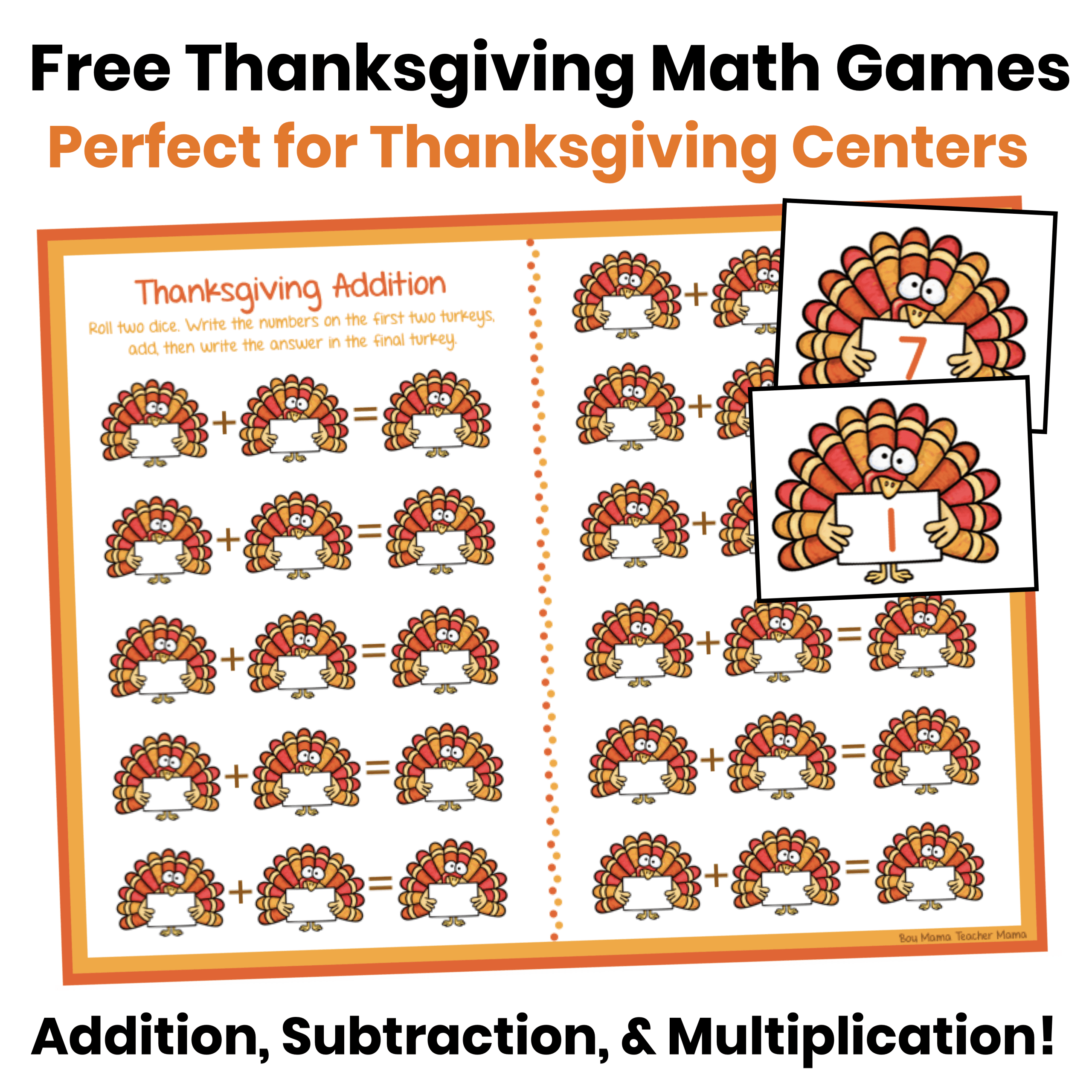
By transforming common seasonal chores and family traditions into interactive challenges, you can sneak in high-impact arithmetic, fractions, and spatial reasoning without your child even realizing they are practicing schoolwork. Here is how to turn your holiday week into an effortless, zero-cost learning laboratory.
Why Contextual Math Beats Holiday Worksheets
Rote memorization and isolated worksheets teach procedures, but real-world problem-solving builds conceptual understanding. Educational research consistently shows that kids retain numerical concepts better when those concepts attach to physical items, emotional experiences, and genuine stakes.
When an eight-year-old calculates whether there will be enough pie for twelve guests, math stops being an arbitrary abstraction on paper. It becomes a tool to answer a practical question. This approach shifts the dynamic from test-taking pressure to collaborative problem-solving, making it one of the most effective ways to build math confidence across all grade levels.
The Free Hack to Easy Math Practice this Thanksgiving: Kitchen Math
The Thanksgiving kitchen is the ultimate natural math classroom. Almost every stage of holiday cooking requires estimation, division, time tracking, or fraction manipulation. Instead of cooking alone while your kids watch television, invite them into the kitchen and make them your “Lead Measurement Officer.”
1. Recipe Scaling and Fractions
Most canned or online recipes are written for four to six servings. If your gathering has ten or twelve people, scaling those recipes up offers an immediate, hands-on lesson in fraction multiplication.
- The Challenge: “This pumpkin pie recipe calls for 3/4 cup of brown sugar for one pie, but we need to make two pies. How much sugar do we need altogether?”
- The Hands-on Fix: If mental multiplication is too advanced, hand them a 1/4-cup scoop and ask them to physically count out how many 1/4 cups make 3/4, then double that count. Seeing that six 1/4-cups equals 1 1/2 cups creates an intuitive grasp of equivalent fractions.
2. Elapsed Time and Roasting Schedules
Managing the oven on Thanksgiving Day is a masterclass in elapsed time—a concept elementary and middle school students frequently struggle with on standardized tests.
- The Challenge: “The turkey takes 15 minutes per pound. If our turkey is 14 pounds, how many total minutes must it roast? If we want to eat at 4:30 PM, what time does it need to go into the oven?”
- The Visual Tool: Have your child draw an analog timeline on paper or a dry-erase board. Let them work backward in 30-minute chunks to map out oven times for stuffing, rolls, and the bird.
4 More Stealth Math Moments During Holiday Prep
Math opportunities extend far beyond the oven timer. Look around your home throughout Thanksgiving week, and you will find seamless ways to practice grade-level skills.
1. Grocery Store Unit Pricing and Budgeting
Before heading to the supermarket, write your shopping list alongside your budget. At the store, hand your middle-schooler the shopping list and calculator.

Have them compare brands: Is the 32-ounce bag of cranberries for $4.99 a better deal than two 12-ounce bags for $2.00 each? This prompts quick mental estimates or division to calculate price per ounce, showing kids directly how math saves families real money.
2. Table Geometry and Spatial Reasoning
Setting the Thanksgiving table is a classic chore that doubles as a spatial reasoning challenge for younger children. Ask them to determine table dimensions, count place settings, and arrange chairs symmetrically.
- For K–2: “We have 10 chairs and 4 people on each long side. How many chairs belong on the ends?”
- For Grades 3–5: Have them measure the centerpieces and plates using a ruler or tape measure to make sure every place setting has at least 24 inches of elbow room.
3. Road Trip and Travel Calculations
If you are traveling by car this holiday, put away the dashboard GPS estimates and ask your kids to navigate using basic rate and distance formulas.
Have them note the odometer before departure. If grandma’s house is 180 miles away and you are traveling at a steady highway speed of 60 miles per hour, ask them how many hours the trip should take without stops. Older kids can calculate your car’s miles per gallon (MPG) by dividing the miles traveled between gas stations by the gallons needed to refill the tank.
4. Football Statistics and Score Probability
For families who watch Thanksgiving Day football games, the scoreboard provides continuous mental math drills. Because football scores jump in uneven increments—touchdowns (6), extra points (1), two-point conversions (2), and field goals (3)—it forces mental combinations beyond simple base-ten addition.
During commercials, ask: “Our team is down by 11 points. What are two different scoring combinations they could use to tie the game?” This introduces algebraic thinking and variable combinations in an exciting, low-stakes context.
Grade-by-Grade Prompts for the Dinner Table
To keep the conversation going around the dinner table without turning Thanksgiving into a pop quiz, pick prompts tailored to your child’s current skill level:
- Kindergarten to 1st Grade (Counting & Grouping):
“Can you count how many rolls are in the basket? If everyone at the table takes one, will we have any leftover?” - 2nd to 3rd Grade (Addition, Subtraction & Arrays):
“The deviled egg platter has 4 rows of 6 eggs. How many eggs is that total? If Uncle Mark eats 3, what is our new total?” - 4th to 5th Grade (Fractions & Decimals):
“If this pecan pie is sliced into 8 equal pieces and 5 pieces are eaten, what fraction of the pie remains? Can we simplify that fraction?” - Middle School (Ratios, Rates & Percentages):
“If our Thanksgiving grocery bill was $140 and sales tax is 7%, what was the final cost before tax?”
3 Golden Rules to Keep Holiday Math Fun
The entire premise of this hack relies on curiosity, not coercion. To make sure your children stay enthusiastic, keep these three guidelines in mind:
- Frame it as teamwork: Never say, “Time for some math practice.” Instead, say, “I need your help calculating this so I don’t burn the pie.” Kids love being genuinely helpful and holding real responsibility.
- Treat mistakes as experiments: If a recipe ratio calculation is off, talk through it playfully. Show them how double-checking the numbers saves the dish from being too salty or dry.
- Keep it bite-sized: Limit each math prompt to two or three minutes. Once the answer is found, praise the thinking process and move on with your day.
You do not need extra time, specialized curricula, or expensive workbooks to prevent academic slide over the holidays. By welcoming your children into the everyday logistics of Thanksgiving, you provide practical, memorable math practice that costs nothing and enriches family time together.


