Free Hack to Improve Kindergarten Graphing Skills
Unlock Early Math Success
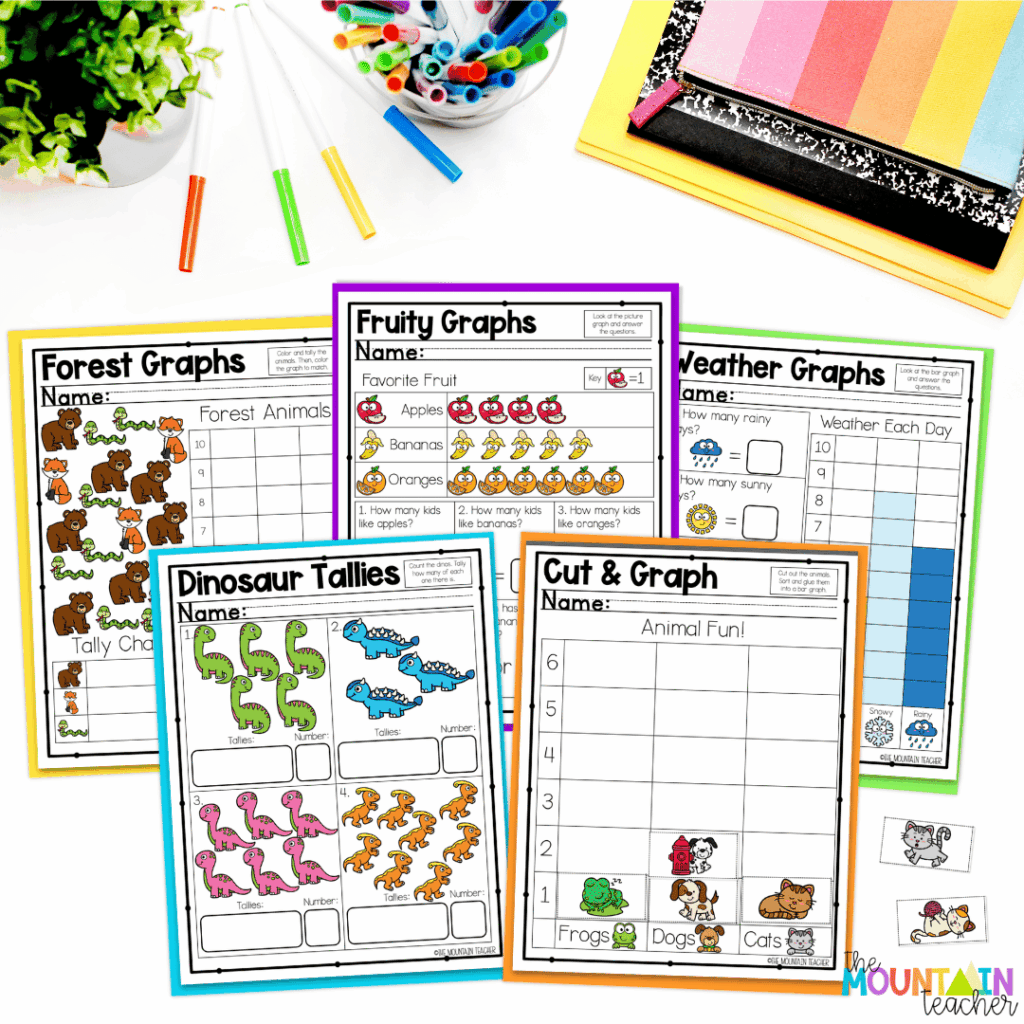
Early mathematical thinking sets the foundation for a child's entire academic journey. Among the core standards in early childhood education, data and measurement play a pivotal role. However, teaching abstract mathematical concepts to five- and six-year-olds can sometimes feel like an uphill battle. Worksheets often fall flat, failing to capture the short attention spans of young learners.
Fortunately, you do not need expensive math kits or subscription boxes to make data collection engaging. There is a surprisingly simple free hack to improve kindergarten graphing skills that transforms ordinary household clutter into an interactive math station. By shifting from pencil-and-paper tasks to tactile, hands-on sorting, children naturally grasp how to organize, categorize, and visually compare information.
Why Graphing Matters in Kindergarten
Before diving into the hack, it helps to understand why graphing is introduced so early. Graphing is not just about coloring in boxes or drawing bar charts; it is a foundational skill for logical thinking. When kindergarteners graph, they practice:
- Classification: Grouping items by shared attributes like color, shape, or size.
- Counting and Cardinality: Matching objects to numbers accurately.
- Comparative Analysis: Determining which category has "more," "less," or "equal" amounts.
- Visual Literacy: Translating physical quantities into a pictorial representation.
Mastering these concepts early builds the spatial and numerical reasoning necessary for advanced math in later grades. The challenge lies in making this process intuitive rather than academic.
The Ultimate Free Hack to Improve Kindergarten Graphing Skills
The secret to keeping kindergarteners engaged while teaching data collection relies entirely on edible or collectible sensory sorting. Instead of buying specialized math counters, you can use items you already own or buy for pennies.
Here is how to set up the ultimate low-cost graphing activity in under two minutes using painter's tape and everyday objects.
Step 1: Create a Floor Grid
Ditch the tiny paper grid. Children learn better when they can move their bodies and interact with life-sized objects. Use blue painter's tape to create a large grid directly on a hard floor or a low table.
- Lay down three to four vertical columns.
- Intersect them with horizontal rows to create distinct squares or rows.
- At the bottom of each column, place a visual cue—such as a colored marker, a cutout shape, or a drawn symbol—to represent the category.
Step 2: Gather Your "Counters"
Look around your house for items that naturally sort into distinct categories. Avoid buying plastic counters; everyday items make the exercise more relatable and fun. Excellent options include:
- Colorful fruit-flavored snacks or cereal loops.
- A handful of clean Legos or building blocks separated by color.
- A mix of autumn leaves collected during a walk outside.
- Buttons from an old sewing kit.
- Plastic animal figurines or toy cars.
Step 3: Sort and Place
Video: "Graphing" Activity - How To Teach Preschool Graphing - Reading Corner Online
Give your kindergartener a mixed pile of these items. Ask them to take one item at a time, identify its category, and place it in the correct column on your floor grid, moving from the bottom row upward.
This physical stacking mimics a traditional bar graph. As the columns grow, children instantly see which category is taller and which is shorter without needing to read numbers.
Guiding Questions to Deepen Learning
The physical act of building the graph is only half the battle. To truly maximize this educational hack, you must guide your child through data interpretation using targeted questions. Once the grid is full, prompt your young learner with foundational math vocabulary:
- "Which category has the most items? How can you tell just by looking at it?"
- "Which category has the fewest items?"
- "Are any categories tied with the exact same amount?"
- "What is the total number of items we sorted altogether?"
These conversations bridge the gap between physical sorting and analytical thinking, turning a simple play session into a robust math lesson.
How to Scale the Activity for Different Skill Levels
Every child develops at their own pace. One of the best features of this DIY floor grid method is its adaptability. You can easily adjust the difficulty to match your child's current capabilities.
For Beginners
If your child is just starting out, keep the categories limited to two simple choices (for example, red blocks versus blue blocks). Limit the total number of items to ten or fewer so they do not get overwhelmed by counting large quantities.
For Advanced Learners
If your kindergartener has mastered basic sorting, introduce more complex parameters. Use items that vary by two attributes simultaneously—such as sorting by both color and size (e.g., big red buttons versus small blue buttons). You can also introduce a simple tally-mark sheet alongside the floor grid, teaching them to translate physical objects into written tally marks.
Tips for Maintaining Engagement
To keep this graphing hack fresh and exciting, consistency paired with novelty is key. Try swapping out the sorting materials every few days. One day they might graph types of shoes in the hallway, and the next day they might graph different colored toy dinosaurs.
Always let the child choose the categories occasionally. Giving them ownership over what data they collect boosts intrinsic motivation, turning math time into their favorite part of the day. By keeping the materials accessible, free, and interactive, you build a lifelong love for mathematical problem-solving without the stress of traditional flashcards.