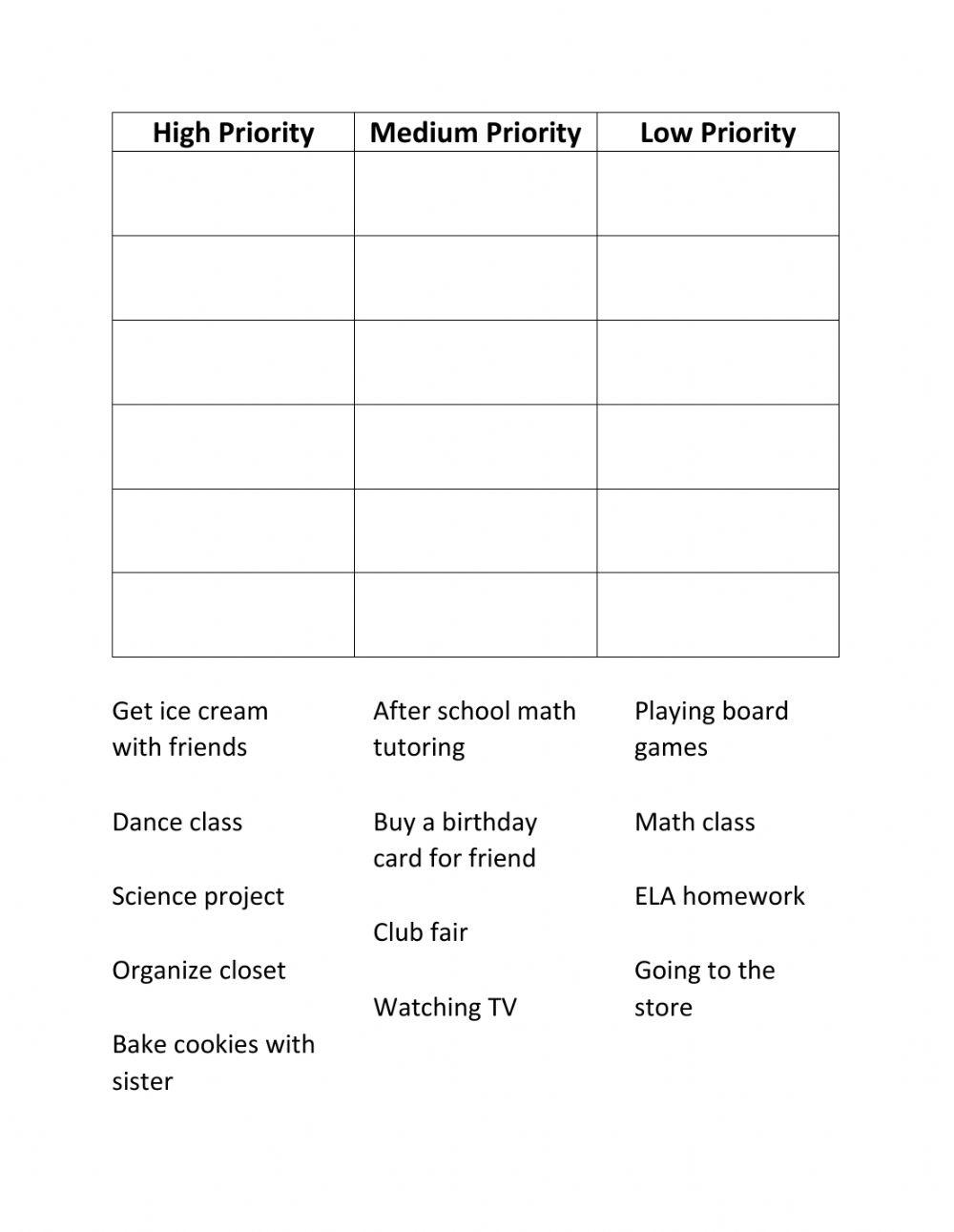
Free Prioritization Worksheets for Back to School
The shift from lazy summer afternoons to the structured chaos of a new academic year can rattle even the most organized households. Between syllabi, sports practices, extracurricular clubs, and looming project deadlines, students often struggle to identify what requires immediate action and what can wait. Introducing free prioritization worksheets for back to school can transform that early-semester panic into a steady, manageable routine that fosters lifelong executive functioning skills.

Prioritization is not an innate trait; it is a learned cognitive skill. Without explicit systems to categorize demands, students tend to default to recency bias—tackling whatever assignment was mentioned last—or avoidance bias, procrastinating on difficult tasks in favor of trivial busywork. Visual, structured worksheets bridge this gap by turning vague mental pressure into concrete, actionable steps.
Why Paper-Based Prioritization Works for Students
While digital productivity apps are plentiful, physical worksheets offer distinct neurological advantages, particularly during the back-to-school transition:
- Reduced Digital Distractions: Opening a tablet or smartphone to check a to-do list exposes students to notifications, social feeds, and messages. A paper worksheet keeps their attention anchored solely on the tasks at hand.
- Tactile Feedback and Memory Retention: The physical act of writing by hand activates deeper neural pathways related to comprehension and memory, helping students internalize their daily goals more effectively than typing.
- Cognitive Offloading: Keeping five classes' worth of homework in working memory induces anxiety. Brain-dumping those obligations onto a printable sheet instantly frees up mental bandwidth for actual problem-solving.
Core Frameworks to Look for in Prioritization Worksheets
Not all planning sheets are created equal. A generic lined notepad does not teach a student how to evaluate competing obligations. When downloading or creating printables, look for tools that incorporate established decision-making models.
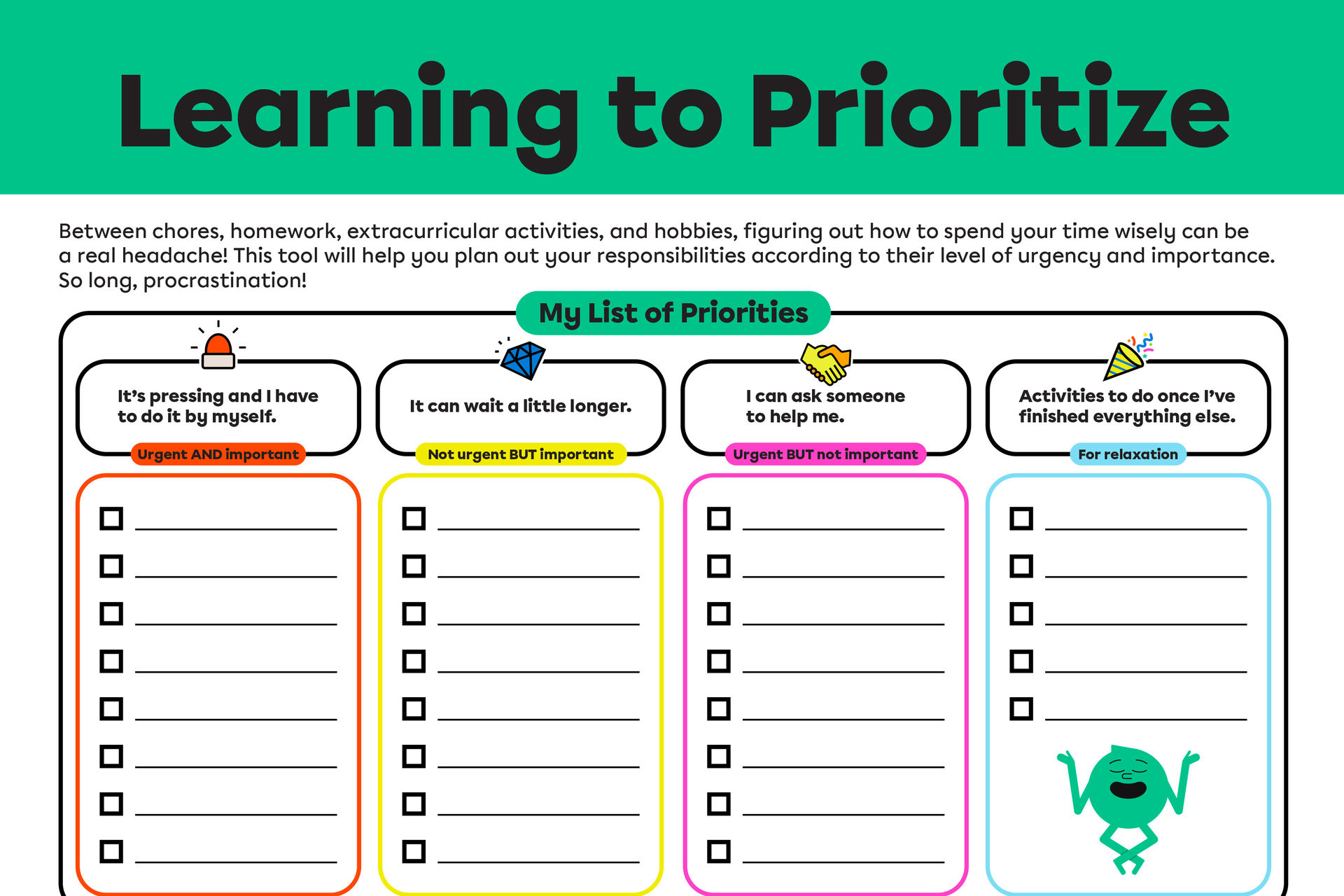
1. The Eisenhower Matrix (Urgent vs. Important)
Adapted for academics, this four-quadrant grid teaches students to distinguish between pressing deadlines and high-value learning:
- Do First (Urgent & Important): A math worksheet due tomorrow morning or studying for a test happening this Friday.
- Schedule (Not Urgent & Important): Outlining a term paper due in three weeks, exercising, or reading assigned novel chapters ahead of time.
- Delegate or Minimize (Urgent & Not Important): Responding instantly to group chat messages about a project or buying binder dividers.
- Eliminate (Not Urgent & Not Important): Mindless web surfing or redesigning a folder cover for the fourth time.
2. The 1-3-5 Rule Layout
The 1-3-5 model prevents students from overcommitting. The worksheet restricts each day's agenda to:
- 1 Major Task: The primary academic hurdle (e.g., drafting a biology lab report).
- 3 Medium Tasks: Standard homework pieces (e.g., reading 20 pages of history, completing 10 algebra problems, reviewing Spanish flashcards).
- 5 Small Tasks: Quick maintenance items (e.g., packing a gym bag, getting a permission slip signed, printing an article, organizing a backpack).
3. The MIT (Most Important Task) Daily Planner
For younger students or those prone to severe overwhelm, simple worksheets centered around 3 daily MITs are best. By identifying just three non-negotiable milestones each morning, students experience a sense of accomplishment without facing an intimidating 15-item checklist.
How to Use Free Prioritization Worksheets for Back to School Effectively
Simply printing out a template and placing it on a desk does not guarantee success. Students need an explicit, repeatable process to integrate these tools into their afternoon routines.

- Execute a Daily Brain Dump: Before categorizing anything, the student should list every single assignment, chore, and activity floating around their head or written on the classroom board. Do not worry about order at this stage.
- Estimate Time Commitments: Next to each task, write a quick estimate of how long it will take (e.g., "Chemistry worksheet: 25 mins"). Students notoriously underestimate time; tracking estimates against reality builds temporal awareness.
- Assign Hierarchy: Transfer the brain-dump items into the worksheet's structured sections (such as Quadrant 1, or the 1-3-5 sections). Emphasize that not everything can be top priority.
- Establish a Work Sequence: Encourage the student to tackle the hardest or most critical task first—often called "eating the frog"—while their cognitive energy is highest.
- Conduct an Evening Reset: Spend five minutes before bed reviewing what was crossed off. Unfinished items are calmly migrated to the next day's worksheet, eliminating bedtime anxiety.
Adapting Worksheets Across Different Grade Levels
A template that works for a high school junior tackling AP courses will overwhelm a fourth grader. Tailor your selection to match developmental stages.
Elementary School (Grades 3–5)
Focus on visual cues, checkboxes, and minimal text. Look for worksheets that use color-coding (e.g., red for today, yellow for this week) and include sections for routine self-care habits like packing their backpack, setting out clothes, and reading for 15 minutes.
Middle School (Grades 6–8)
Middle school brings multiple teachers, varying assignment formats, and locker logistics. Worksheets for this stage should bridge the gap between daily homework tracking and weekly planning. Dual-section templates—displaying the daily must-dos alongside a "Look Ahead" column for long-term projects—help tweens understand that homework is not the only academic obligation.
High School and College (Grades 9+)
Older students require sophisticated tools that accommodate shifting extracurricular commitments, part-time jobs, and intensive study blocks. Templates integrating time-blocking (grids showing hours from 3:00 PM to 10:00 PM) paired with a priority matrix enable high schoolers to allocate concrete windows for focused work.
DIY Printable Ideas You Can Build in Minutes
If ready-made internet downloads do not fit your student's unique workflow, you can design a custom prioritization worksheet using free design tools like Canva, Google Docs, or spreadsheet software. Consider including these targeted modules:
- The "Parking Lot": A blank box dedicated to intrusive thoughts or sudden ideas that arise during study time, allowing the student to jot them down and return to focus.
- Energy Matching Blocks: Two simple columns labeled "High Energy Required" (for calculus or essay writing) and "Low Energy Required" (for filing notes or cleaning out binders).
- Reflective Check-In: A tiny footer asking, "What worked well today?" to foster metacognitive awareness over the course of the semester.
Making the Habit Stick All Year Long
Worksheet enthusiasm runs high in late August, but by mid-October, paper templates often end up crumpled at the bottom of backpacks. To prevent abandonment:
- Laminate the Worksheet: Slide a favorite layout into a plastic sheet protector or laminate it. Using dry-erase markers makes the process tactile, sustainable, and less intimidating than a permanent paper sheet.
- Pair with an Existing Routine: Anchor planning to a specific moment, such as right after finishing an after-school snack.
- Focus on Completion, Not Perfection: A half-filled prioritization sheet that guided 45 minutes of deep work is far more valuable than an untouched, pristine template.
By pairing intentional frameworks with easy-to-use printables, you provide students with more than just an academic safety net—you give them the organizational resilience they need to thrive throughout the school year and beyond.