From Startups to $10 Billion: Bill Ackman’s Net Worth Illustrated!
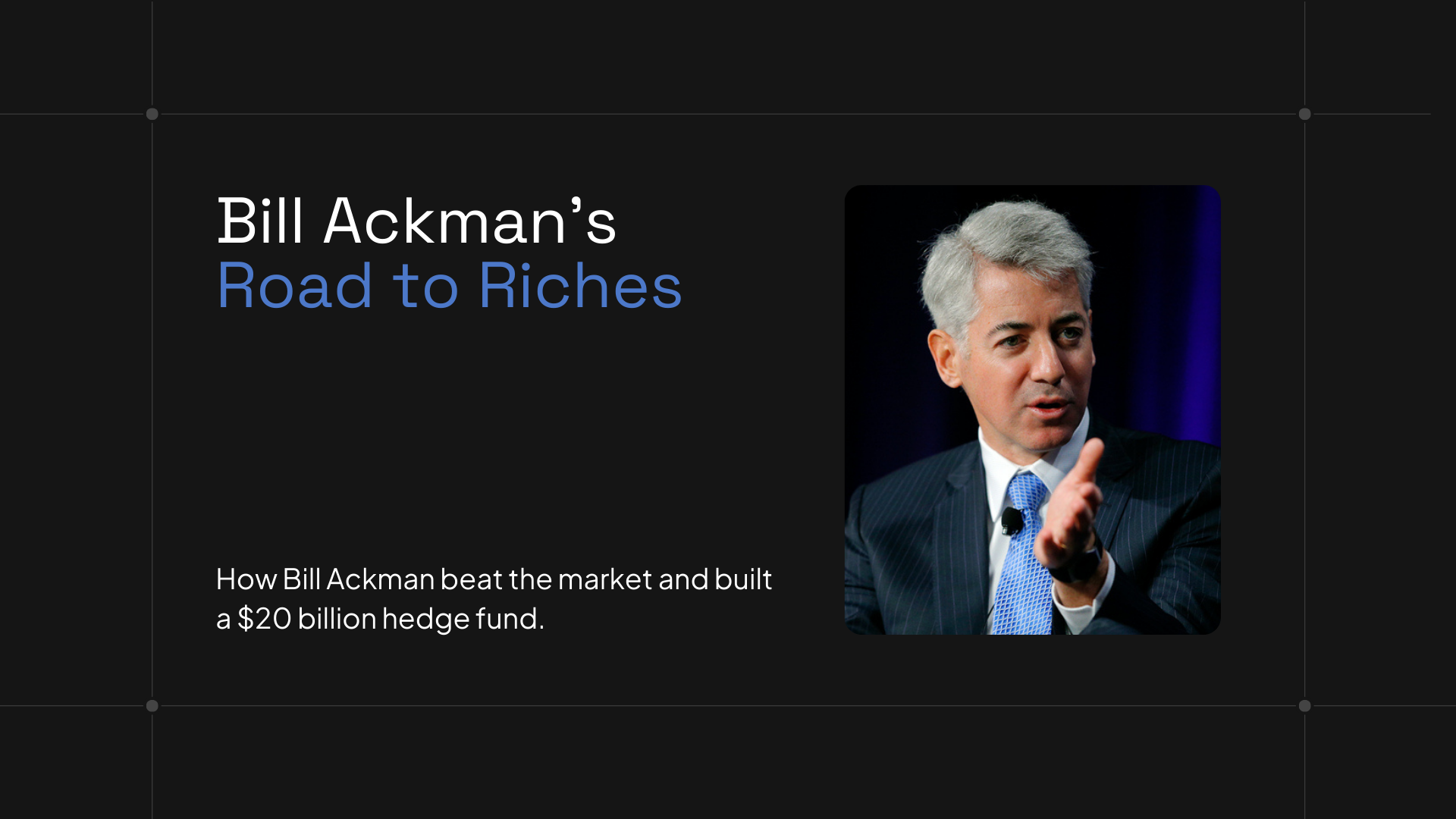
Few figures on Wall Street command attention quite like William Albert Ackman. As the founder and CEO of Pershing Square Capital Management, he has spent three decades navigating public proxy battles, headline-grabbing short positions, and macroeconomic crises. Examining his financial ascent from startups to $10 billion: Bill Ackman’s net worth illustrated reveals how high-conviction bets, structured risk management, and the ability to rebound from catastrophic losses can create one of the modern era's most formidable investing fortunes.
Today, Ackman sits among the wealthiest hedge fund managers in the world, with an estimated net worth hovering around $9 billion to $10 billion. Yet his financial trajectory was never a straight line upward. It is an instructive study in early entrepreneurial grit, asymmetric risk-reward, and the sheer compounding power of managing permanent capital.
The Early Hustle: Gotham Partners and the First Startup Grind
After graduating from Harvard College in 1988 and Harvard Business School in 1992, Ackman bypassed the comfort of a standard investment banking career to build his own firm. Alongside fellow HBS graduate David P. Berkowitz, he founded Gotham Partners in 1992 with roughly $3 million in seed capital.
Gotham was Ackman’s original startup laboratory. Operating on deep-value fundamentals, the young managers hunted down undervalued, inefficiently priced assets. The strategy delivered explosive early gains, and by the late 1990s, Gotham was managing hundreds of millions of dollars. However, the firm eventually fell victim to an illiquidity trap.
When Gotham took substantial, illiquid positions in operating businesses—including a golf course operator and real estate assets—the fund struggled to meet investor redemptions during market turbulence. Amid mounting regulatory scrutiny and redemption pressures, Ackman and Berkowitz made the difficult choice to unwind the fund in 2002. While Ackman returned substantial capital to investors, his reputation took a severe hit. For many investors, a public fund closure marks the end of the road; for Ackman, it served as an invaluable masterclass in capital structure and liquidity risk.
The Rebirth: Launching Pershing Square Capital Management
In 2004, Ackman staged his comeback by founding Pershing Square Capital Management with $54 million, backed by his own personal capital and funding from Leucadia National. This time, Ackman instituted a structure built to withstand volatility, prioritizing liquid, high-quality, large-cap companies where operational or balance-sheet changes could unlock hidden shareholder value.
Pershing Square adopted an activist playbook: buy a significant minority stake in an underperforming business, campaign publicly for strategic improvements, secure board seats if necessary, and exit once the market repriced the equity. This approach laid the groundwork for Ackman’s rapid wealth accumulation, fueled by both performance fees and management fees on expanding assets under management (AUM).
From Startups to $10 Billion: Bill Ackman’s Net Worth Illustrated
Ackman’s fortune did not compound steadily through index tracking; it surged in discrete, monumental leaps driven by historic market calls. To understand how his net worth crossed the multi-billion-dollar threshold, we must examine the key asymmetric trades that defined his career.
1. The MBIA Crusade (2002–2008)
Before the 2008 subprime mortgage crisis shocked global markets, Ackman identified severe structural flaws in bond insurer MBIA. He published a meticulously researched warning titled Who’s Minding the Store? and bought credit default swaps betting against MBIA's AAA rating. Despite facing relentless public criticism and regulatory audits over several years, his thesis proved accurate. Pershing Square earned over $1 billion during the crash, solidifying Ackman’s reputation as an elite market tactician.
2. General Growth Properties (GGP): The 100x Home Run
In late 2008, mall operator General Growth Properties collapsed into bankruptcy under heavy debt. Ackman recognized that the company owned premier, highly cash-generative retail real estate that far exceeded its liabilities if debts were successfully restructured. Pershing Square acquired a massive stake for approximately $60 million. Ackman orchestrated a complex recapitalization, spun off development assets into the Howard Hughes Corporation, and ultimately delivered a profit exceeding $1.6 billion—one of the greatest real estate turnaround trades in Wall Street history.
3. The Pandemic Hedge of 2020: Turning $27 Million into $2.6 Billion
Perhaps no single trade better illustrates Ackman’s mastery of asymmetric payoffs than his move in February 2020. Anticipating the global economic disruption of COVID-19, Ackman spent $27 million on credit default swaps to insure against broad bond-market defaults. As markets cratered weeks later, the position exploded in value. Ackman closed the hedge in late March 2020, netting $2.6 billion in profit for his funds—a return of roughly 100 to 1.
Crucially, he immediately deployed that capital back into beaten-down equities like Starbucks, Lowe’s, Agilent, and Hilton, capturing the historic market rebound that followed.
The Costly Missteps: Herbalife and Valeant
An honest breakdown of Ackman’s balance sheet requires acknowledging the setbacks that nearly derailed his firm. Between 2012 and 2017, Pershing Square weathered two devastating blows:
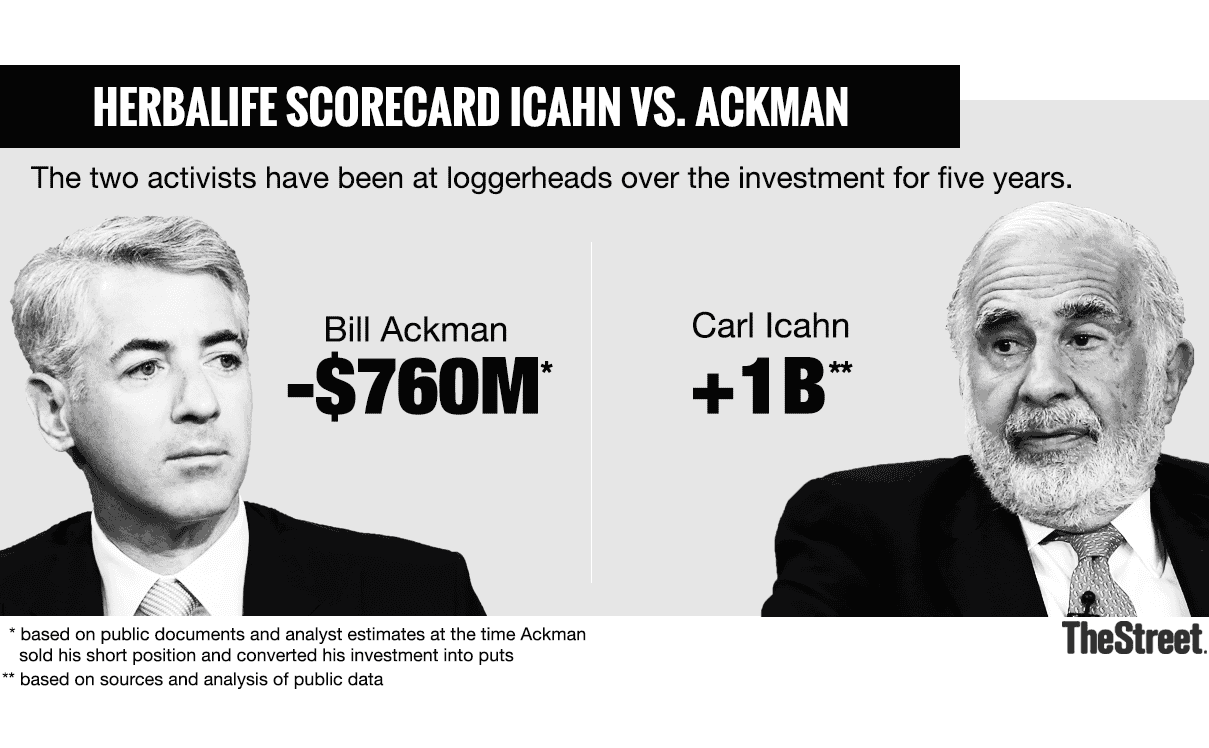
- The Herbalife Short: In late 2012, Ackman announced a $1 billion short position against Herbalife, declaring it a pyramid scheme. The trade ignited a legendary public war with rival investor Carl Icahn, who bought the long side of the stock. After years of paying borrowing fees and public campaigns, Ackman exited the position with hundreds of millions of dollars in losses.
- Valeant Pharmaceuticals: Pershing Square bought heavily into drugmaker Valeant, backing its aggressive acquisition-and-pricing strategy. When regulatory investigations and accounting questions surfaced, the stock collapsed by more than 90%. Pershing Square lost approximately $4 billion, severely dampening fund returns and testing investor patience.
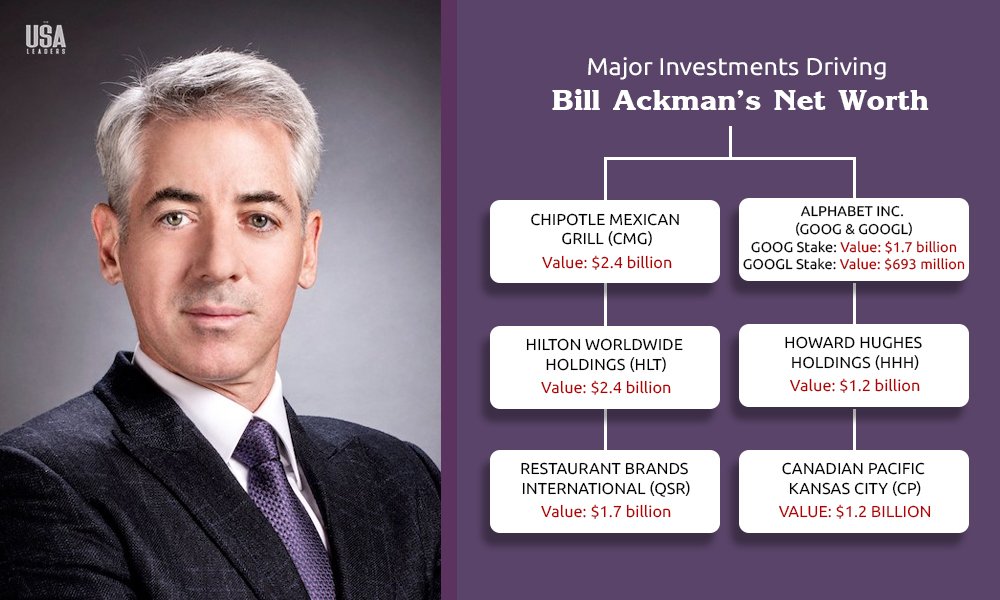
Following these defeats, Ackman initiated "Pershing Square 3.0"—a shift away from hostile, noisy public shorts toward long-only, high-conviction compounders such as Chipotle, Alphabet, and Universal Music Group. This disciplined recalibration catalyzed the strongest compounding phase of his career.
Deconstructing the $10 Billion Fortune Today
Bill Ackman’s personal net worth is not simply cash in a bank account. It is tied to institutional assets, fund ownership, and strategic corporate equity:
- The Pershing Square Management Stake: In 2024, Pershing Square sold a 10% stake in its management company to an institutional investor consortium for $1.05 billion. That transaction established an implied valuation of $10.5 billion for the management entity alone. As the controlling shareholder, Ackman’s personal equity in the management company represents the core pillar of his multi-billion-dollar valuation.
- Pershing Square Holdings (PSH): Ackman owns a substantial personal coinvestment inside Pershing Square’s publicly traded closed-end fund, meaning his net worth rises and falls directly alongside his investors.
- Private Assets and Philanthropy: Ackman maintains high-value real estate holdings in New York City and the Hamptons, alongside a dedicated philanthropic vehicle, the Pershing Square Foundation, which has committed hundreds of millions of dollars to healthcare, economic development, and education.
Core Principles Behind Ackman’s Financial Ascent
For investors examining Ackman’s path from a boutique startup fund to the Forbes 400, several timeless principles stand out:
- Seek Asymmetry: The best trades risk limited downside capital for exponential upside. Ackman’s hedges illustrate the power of paying small premiums to protect against catastrophic market shifts.
- Focus on Simple, Predictable Cash Flows: The modern Pershing Square portfolio favors high-barrier-to-entry businesses with durable pricing power (e.g., restaurant franchisors, leading tech platforms, and essential infrastructure).
- Survive to Play Another Day: Portfolio longevity matters more than short-term brilliance. Eliminating leveraged short bets and illiquid structures allowed Ackman to recover from multi-billion-dollar errors that would have permanently ruined less resilient operators.
Conclusion
Bill Ackman’s journey from co-founding Gotham Partners to commanding a personal fortune near $10 billion highlights the extraordinary rewards of high-conviction value investing. By surviving fund closures, enduring high-profile losses, and executing some of the most profitable hedges in modern market history, Ackman built an enduring investment empire. His career stands as proof that on Wall Street, true wealth is forged not by avoiding mistakes, but by learning from them quickly and positioning capital where risk is limited and upside is boundless.