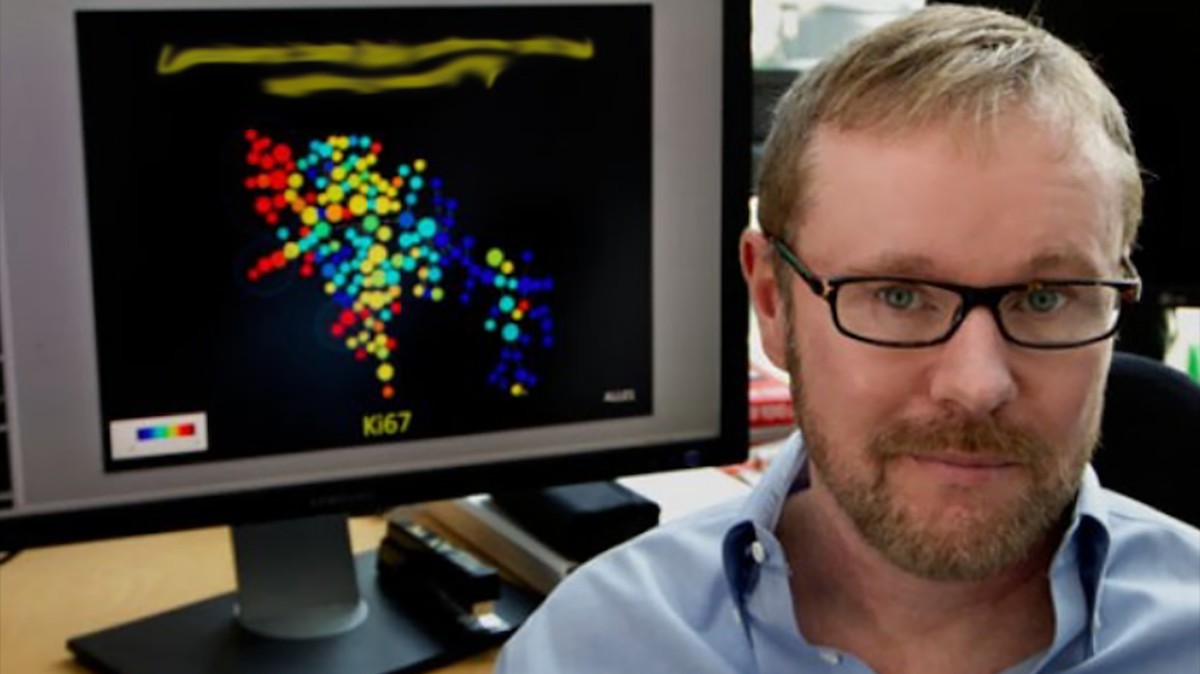
Garry Nolan’s Truth Unveiled at Stanford
In the world of modern academia, few figures bridge the gap between rigorous mainstream science and the outermost frontiers of human inquiry quite like Dr. Garry Nolan. A professor in the Department of Pathology at the Stanford University School of Medicine, Nolan has built a stellar, decades-long reputation as an immunologist, inventor, and entrepreneur. However, in recent years, public interest has increasingly gravitated toward **Garry Nolan’s Truth Unveiled at Stanford**, a phrase that encapsulates his fearless entry into the controversial realm of unidentified anomalous phenomena (UAPs) and anomalous materials.

While his mainstream scientific achievements have fundamentally shaped how we understand the human immune system, his willingness to apply empirical methodologies to stigmatized subjects has cemented a legacy that extends far beyond the traditional ivory tower.
The Academic Core: Immunology and Cellular Analysis
Before examining his foray into fringe science, it is vital to understand the sheer weight of Garry Nolan’s primary academic career. At Stanford, Nolan’s laboratory has been at the forefront of developing tools to analyze single cells. His work directly impacts how researchers understand cancer, autoimmune diseases, and leukemia.
Pioneering Mass Cytometry
One of Nolan’s most significant contributions to biotechnology was helping to commercialize and expand mass cytometry (specifically CyTOF technology). Traditional flow cytometry uses fluorescent markers to identify proteins on and within cells, but it is typically limited by the overlapping emission spectra of fluorophores.
Nolan and his team circumvented this limitation by using stable metal isotopes attached to antibodies. By measuring these metal tags via mass spectrometry, scientists could simultaneously analyze up to 40 or more parameters in a single cell. This technological leap revolutionized:
- Cancer immunotherapy monitoring
- Deep immune profiling of healthy and diseased tissues
- The discovery of new cell types and functional states
Entrepreneurial Impact
Beyond publishing hundreds of peer-reviewed papers, Nolan is a prolific inventor holding numerous patents. He has founded or co-founded several biotechnology companies—including DVS Sciences (acquired by Fluidigm), Nodality, and Scaled Biolabs—translating basic laboratory discoveries into commercially viable diagnostic tools that save lives.
Stepping Into the Unknown: Garry Nolan’s Truth Unveiled at Stanford
Despite his orthodox credentials, Nolan's trajectory shifted when government and intelligence community insiders approached him regarding biological samples associated with alleged UAP encounters. Recognizing that data should dictate scientific inquiry rather than social stigma, Nolan agreed to apply his high-end analytical equipment to the problem.
This pivot brought intense public scrutiny, transforming how academics view the study of anomalous materials. Rather than shying away from the topic, Nolan utilized his platform at Stanford to advocate for a scientific, evidence-based approach to a subject long dominated by speculation and ridicule.

Analyzing Anomalous Materials
Nolan’s entry into UAP research largely centered on metallurgy and material science. Using advanced instrumentation such as secondary ion mass spectrometry (SIMS) and electron microscopy, his lab analyzed fragments allegedly retrieved from crash sites or unexplained aerial events.
The goal was simple: determine the isotopic ratios of the elements within the samples. Isotopic signatures act as a fingerprint, revealing whether material originated on Earth or was manufactured using industrial processes beyond current terrestrial norms. While some samples proved to be terrestrial slag or standard industrial alloys, others displayed complex, engineered isotopic layering that sparked intense debate within the scientific community.
The Biology of Contact
Nolan didn't stop at materials; he also turned his immunological lens toward the physiological effects reported by individuals who claimed close encounters with anomalous objects. Working with brain imaging and medical records, Nolan investigated the basal ganglia of individuals who reported anomalous exposures.
His findings suggested that witnesses often possessed a statistically significant hyper-branching of neurons in the caudate-putamen area of the brain—a neurological configuration also found in individuals with exceptional intuition or higher sensory processing capabilities. Whether this brain structure predisposed individuals to experience anomalous events or was a result of physical interaction remained an open, fascinating scientific question.
Bridging the Gap Between Academia and Public Policy
Nolan’s willingness to speak openly about these findings has played a pivotal role in the broader cultural and legislative shift toward UAP transparency. He has testified before the United States Senate and engaged with defense officials, advocating for academic freedom and the removal of the social stigma that prevents young scientists from investigating unexplained phenomena.
By lending his formidable academic reputation to the cause, Nolan legitimized a field that previously relied on amateur sleuths. He established a framework where curiosity is championed over ridicule, arguing that true science does not turn away from anomalies.
A Multifaceted Legacy
Garry Nolan’s career proves that a scientist does not have to choose between rigorous, peer-reviewed conventional research and the exploration of the unknown. Within the halls of Stanford, he remains a titan of biotechnology and immunology. Outside the campus gates, he is celebrated as a pioneer who demanded empirical rigor for the most elusive mysteries of our time.
Ultimately, Garry Nolan’s work demonstrates the true spirit of the scientific method: follow the data wherever it leads, regardless of how unconventional the path may be.