Gestation of a Guppy: Signs, Timeline & Care
Guppies (Poecilia reticulata) are among the most popular freshwater aquarium fish in the world, largely due to their vivid coloration, hardiness, and prolific breeding habits. Unlike many common egg-laying species, guppies are ovoviviparous livebearers, meaning females incubate eggs internally and give birth to fully formed, free-swimming fry. Understanding the gestation of a guppy is critical for aquarists who want to keep the mother healthy, prevent unnecessary stress, and maximize the survival rate of the new brood.

How Long Is the Gestation of a Guppy?
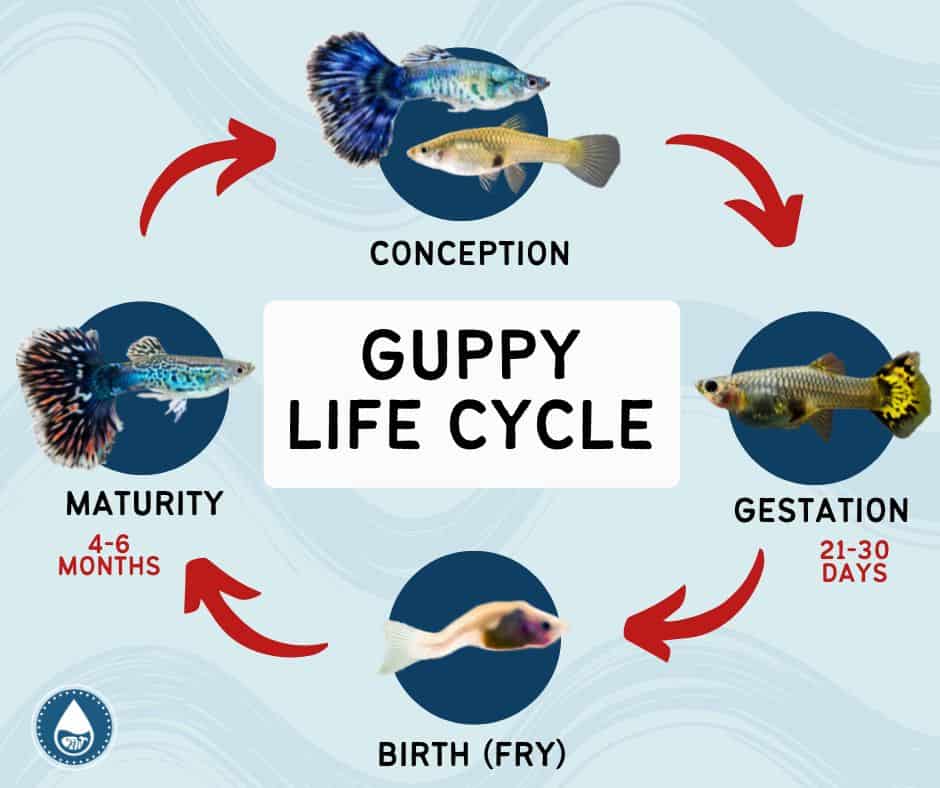
On average, the gestation period of a guppy ranges between 21 and 30 days, with 26 to 28 days being the most common timeframe. However, this window can fluctuate depending on several environmental and physiological factors.
In warmer, well-maintained water, embryo development speeds up, occasionally shortening the cycle to around 19 to 21 days. In contrast, colder water or suboptimal conditions can slow metabolic rates and extend the gestation period to 35 days or longer. If a female experiences severe stress, she may hold onto her fry past the typical delivery window or abort them prematurely.
Key Factors That Influence Gestation Time
- Water Temperature: Guppies thrive in temperatures between 74°F and 82°F (23°C to 28°C). Warmer water (78°F–80°F) optimizes metabolic rate and ensures a steady, standard gestation cycle.
- Diet and Nutrition: Females require high-protein, nutrient-dense foods like live or frozen baby brine shrimp, daphnia, and high-quality spirulina flakes to support developing embryos.
- Stress Levels: Aggressive tank mates, poor water quality, or frequent relocation can disrupt hormones and prolong labor or cause birth complications.
- Age and Health: Young females experiencing their first pregnancy often have slightly irregular gestation windows and smaller batch sizes than mature females.
Clear Signs Your Guppy Is Pregnant
Guppies reproduce readily; in a mixed-gender community tank, adult females are almost perpetually pregnant. Identifying the physical and behavioral markers helps you prepare the tank before delivery begins.
1. The Gravid Spot
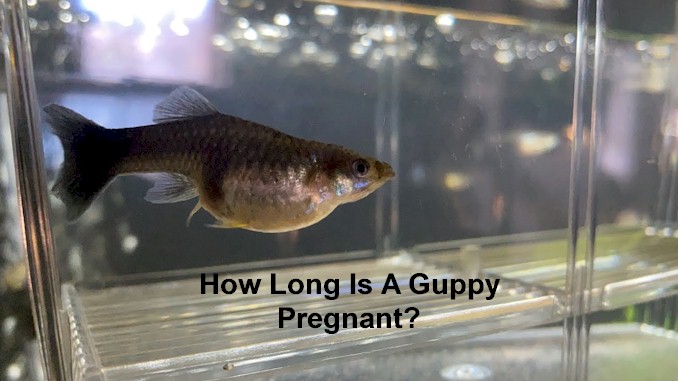
The most reliable visual indicator of pregnancy is the gravid spot—a dark triangular or round patch located on the female's abdomen just above the anal fin. While even non-pregnant females can show a faint spot, it becomes significantly darker, larger, and more opaque during gestation. In the final week, tiny black dots (the eyes of the fry) are often visible through the mother's stretched abdominal wall.
2. Abdominal Swelling and "Squaring Off"
As the embryos grow, the female's belly expands laterally and downward. During the final 24 to 48 hours of gestation, her abdomen undergoes a distinct shape shift known as "squaring off." Instead of a smooth, rounded curve, her belly flattens near the anal fin, taking on a boxy, rectangular contour. This is the clearest sign that delivery is imminent.
3. Behavioral Changes
A female preparing to give birth often displays observable changes in behavior:
- Isolation: She may seek out secluded spots away from aggressive males, lingering near dense plant cover, behind filters, or resting near the tank floor.
- Appetite Fluctuations: She may show voracious hunger during mid-gestation, followed by sudden disinterest in food just before labor.
- Pacing or Shivering: Contractions often manifest as subtle shivering motions, accompanied by pacing up and down the glass.
Week-by-Week Gestation Timeline
Tracking the progression of gestation helps aquarists provide appropriate care at each stage:
Week 1: Fertilization and Early Development
Female guppies can store viable sperm in specialized folds of their oviducts for up to six months, allowing them to produce multiple consecutive broods from a single mating encounter. During the first week, eggs are fertilized internally. The female shows little to no physical change, though her appetite may slightly increase.
Video: Stages of A Guppy Pregnancy
Week 2: Visible Gravid Expansion

The embryos begin dividing and taking shape. The female's abdomen swells moderately, and the gravid spot turns from a muted grey or light brown to a pronounced dark brown or black.
Week 3: Deepening Pigmentation and Growth
By the third week, the fry are developing scales, fins, and eyes. The female's belly is noticeably round, and she may slow down her swimming pace due to the added weight. Careful inspection under bright tank lighting may reveal the clustered, tiny dark eyes of the fry within the gravid area.
Week 4: Squaring Off and Labor
The belly drops and squares off. Labor usually lasts between 2 and 6 hours, though it can extend to 12 hours in larger broods. Fry emerge individually or in small clusters, tail or head first, instantly uncurling and swimming toward cover.
Caring for a Female Guppy During Gestation
Proper husbandry during gestation directly influences fry health and maternal survival. Follow these best practices to ensure an uncomplicated pregnancy:
Maintain Pristine Water Quality
Water parameters should remain stable. Aim for an ammonia and nitrite reading of 0 ppm, with nitrates below 20 ppm. Perform regular 20–25% water changes weekly, taking care to match the replacement water's temperature and pH to avoid inducing thermal shock or premature labor.
Offer Varied, Nutrient-Dense Food
Feed the pregnant female small portions two to three times daily. Combine standard flake foods with high-protein options such as:
- Frozen or live brine shrimp
- Bloodworms or micro-worms
- Daphnia (which aids digestion and prevents bloat)
- Vegetable matter like blanched spinach or spirulina to prevent constipation
Breeding Box vs. Planted Nursery Tank
While commercial plastic breeding boxes are widely sold, they can cause extreme stress due to restricted water flow and tight confinement, sometimes leading to aborted deliveries. A far better alternative is a heavily planted nursery tank or a main tank filled with dense cover such as Java moss, Hornwort, Water Wisteria, or Guppy Grass.
Dense vegetation provides natural hiding spots where newborn fry can escape adult guppies—who possess no maternal instincts and will readily consume their own offspring.
Post-Delivery Care and Recovery
Once delivery concludes, remove the mother from the birthing area or return her to the community setup. Allow her 24 to 48 hours in calm water with gentle lighting and a protein-rich meal to help replenish her spent energy reserves. Monitor her for signs of exhaustion, prolapse, or secondary fungal infections.
Because female guppies store sperm, expect another delivery in roughly four weeks if adult males are present in the community tank, or even if the female is housed alone thereafter. Providing consistent, high-quality care throughout each cycle ensures long-lived adults and thriving generations of fry.