Get Your A4 Printable Solfege Music Chart Today
Vocal pitch can feel frustratingly abstract. Unlike a pianist who presses an ivory key or a guitarist who frets a wire, a singer relies entirely on neuromuscular memory, internal hearing, and breath control. If you want to bridge the gap between written notes and accurate singing, adopting an A4 printable solfege music chart today can turn elusive pitch concepts into concrete, physical landmarks you can see and feel.
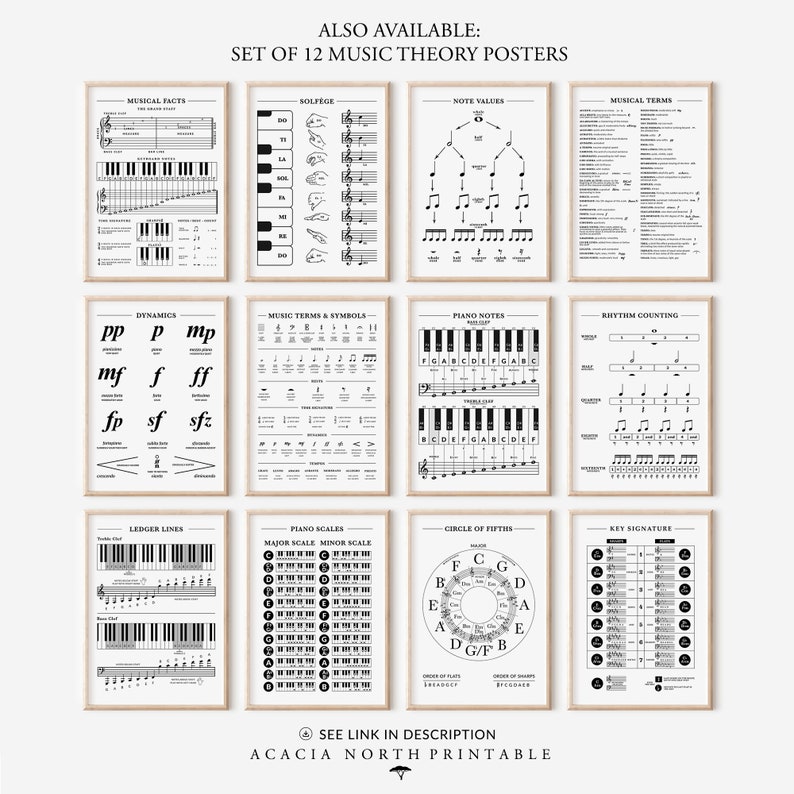
Solfege (or solfège) has stood as the gold standard of vocal pedagogy for centuries. When paired with standard A4 paper dimensions (210 × 297 mm)—the universal default for music folders, desktop stands, and rehearsal binders across most of the world—a well-designed reference chart becomes an immediate, practical tool for studios, classrooms, and home practice corners.
The Enduring Power of Solfege in Music Pedagogy
Originating from an 11th-century hymn arranged by Guido d'Arezzo and later modernized by figures like John Curwen and Zoltán Kodály, solfege assigns distinct, singable syllables to the degrees of a musical scale: Do, Re, Mi, Fa, Sol, La, and Ti.
This system works because it bypasses analytical music theory during the act of performance. When singers attach a unique syllable to each pitch interval, their brains create an associative loop linking three critical dimensions:
- Phonetic memory: The mouth shape and vocal vowel associated with the syllable.
- Spatial relationships: The distance between the notes on the staff or chart.
- Auditory expectation: The inner ear predicting the exact pitch before sound leaves the vocal cords.
Moveable Do vs. Fixed Do: Choosing Your Reference
Before selecting or printing a chart, it is vital to know which solfege tradition fits your curriculum or personal goals:
1. Moveable Do
Favored in North American, British, and Kodály-based choral traditions, Moveable Do treats Do as the tonic (first scale degree) of whichever key you are singing. In C major, C is Do; in F major, F is Do. This system teaches relative pitch and harmonic function. It helps vocalists immediately recognize key centers, modulations, and interval patterns regardless of key signature.
2. Fixed Do
Standard across Southern Europe, Latin America, and parts of East Asia, Fixed Do assigns Do strictly to the note C, Re to D, and so on, regardless of key. This tradition is heavily tied to developing absolute pitch and fast sight-reading in instrumental conservatory settings.
For most contemporary choral singers, vocalists, and ear-training students, Moveable Do offers the fastest route to reliable sight-singing fluency.
Key Elements in an A4 Printable Solfege Music Chart Today
A bare-bones list of syllables does not take full advantage of visual learning. An effective chart organizes information systematically to engage multiple senses simultaneously. Look for or design a layout that includes these structural elements:
The Curwen/Kodály Hand Signs
Video: How To: add note names, solfege, & finger charts to music instantly with MuseScore 4 (for free)
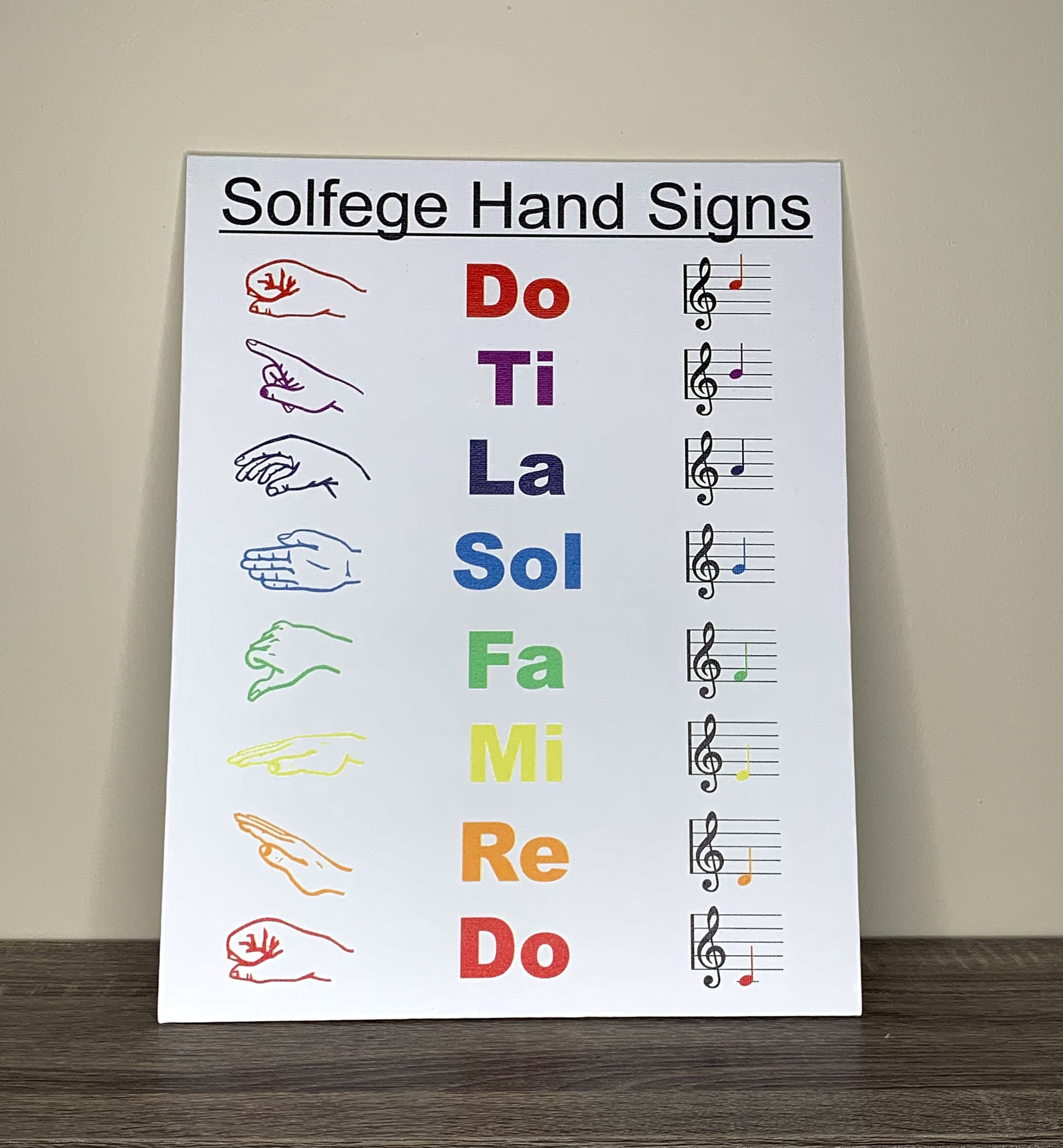
John Curwen developed physical hand gestures for each pitch, later refined by Zoltán Kodály. These signs provide kinesthetic feedback that mirrors the harmonic character of each note:
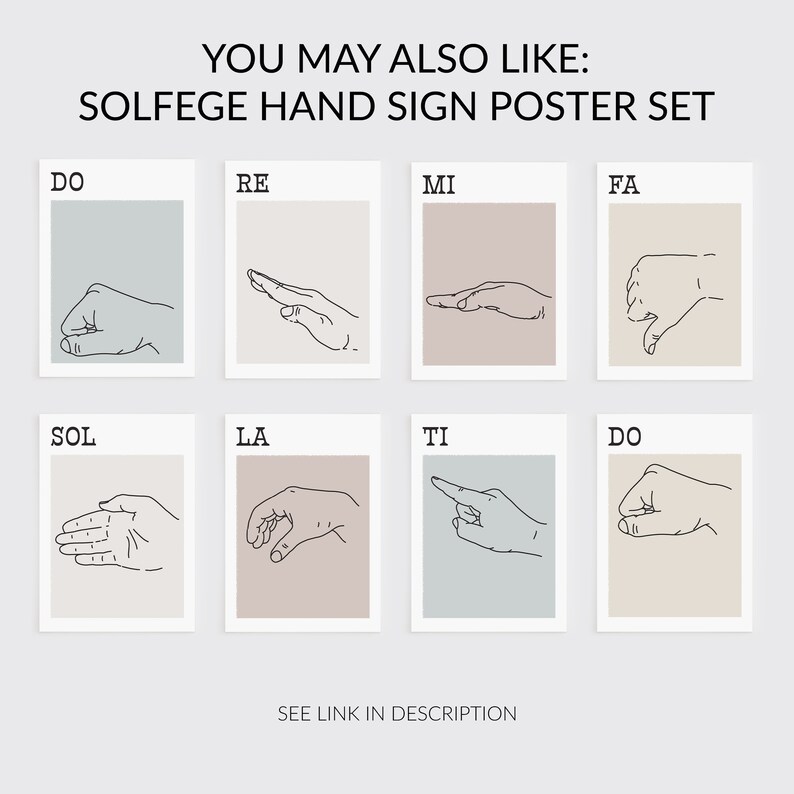
- Do: A closed fist, symbolizing stability, rest, and home.
- Re: An upward-tilted open hand, signaling upward momentum.
- Mi: A steady, horizontal palm, conveying calm and sweetness.
- Fa: An inverted fist with the thumb pointed downward, indicating gravity and pull toward Mi.
- Sol: An open hand facing inward or upright, acting as an open, bright dominant pole.
- La: A relaxed, downward-curving hand, evoking a suspended, melancholy contour.
- Ti: An upward-pointing index finger, creating an intense magnetic pull upward back toward high Do.
Clear Interval and Scale Degree Markings
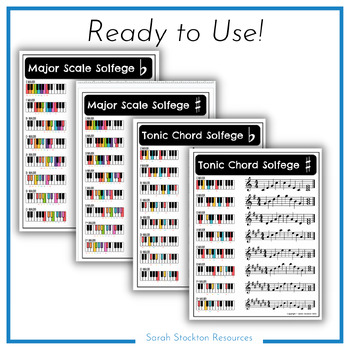
Alongside the syllables, an optimal chart displays numeric scale degrees (1 through 8, often written with carats: ˆ1, ˆ2, ˆ3) and indicates half-step intervals clearly. Visual cues highlighting the natural half steps between Mi–Fa and Ti–Do help singers anticipate the tighter pitch distance required at these harmonic transition points.
Ladder or Vertical Step Orientation
Humans naturally map pitch vertically: low pitches feel low, high pitches feel high. A solfege chart oriented vertically as a ladder or staircase reinforces proper spatial concepts much better than a horizontal text list.
How to Use Your Solfege Chart for Daily Vocal Practice
Printing your chart is only the first step. To translate ink on paper into pitch certainty, incorporate it into your daily 10-minute warm-up routine using the following targeted exercises.
Exercise 1: Stepwise Anchoring
- Play a single reference note on a keyboard or pitch pipe to establish your tonic (Do).
- Sing slowly up the ladder: Do–Re–Mi–Fa–Sol–La–Ti–Do, following your finger along the chart.
- Perform the matching hand sign for each note as you vocalize it.
- Sing back down to low Do. Keep your tempo steady at 60 BPM.
Exercise 2: Isolating the Half Steps
Pitch drift often occurs at the half steps. Target these zones specifically to sharpen intonation:
- Sing: Do–Re–Mi–Fa–Mi. Notice the narrow physical space between Mi and Fa. Ensure your Fa does not go sharp, and your Mi does not sag flat.
- Sing: Sol–La–Ti–Do–Ti–La–Sol. Feel the forward pull of Ti leaning into high Do.
Exercise 3: Arpeggiation and Triad Outlining
Tonic chord stability is essential for all vocal performance. Use the chart to track skip intervals:
- Sing the major triad: Do–Mi–Sol–Do, jumping visually past Re and Fa/La on the chart.
- Descend: Do–Sol–Mi–Do.
- Practice landing directly on Sol from Do (a perfect fourth downward or fifth upward) while looking directly at the spatial distance marked on the page.
Practical Printing and Setup Recommendations
To ensure your chart remains a durable, everyday asset rather than a crumpled piece of scrap paper, consider these functional setup tips:
- Paper Weight: Print on 160–200 gsm cardstock rather than standard 80 gsm office paper. This allows the sheet to sit upright on a standard music stand without flopping over.
- Lamination: A quick matte lamination protects the sheet from pencil marks, thumb wear, and moisture while preventing glare under overhead rehearsal room lights.
- Eye-Level Placement: Mount the chart at eye level on a wall or music stand. Good vocal production requires a neutral cervical spine; looking down at a flat desk collapses the airway and impairs tone quality.
- Three-Hole / Four-Hole Punching: Standard A4 binders typically use two or four rings. Leave a 15 mm margin on the left side of your printout to avoid clipping musical notation or hand signs when binding.
Consistency Beats Complexity
You do not need an elaborate digital suite to build an exceptional musical ear. A straightforward visual guide, paired with five to ten minutes of focused vocalization each day, builds a reliable neural bridge between the notes you see and the sounds you make. Print your chart, place it on your stand, and let consistent, embodied practice do the heavy lifting.