Godzilla Sleeve Tattoo: Ultimate Design Guide
Few cinematic icons command the physical presence and cultural gravity of the King of the Monsters. For body art enthusiasts, committing to a godzilla sleeve tattoo offers the ultimate canvas: a sweeping vertical space capable of showcasing colossal scale, raw destruction, and intricate creature anatomy. Whether you draw inspiration from 1950s rubber-suit nostalgia or the hyper-realistic CGI of contemporary monster cinema, designing a sleeve requires thoughtful planning to transform raw chaos into cohesive, breathtaking art.

Choosing Your Era: Defining Godzilla's Aesthetic
Godzilla's appearance has evolved dramatically over seven decades. The specific era you choose dictates the entire aesthetic, line weight, and color palette of your sleeve:
- Showa Era (1954–1975): Characterized by the charcoal textures, heavy brow, and classic upright stance of the original Eiji Tsuburaya suits. This style suits vintage illustrative work, retro woodblock textures, and homage pieces honoring cinema history.
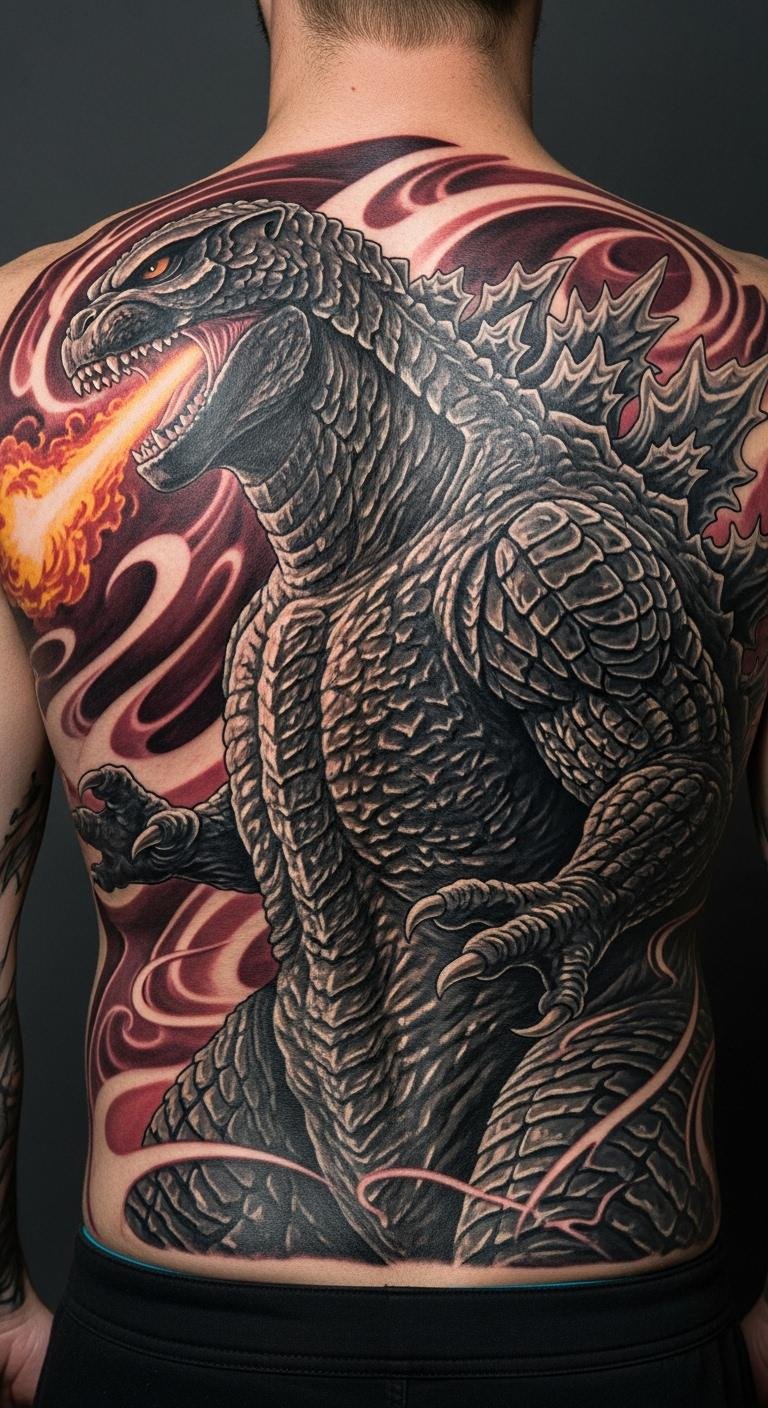
- Heisei Era (1984–1995): Featuring a feline face, muscular build, and pronounced dorsal fins, the Heisei Godzilla is often considered the definitive classic look. It works exceptionally well with saturated neo-traditional color palettes and bold outlines.
- Millennium Era (1999–2004): Defined by sharper, jagged purple dorsal plates, aggressive postures, and a reptilian, predatory head. This design lends itself to sharp, dynamic compositions with high contrast.
- Shin Godzilla (2016): Grotesque, godlike, and terrifying. With exposed musculature, irregular rows of needle-thin teeth, and glowing red or purple radiation fissures, this era appeals to fans of dark surrealism, biomechanical elements, and horror tattooing.
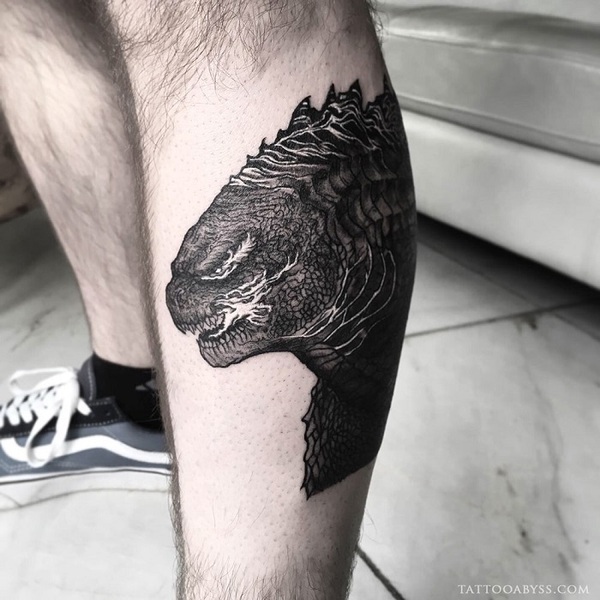
- Legendary MonsterVerse (2014–Present): Stocky, ancient, and earthbound, resembling an apex crocodilian predator. This design is best executed in black-and-grey or photorealistic color, relying on heavy skin textures and realistic environmental lighting.
Structuring the Sleeve: Composition and Flow
A full arm sleeve must account for the natural curvature and movement of muscles. Godzilla is broad and bulky, which poses a unique compositional challenge: how do you fit a massive titan onto a cylindrical limb without distorting his anatomy?
Upper Arm vs. Forearm Placement
Most tattoo artists place Godzilla's head and shoulders on the outer bicep or deltoid. The natural swell of the shoulder muscle provides three-dimensional depth to Godzilla's chest and roaring jaw. Alternatively, a dramatic vertical composition can position Godzilla emerging from the wrist, his body snaking up the forearm while his atomic breath fires upward across the elbow toward the shoulder.
Harnessing the Atomic Breath
The atomic breath is the single best visual storytelling tool for a sleeve. Functioning as a dramatic directional line, the energy beam can spiral around the forearm, cross the inner elbow, or illuminate dark patches of skin. It also provides a primary light source (source lighting or OSL), allowing your artist to cast dramatic neon blue, violet, or red highlights across the surrounding scale textures and cityscapes.
Environmental Fillers: Grounding the Monster
A giant creature floating in blank space loses its sense of scale. Incorporating urban and natural destruction gives Godzilla context:
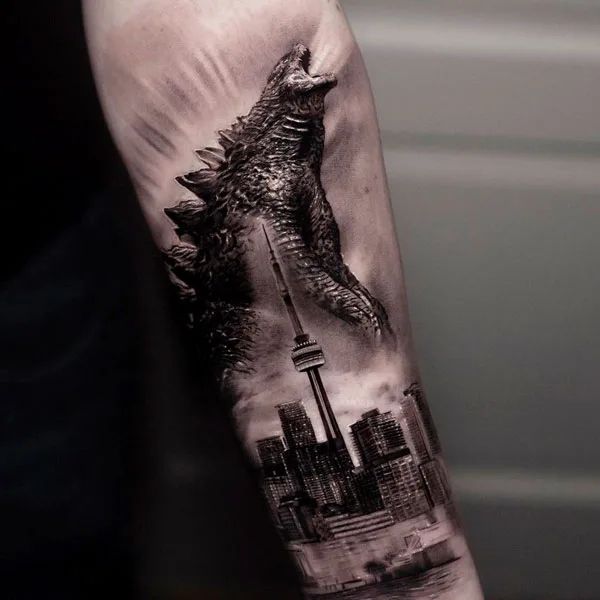
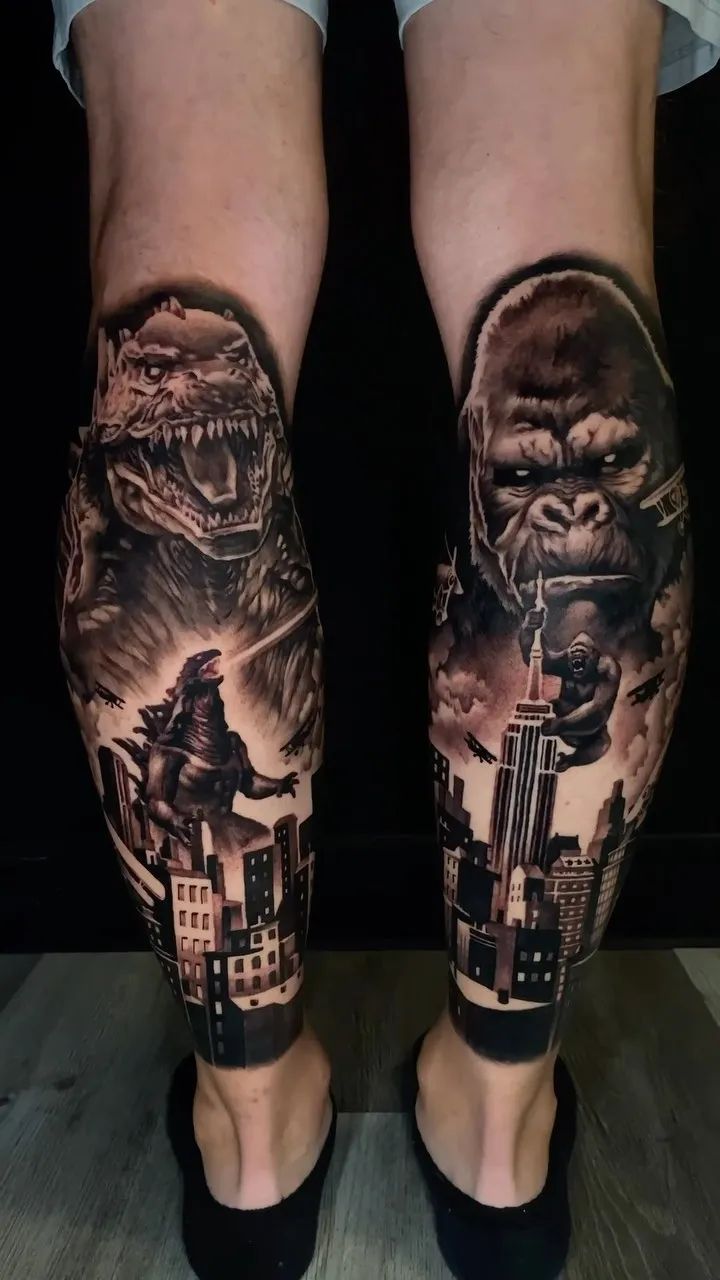
- Crumbling Skylines: Tokyo Tower, shattered skyscrapers, and neon Kanji signage ground the piece in classic kaiju lore.
- Smoke and Flame: Plumes of billowing black smoke work as ideal background filler to transition between different sections of the arm.
- Tidal Waves and Ocean Foam: Referencing Godzilla’s oceanic origins allows for traditional water bars and splashing waves, reminiscent of Hokusai prints.
Iconic Kaiju to Include in a Godzilla Sleeve Tattoo
While Godzilla alone can fill an entire sleeve, introducing rival titans elevates your sleeve into an epic battle scene. Balancing two massive creatures requires careful positioning so neither gets lost in the composition.
King Ghidorah
The three-headed golden dragon is Godzilla’s quintessential foil. Ghidorah's serpentine necks can fluidly wrap around the inner arm or wind down toward the wrist, framing Godzilla while solving the anatomical puzzle of filling negative space.
Mothra

Mothra offers vibrant, warm contrast against Godzilla’s dark, rugged scales. Positioning Mothra near the top of the shoulder with spread wings provides a natural crown for the sleeve, contrasting soft, patterned lepidopteran wings against jagged dorsal plates.
Mechagodzilla
Incorporating Mechagodzilla introduces hard-surface mechanical elements, polished chrome, and industrial angles. This provides a stunning visual juxtaposition against Godzilla’s organic, reptilian skin.
Artistic Styles That Suit Kaiju Sleeves
The visual impact of your tattoo depends entirely on the artistic technique applied:
1. Japanese Traditional (Irezumi) & Neo-Traditional
Godzilla is a modern Japanese folk myth. Rendering him in an authentic Irezumi style—framed by wind bars, stylized finger waves, and cherry blossoms—feels culturally harmonious. Neo-traditional styles push this further, utilizing bold line weights, exaggerated facial expressions, and hyper-saturated color gradients that make atomic energy pop off the skin.
2. Black & Grey Realism
If you prefer a gritty, atmospheric tone reminiscent of cinema, black-and-grey realism is unmatched. An experienced artist can manipulate skin tones, negative space, and deep carbon blacks to render hyper-detailed skin scales, crumbling concrete, and atmospheric mist without needing bright color.
3. Manga and Comic Book Illustrative
For an unapologetically graphic look, manga panels, crosshatching, speed lines, and screentone dotwork can be assembled into a dynamic collage. Framing Godzilla within broken panel borders creates a distinct, modern narrative flow along the arm.
Planning Your Sessions: Practical Considerations
Executing a full sleeve is a serious investment of time, pain tolerance, and money. Keep these practical factors in mind before going under the needle:
- Curate Reference Imagery: Do not just search for existing tattoos. Collect film stills, concept art, and high-end collectible statue photos that showcase dynamic lighting and accurate anatomy.
- Find a Creature Specialist: Not all realism artists excel at reptiles or fantasy monsters. Look for an artist whose portfolio features heavy texture work, dynamic creature anatomy, and large-scale body composition.
- Expect Multiple Sessions: A detailed full sleeve generally requires 25 to 40 hours of needle time, broken into four to eight sessions depending on your artist’s speed and the complexity of the design.
- Plan for Pain Hotspots: Sleeves cover sensitive territory. The inner bicep, elbow ditch, and the point of the elbow are notably painful. Discuss shading strategies with your artist so difficult zones are managed across different sessions.
Long-Term Care and Vibrancy
Due to the dense blacks and high-contrast lighting required for a kaiju scene, proper healing and maintenance are paramount. Godzilla’s scales rely on tight line work and deep saturation, while neon-colored atomic blasts depend on unblemished skin to stay radiant. Once healed, consistently apply high-SPF sunscreen over your sleeve whenever you are exposed to direct sunlight to prevent UV rays from muddying fine details and fading vibrant breath effects.
A Godzilla sleeve is more than a fandom tribute; it is a monument to atomic power, ancient forces of nature, and legendary visual design. By harmonizing iconic monster lore with seasoned tattoo composition, you transform your arm into an awe-inspiring battleground worthy of the King himself.