Golden Retriever Size: Purebred vs. Mix Guide
When looking at a Golden Retriever, you might instantly picture a friendly, golden-coated dog with an iconic smile and a sturdy build. However, not all golden-furred dogs are created equal. Whether you are adopting a rescue, buying from a breeder, or simply curious about your canine companion's heritage, understanding Golden Retriever size: how to spot a purebred vs. a mix is a fantastic starting point. While DNA tests offer definitive answers, observing physical proportions, coat traits, and behavioral standards provides strong clues.

Official Golden Retriever Size Standards
The Kennel Club and the American Kennel Club (AKC) maintain strict breed standards. These guidelines outline the exact height, weight, and proportions a purebred adult Golden Retriever should display. Because purebreds have been selectively bred for generations, their physical dimensions fall into a relatively narrow and predictable range.
Male vs. Female Dimensions
Sexual dimorphism is quite noticeable in this breed. Males are significantly larger and more substantial than females:
- Male Height: 23 to 24 inches tall at the shoulder.
- Male Weight: 65 to 75 pounds.
- Female Height: 21.5 to 22.5 inches tall at the shoulder.
- Female Weight: 55 to 65 pounds.
A purebred adult that falls significantly outside these ranges—especially if it is drastically under or over weight without an obvious medical cause—often suggests mixed-breed ancestry.
Body Proportions and Bone Structure
Beyond simple height and weight, purebred Goldens have a very specific silhouette. They are slightly longer than they are tall, with a ratio of about 12:11 from the point of the shoulder to the buttocks, compared to the ground at the withers. Their bone structure is medium-heavy; their legs are sturdy without being clumsy, and their chests are deep and wide, reaching down to the elbows.
Clues for Spotting a Purebred vs. a Mix
When evaluating a dog, looking at individual traits in isolation can be misleading. Instead, look at the overall package. Comparing a dog against established breed characteristics helps clarify whether you are looking at a purebred or a mixed-breed dog.
Coat Type and Color Variations
The hallmark of the breed is its water-repellent, dense, double coat. Purebreds feature feathering on the back of their forelegs, underneath their body, on the thighs, and on the tail. Their coat color ranges from a light golden to a dark, rich golden hue. However, watch out for these common misconceptions:
- White or Cream: Very pale cream is acceptable in European-line (English) Goldens, but stark white usually indicates a mix with a breed like a Samoyed or White German Shepherd.
- Black or Brown: Golden Retrievers never come in black. A black dog with a Golden Retriever's build is almost certainly a mix with a Labrador, Flat-Coated Retriever, or Poodle.
- Short Coats: If the coat lacks the signature feathering and is short and sleek, it may be a Labrador mix rather than a purebred Golden.
Head Shape and Expression
Video: Field vs. Show Golden Retrievers: History, Health & Choosing the Right One
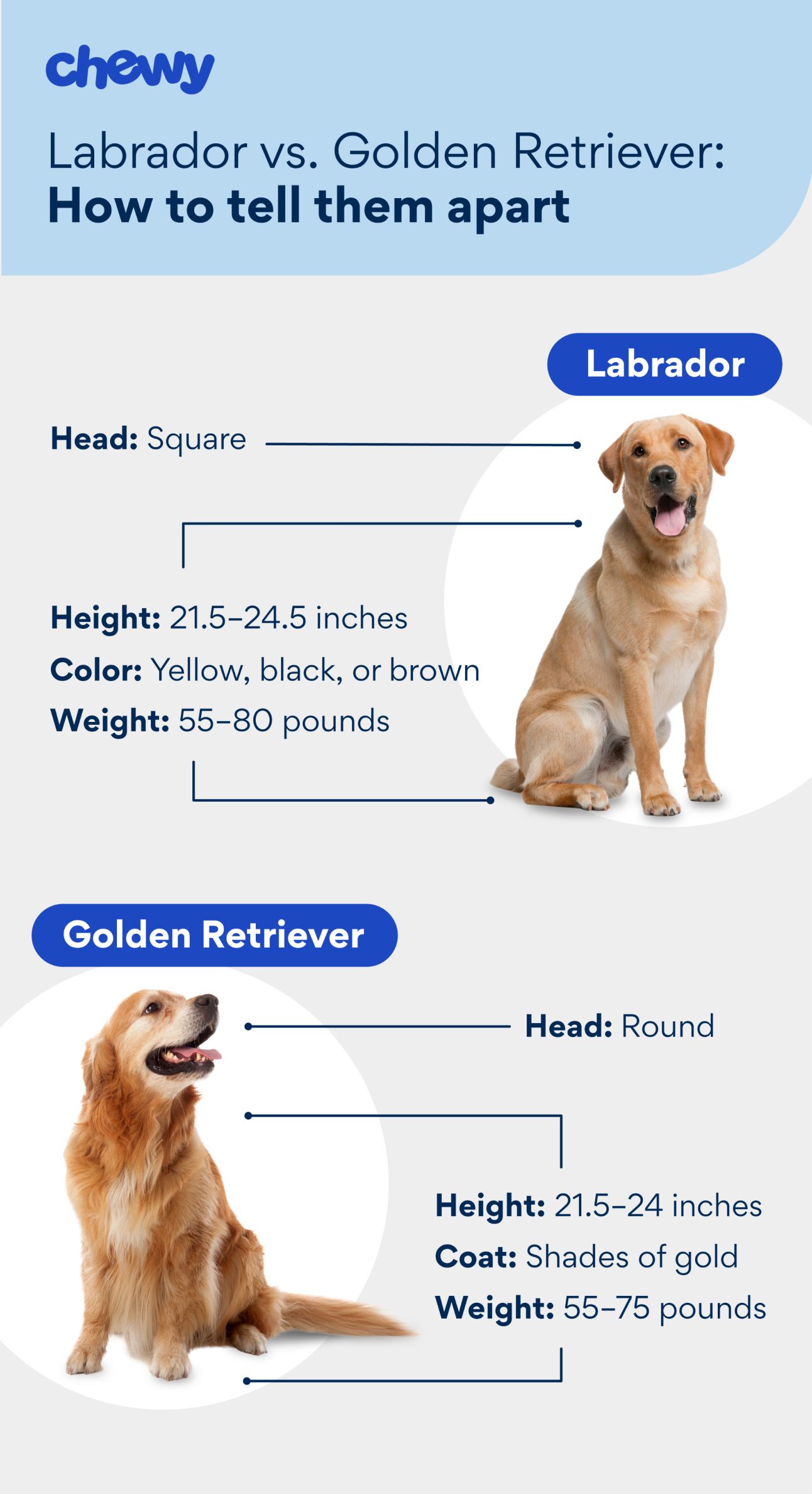
The head of a purebred Golden Retriever is a masterpiece of balance. It is broad with a distinct, straight muzzle that is nearly as long as the skull. The stop (the transition from the bridge of the nose to the forehead) is well-defined. Their eyes are dark brown, set wide apart, and convey a warm, intelligent expression. If a dog has a very pointy muzzle, bulging eyes, or erect ears, it likely has genetics from another breed, such as a Collie or German Shepherd.
Common Golden Retriever Mixes and Their Sizes
Many popular designer breeds cross a Golden Retriever with another purebred dog. These mixes often skew the expected Golden Retriever size and appearance.
Goldador (Golden Retriever + Labrador)
Goldadors generally match or slightly exceed standard Golden Retriever dimensions. Males can weigh up to 80 pounds. The primary giveaway is the coat, which is usually shorter, sleeker, and lacks the heavy feathering found on a purebred Golden.
Miniature Golden Retriever (Mixes)
There is no such thing as a purebred "Miniature Golden Retriever." When breeders produce smaller versions, they typically cross a Golden Retriever with a Cocker Spaniel or a Miniature Poodle (known as a Comfort Retriever). These dogs usually top out between 20 and 40 pounds, making them noticeably smaller than any standard purebred Golden.
Goldendoodle (Golden Retriever + Poodle)
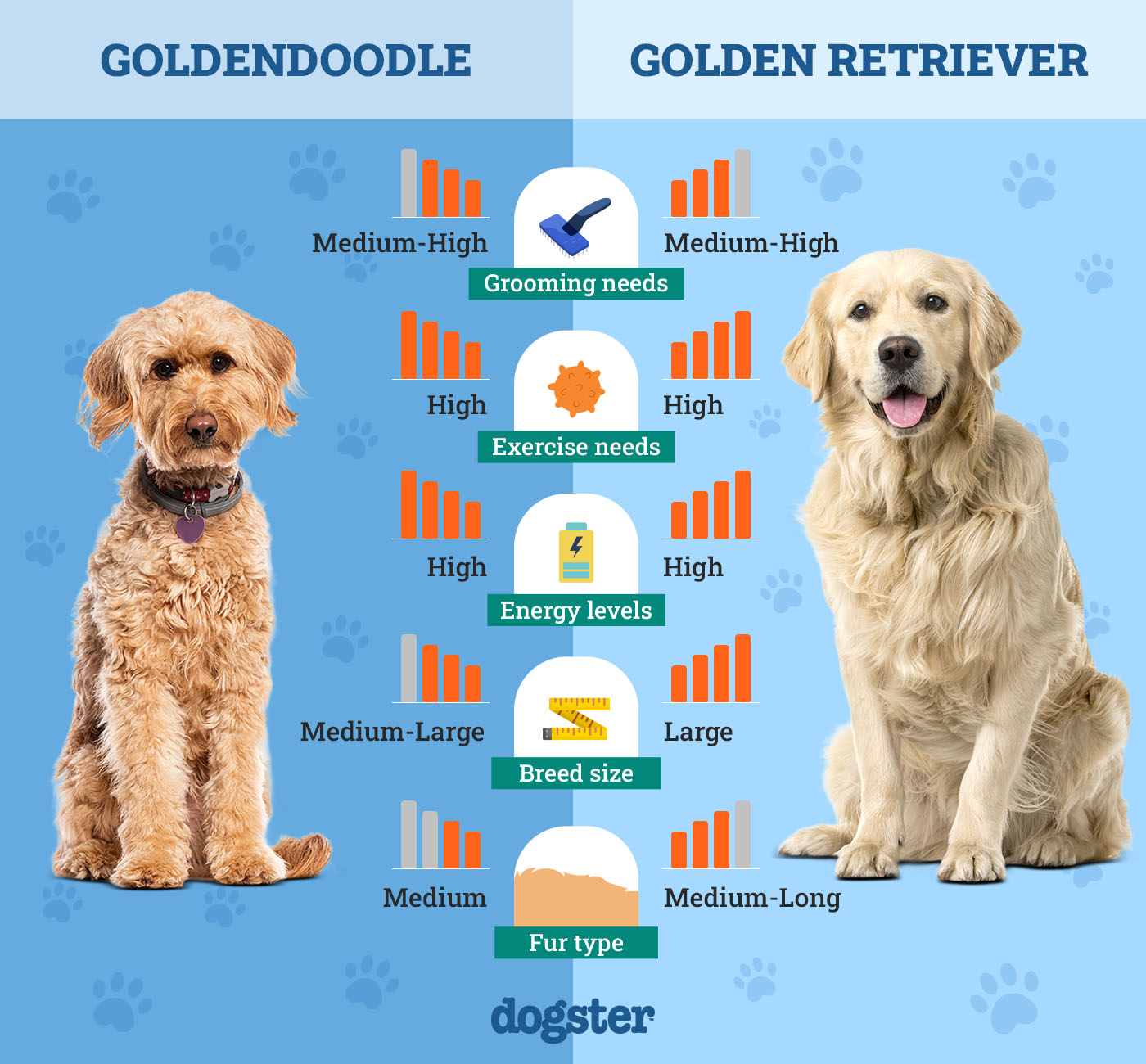
Goldendoodles vary drastically depending on whether they are bred with a Miniature, Medium, or Standard Poodle. Standard Goldendoodles can easily exceed 75 pounds and feature a curly, non-shedding coat rather than the straight or wavy double coat of a purebred.
How to Confirm Your Dog's Breed
If visual inspection and size checks leave you guessing, modern science provides definitive answers. Canine DNA testing kits use cheek swabs to analyze a dog’s genetic makeup across hundreds of breeds. These tests can tell you if your dog is 100% purebred or outline their exact mix percentages, bypassing any guesswork regarding Golden Retriever size and physical standards.
Final Thoughts
Determining whether a dog is a purebred or a mix involves looking closely at height, weight, bone density, coat texture, and facial structure. While breed standards offer a clear baseline for a purebred's dimensions, mixed-breed dogs make incredible, loving companions regardless of their genetic lineage. Whether your dog is a textbook purebred or a delightful mutt, knowing their background helps you tailor their nutrition, exercise, and healthcare needs for a long, happy life.