Gonzo Journalism Unveiled: Reality’s Most Uncensored Edge
Introduction to the Wild World of Reporting

Traditional journalism demands objectivity, strict adherence to facts, and a safe distance between the reporter and the subject. But what happens when that wall crumbles? Enter the chaotic, immersive, and fiercely subjective realm of Gonzo Journalism Unveiled: Reality’s Most Uncensored Edge. Pioneered in the turbulent 1970s, this style of reporting rejected the notion of neutral observation. Instead, it placed the journalist squarely in the center of the narrative, often as an active, flawed participant.
Gonzo writing is not just about relaying what happened; it is about capturing how it felt to be there. By blending investigative reporting with satirical fiction, personal confession, and visceral prose, gonzo writers exposed truths that objective reporting often missed. In this article, we explore the origins of this radical genre, the legendary figures who defined it, and how its spirit survives in modern media.
The Origins of a Revolution
The term "Gonzo" was coined in 1970 by journalist Bill Cardoso, the Sunday editor of The Boston Globe. Reading an article by a then-unknown writer named Hunter S. Thompson about the Kentucky Derby, Cardoso famously declared it was "pure gonzo"—a Boston Irish slang term for the last man standing in a weekend drinking marathon.
Thompson grabbed hold of the term and ran with it. His piece, "The Kentucky Derby Is Decadent and Depraved," discarded standard reporting techniques. Thompson and illustrator Ralph Steadman descended upon Louisville, Kentucky, not to cover the horse race itself, but to document the bizarre, alcohol-soaked decadence of the spectators. The article was messy, hysterical, and deeply personal. It marked the birth of a literary movement.
Defining Characteristics of Gonzo Style
Unlike standard news reporting or even traditional New Journalism (which used fiction techniques for non-fiction), gonzo journalism possesses distinct traits:
- Total Subjectivity: The writer's biases, hinkiness, and emotional states are openly displayed, not hidden.
- First-Person Narrative: The reporter is a main character in the story, frequently driving the plot forward through their actions.
- Participatory Reporting: Writers do not observe from the sidelines; they ingest the substances, break the laws, or share the dangers of their subjects.
- Satirical and Hyperbolic Tone: Exaggeration is used as a tool to reveal deeper, underlying truths about society and politics.
Hunter S. Thompson: The Architect of Chaos
No discussion of the genre is complete without examining its founding father, Hunter S. Thompson. Armed with a leather suitcase filled with whiskey, gin, mezcal, cocaine, and a portable typewriter, Thompson redefined what it meant to cover American culture and politics.
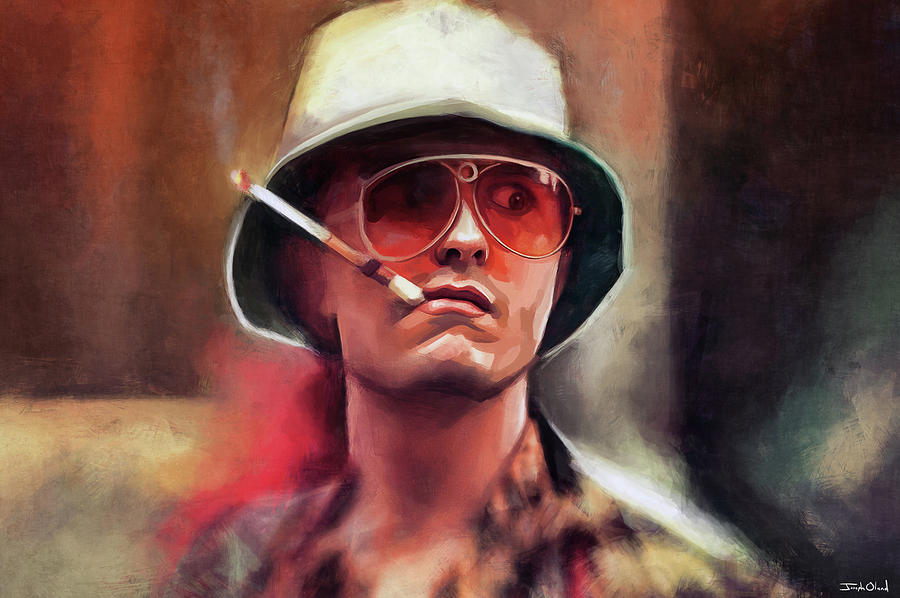
His masterwork, Fear and Loathing in Las Vegas: A Savage Journey to the Heart of the American Dream, began as an assignment to cover a drug enforcement convention and a motorcycle race. Instead, Thompson and his attorney ("Dr. Gonzo") consumed vast quantities of mind-altering substances while tearing through the Nevada desert in a red convertible. The resulting book remains a scathing, psychedelic critique of the failure of the 1960s counterculture.
Thompson’s political reporting for Rolling Stone, collected in books like Fear and Loathing on the Campaign Trail '72, proved that a gonzo perspective could offer sharper insights into elections than dry political commentary. He cut through PR spin by treating politicians with the raw, unfiltered skepticism they deserved.
Video: MODERN GONZO JOURNALISM
Other Pioneers of the Movement
While Thompson is the undisputed icon of the genre, other writers pushed the boundaries of immersive, subjective storytelling in their own unique ways:
- Tom Wolfe: Though often associated with New Journalism, Wolfe’s hyper-stylized prose and deep immersion into subcultures—such as Ken Kesey’s Merry Pranksters in The Electric Kool-Aid Acid Test—paved the way for gonzo sensibilities.
- P.J. O'Rourke: Bringing a conservative and fiercely satirical edge to international reporting, O'Rourke traveled to global hotspots while maintaining a deeply cynical, gonzo-adjacent point of view.
- Lester Bangs: In the realm of music journalism, Bangs tore up the rulebook. He interviewed rock stars not with reverence, but with confrontational, chaotic honesty that matched the fury of punk rock.
Gonzo Journalism in the Modern Era
As the media landscape shifted from print journalism to digital platforms, the mechanics of reporting changed dramatically. Traditional newsrooms shrank, and algorithmic social media feeds began prioritizing sensationalism. Yet, the core philosophy of gonzo reporting—authenticity through direct experience—remains remarkably relevant.
Digital-Age Successors
Modern platforms like Vice in its early days adopted a modernized form of gonzo reporting. Reporters traveled to dangerous war zones, illegal drug labs, and fringe communities, placing themselves directly in front of the camera. The audience was not just told about the danger; they watched the journalist sweat, panic, and navigate high-risk situations.
Similarly, independent content creators, podcasters, and YouTube documentary makers often employ a gonzo approach. By abandoning corporate editorial constraints, these modern creators document subcultures and political unrest with raw, unfiltered subjectivity.
The Ethics and Criticisms of Gonzo Reporting
For all its vibrant storytelling, gonzo journalism has always faced heavy criticism. Mainstream journalists argue that the genre blurs the line between fact and fiction, making it difficult for readers to separate reality from a writer's drug-fueled hallucinations.
Furthermore, because the reporter becomes the main character, there is a constant risk of narcissism overshadowing the actual story. When a writer focuses more on their own personal benders than the suffering or complexities of their subjects, the reporting loses its journalistic value.
Despite these valid criticisms, the genre serves as an essential antidote to sanitized, PR-driven corporate media. It reminds readers that absolute objectivity is often an illusion, and that acknowledging a reporter's perspective can sometimes lead to a deeper, more honest truth.
Conclusion
Gonzo journalism broke the mold of polite society and mainstream media by injecting raw humanity, chaos, and unfiltered honesty into storytelling. From Hunter S. Thompson roaring through the Nevada desert to modern digital creators embedding themselves in society's fringes, this fearless approach to reality continues to inspire those who refuse to accept official narratives at face value. As long as institutions attempt to sanitize the truth, the rebellious spirit of gonzo reporting will endure.