Greenville County SC Property Tax Alert: Is Yours Targeted?
Homeowners across the Upstate are opening their mailboxes with growing anxiety, prompting this urgent Greenville County SC property tax alert: is YOUR neighborhood targeted? As Greenville continues its rapid evolution from a quiet textile hub into one of the country’s fastest-growing metropolitan areas, shifting millage rates and surging real estate valuations have caught long-time residents and recent transplants alike off guard. Whether you live in a revitalized downtown bungalow or a suburban cul-de-sac in Simpsonville, understanding how the county determines your tax burden is vital to safeguarding your household finances.

Why Greenville County Property Taxes Are Under Pressure
Property taxes in South Carolina are governed by a combination of state statutes and local county council decisions. In Greenville County, two primary forces have converged over the past few years to drive tax bills higher: rapid market appreciation and local government revenue restructuring.
Following the South Carolina Supreme Court’s landmark ruling in Burns v. Greenville County Council, which struck down the county’s longstanding $25 road maintenance fee as an unlawful tax, county leaders faced an immediate revenue shortfall for infrastructure maintenance. To replace that lost funding and address the demands of an expanding population, the Greenville County Council voted to raise county millage rates. While millage increases provide revenue for emergency services, public works, and road resurfacing, they also mean that even modest increases in assessed property values translate into higher annual tax bills.
Greenville County SC Property Tax Alert: Is YOUR Neighborhood Targeted?
While tax rate adjustments apply countywide, reassessment impacts are never felt equally. Certain pockets of Greenville County have seen disproportionately steep property valuation jumps due to localized buyer demand, commercial infill, and historic gentrification patterns. If your home sits in one of the following zones, you face the highest risk of an assessment shock.
1. The West End, Southernside, and the Village of West Greenville
Few areas in the Southeast have experienced commercial and residential redevelopment as rapid as West Greenville. Proximity to Unity Park, award-winning restaurants, and boutique art galleries has transformed historically working-class communities into prime real estate. Long-time homeowners in Southernside and the Village have seen market valuations double or triple over short cycles. While South Carolina law caps assessment increases during countywide reassessments, property sales in these areas establish new market comparables that pull surrounding baseline values upward.
2. The Swamp Rabbit Trail Corridor and Travelers Rest
Once considered a rural mountain outpost, Travelers Rest has become an affluent residential hotspot fueled by the multi-use Prisma Health Swamp Rabbit Trail. Neighborhoods flanking the trail from northern Greenville through Furman University up to downtown TR have witnessed unprecedented demand. Vacant parcels and older mid-century ranches are routinely cleared for upscale custom builds, drastically raising the fair market value of neighboring properties.
3. Downtown Greenville, North Main, and Augusta Road
Established luxury markets are not immune. Neighborhoods like North Main, the Alta Vista historic district, and Augusta Road remain among the most competitive zip codes in the state. Because buildable land is scarce, older properties are continuously purchased for lot value alone. When a 1,500-square-foot cottage sells for land value and is replaced by a $1.5 million residence, property appraisers take notice, raising the assessed value of adjacent homes.
4. The Golden Strip: Mauldin, Simpsonville, and Fountain Inn

South of the city, the Golden Strip has absorbed thousands of new families drawn by top-tier schools and manufacturing employment hubs. With large-scale master-planned communities multiplying along I-385 and Highway 14, municipal infrastructure expansions have led to local millage adjustments. Homeowners here often experience tax increases not only from the county, but from municipal annexations and special fire district levies.
5. Greer and the Eastside Suburbs
Positioned along the high-growth I-85 corridor connecting Greenville and Spartanburg, Greer has seen aggressive residential infill. The Eastside suburbs around Pelham Road and Hudson Road continue to post consistent appreciation. As older subdivisions trade hands at post-2020 price points, the county tax assessor adjusts neighborhood models accordingly.
How South Carolina Property Taxes Are Calculated
To determine whether your tax notice is accurate, you need to understand the three distinct components of South Carolina’s property tax formula:
- Fair Market Value: Determined by the Greenville County Assessor’s Office using mass appraisal techniques, recent comparable sales, and property characteristics.
- Assessment Ratio: Established by the South Carolina Constitution. Primary legal residences qualify for a 4% assessment ratio, whereas secondary residences, rental properties, and commercial buildings are taxed at a 6% assessment ratio.
- Millage Rate: The tax rate set annually by taxing entities (county council, school boards, fire districts, and municipalities). One mill equals $1 of tax per $1,000 of assessed value.
The Power of Act 388
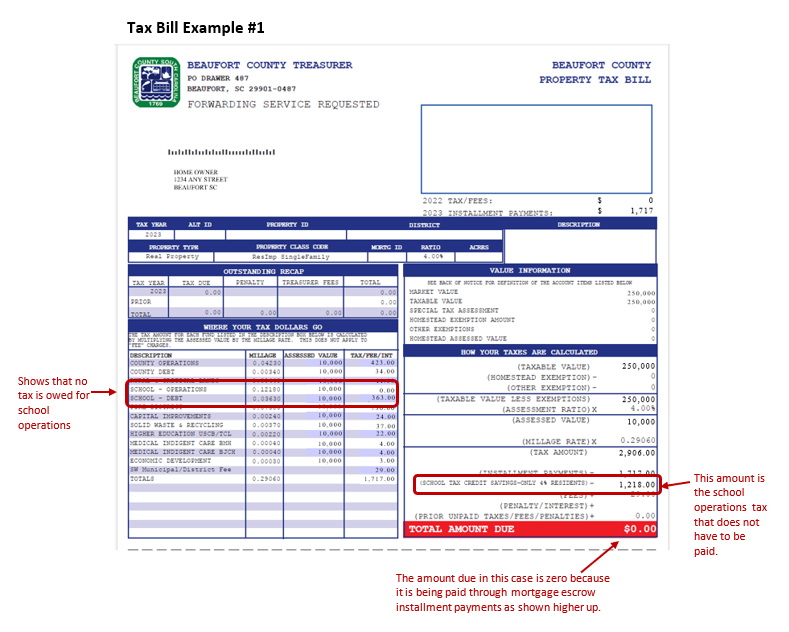
Under South Carolina’s Act 388, legal primary residences assessed at the 4% ratio are completely exempt from school operating taxes, which typically represent the largest portion of a tax bill. However, 4% properties still pay for school bonds (debt service) and county operating expenses. If your home is erroneously classified at 6%—a frequent administrative oversight when buying a new home—your bill could easily double or triple.
The 15% Reassessment Cap and the ATI Reset
South Carolina mandates a countywide property reassessment every five years. Under state law, an individual property’s valuation increase is capped at 15% during a reassessment cycle to protect long-standing owners from sudden real estate spikes. However, this cap is completely removed upon an Assessable Transfer of Interest (ATI)—meaning whenever a property is sold, transferred, or conveyed. If you purchased your home recently, your property will be reassessed at full market value, eliminating the prior owner’s cap protections.
Action Steps: How to Challenge Your Greenville County Tax Assessment
If you receive an assessment notice and believe the county’s valuation of your home is artificially inflated, you have statutory rights to appeal. Follow these steps to verify and contest your bill:
- Verify Your 4% Legal Residence Status: Check your assessment notice immediately. If your property is classified at 6% and you live there as your primary home, submit an Application for Legal Residence to the Greenville County Assessor before the deadline.
- File an Appeal Within 90 Days: Property owners have 90 days from the mailing date of an official reassessment notice to submit a formal written appeal. Do not wait until the tax bill arrives in the late autumn, as the appeal deadline may have already passed.
- Gather Verifiable Market Evidence: The county will not reduce your assessment based on complaints about tax rates. You must present factual proof, such as an independent appraisal, recent sales of identical homes in your immediate subdivision, or evidence of structural defects (foundation issues, roof damage) that lower your home’s market value.
- Apply for the Homestead Exemption: If you are 65 or older, totally and permanently disabled, or legally blind, South Carolina’s Homestead Exemption exempts the first $50,000 of your home’s fair market value from local property taxes. You must apply through the Greenville County Auditor’s Office.
Final Thoughts for Greenville Homeowners
Greenville County’s economic vibrancy brings immense benefits, from rising home equity to thriving downtown amenities. However, rapid growth invariably pressures municipal budgets and property valuations. Stay proactive: review your annual tax notices carefully, ensure your legal residence exemptions are active, and do not hesitate to appeal an inaccurate assessment. Taking action early ensures you pay only your fair share while protecting your home investment.