Groundbreaking Genius: Jim Henson's Television Genius
When historians analyze the transformation of mid-century broadcasting, few figures loom as large or as uniquely as Jim Henson. Far from being a mere children’s entertainer, he was a media visionary who reimagined the relationship between performer, camera, and audience. To examine this groundbreaking genius: the innovations behind Jim Henson’s television genius reveals not just a catalog of beloved characters, but a profound technological and artistic revolution that modernized television production forever.

Before Henson arrived on the scene in the mid-1950s, puppetry on television was essentially stage puppetry captured clumsily on camera. Performers hid behind rigid wooden booths, operating hard marionettes or ventriloquist dummies with painted expressions. Henson recognized that television was an entirely different medium with its own grammar—and he set out to dismantle decades of theatrical tradition to invent something suited for the electronic screen.
Groundbreaking Genius: The Innovations Behind Jim Henson’s Television Genius!
Henson’s breakthrough began with a deceptively simple realization: television is not a theater, and the camera lens is not an audience seated in row G. Instead of forcing television to fit puppetry, he re-engineered puppetry specifically for the television camera. This shift generated several technical and conceptual breakthroughs that altered how screen performances were executed.
1. The Television Monitor as the Performer’s Eyes
In traditional puppet theater, puppeteers looked up at their creations from beneath a stage, relying on muscle memory and spatial guesswork. Henson eliminated the traditional puppet stage altogether. He placed video monitors on the studio floor, enabling performers to watch their puppets in real time exactly as the viewer at home saw them.
This closed-loop feedback system allowed for unprecedented precision:
- Frame Awareness: Puppeteers could play directly to the edge of the television frame, dipping in and out of view with cinematic timing.
- Direct Eye Contact: Performers could calibrate the puppet’s eyeline with millimeter accuracy, focusing directly down the barrel of the camera lens to create an intimate connection with the viewer.
- Choreographed Blocking: Multiple puppeteers could navigate complex, dynamic camera moves without colliding, keeping the puppets naturally positioned within moving shots.
2. Soft Sculpture and Micro-Expressions
Early television puppets—such as Howdy Doody—were carved from wood or cast in hard plastic. Their expressions were static, relying on mechanical hinged jaws that clicked up and down. Henson, working closely with master builder Don Sahlin, rejected rigid materials in favor of soft fabrics, fleece, and flexible polyurethane foam.
This material innovation, famously embodied by Kermit the Frog (originally crafted from Henson’s mother’s old turquoise coat and a pair of ping-pong balls), completely altered puppetry aesthetics. Because the foam was pliable, subtle shifts in the puppeteer’s hand inside the head created organic facial movements. A slight clench of the fingers could convey skepticism, joy, dejection, or panic. The camera close-up, once the enemy of the stiff puppet, became the Muppets’ greatest storytelling asset.
3. Precision Lip-Sync and Speech Articulation
Before Henson, television puppets often flapped their mouths erratically whenever dialogue occurred. Henson instituted an exacting standard of lip-syncing that treated mouth movements as phonetic components. Puppeteers were trained to open the puppet’s mouth on vowel sounds and close it on consonants, matching the cadence of human speech with metronomic precision.
Furthermore, Henson designed his characters so that the jaw dropped naturally while the head remained stable, mirroring human biology rather than the bobbing, awkward neck motions common to marionettes.
Engineering Complexity: From Arm Rods to Live Hands
To expand the physical vocabulary of his characters, Henson developed distinct anatomical configurations, categorizing his puppets into practical mechanical types that solved specific storytelling challenges.
Hand-and-Rod Puppets
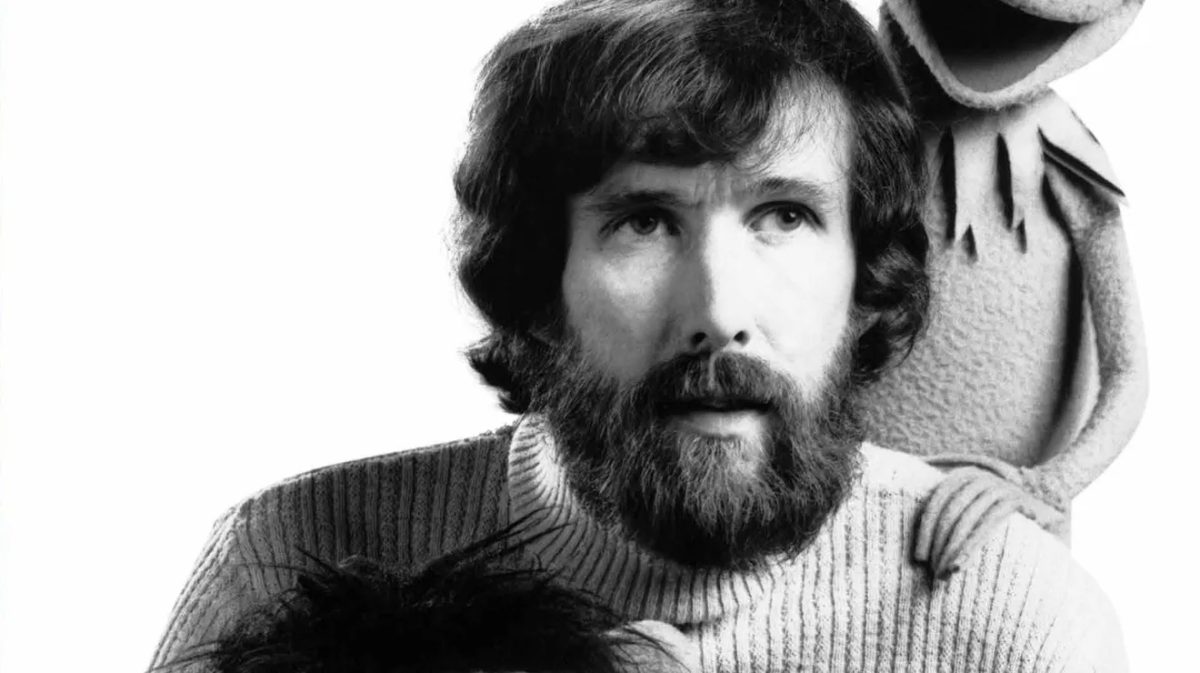
Characters like Kermit and Bert utilize thin piano-wire rods attached to the puppet’s wrists. The performer operates the head and mouth with their dominant hand while manipulating the two slender rods with their other hand. Henson painted these rods to match studio backgrounds or positioned cameras to minimize their visibility, giving the puppets delicate, fluid gestures without visible human interference.
Live-Hand (Two-Person) Muppets
For characters requiring complex dexterity—such as Rowlf the Dog, Fozzie Bear, or the Swedish Chef—Henson pioneered the "live-hand" design. In this setup:
- The primary puppeteer inserts their right hand into the character's head to control mouth movement and emotional expression, while slipping their left arm into the character's left sleeve.
- A secondary puppeteer stands alongside, inserting their right arm into the puppet's right sleeve to act as the second hand.
This cooperative technique required telepathic synergy between performers, enabling characters to play pianos, cook meals, write letters, and physically handle real props with genuine human dexterity.
Merging Worlds: Breaking Television Conventions
Henson’s technical wizardry was matched by his structural reinvention of television programming across two landmark projects: Sesame Street and The Muppet Show.
Integrating Realism and Fantasy on Sesame Street
When Joan Ganz Cooney and the Children’s Television Workshop created Sesame Street in 1969, conventional educational wisdom dictated that fantasy characters and real humans should never inhabit the same space, fearing it would confuse developing minds. Henson proved the opposite. By embedding Big Bird, Oscar the Grouch, and Bert and Ernie directly into a gritty, urban brownstone street alongside human neighbors, Henson established an emotional resonance that anchored the show's educational curriculum.
Meta-Television and The Muppet Show
Rejected by American networks who deemed puppets strictly children's fare, Henson moved production to ATV Studios in Elstree, England, to produce The Muppet Show (1976). The series broke new ground by adopting a "show-within-a-show" format. Rather than presenting a slick, polished variety hour, Henson set the action backstage amid chaos, missed cues, and existential panic.
This self-referential humor appealed equally to adults and children, proving that puppetry could serve as a vehicle for sophisticated satire, musical variety, and genuine narrative drama.
The Enduring Technological Legacy
Henson never rested on his existing accomplishments. In the late 1970s and 1980s, his passion for technological innovation led to the formation of the Jim Henson Creature Shop. For projects like The Dark Crystal (1982) and Labyrinth (1986), his team pioneered cutting-edge animatronics, radio-controlled facial rigs, and early digital performance capture systems.
That spirit culminated in the Henson Digital Puppetry System (HDPS), which allows performers to manipulate digital CGI avatars in real time using physical control rigs—a direct descendant of his 1950s monitor-feedback technique.
A Philosophy Built on Human Warmth
Ultimately, Jim Henson’s genius lay in his refusal to let technology overshadow humanity. Every foam joint, video monitor, radio transmitter, and cable control was designed in service of a single objective: conveying authentic emotion. By liberating puppetry from its theatrical box and teaching the camera how to feel, Henson created an artistic vocabulary that continues to shape visual media, proving that true innovation happens when technological mastery is guided by genuine heart.